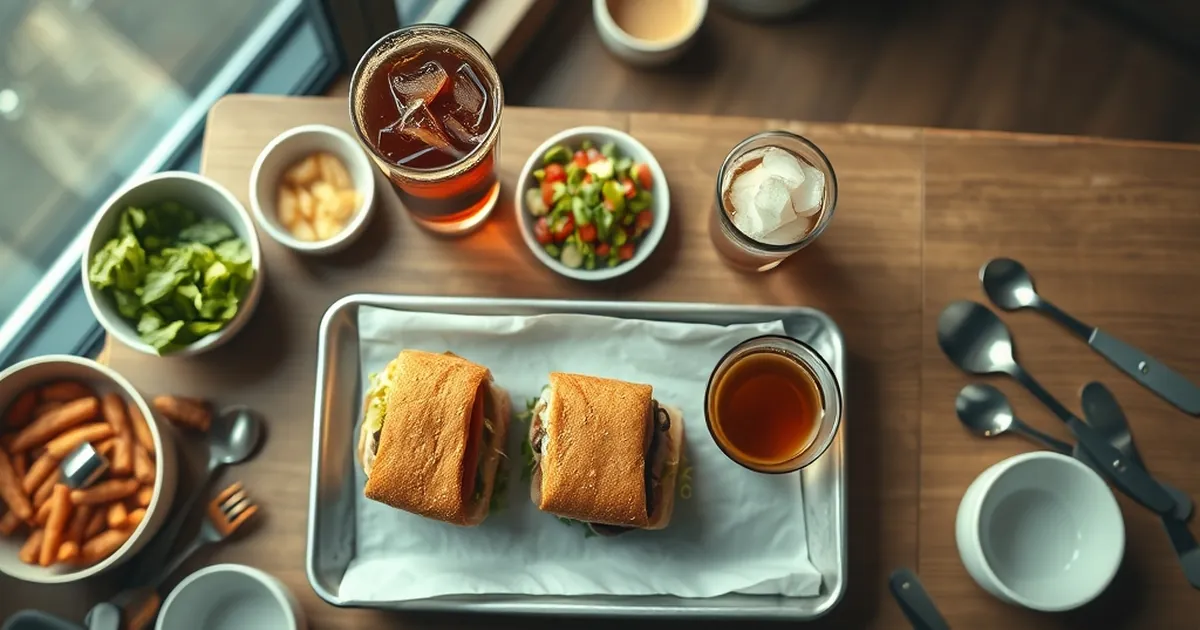
Picture the lunch line at a busy café at 12:40 on a Tuesday. One customer stares at the build-your-own board—five proteins, six bases, a dozen toppings—while the person behind them taps the register with a three-item combo and is eating eleven seconds later. That gap isn't just annoying. It's a decision-making problem, and it's measurable. The question worth asking: why does a fixed combo so reliably beat a menu that lets you choose everything?
The Two-Minute Gap Is Real
Watch enough lunch rushes and the pattern holds: build-your-own customers take roughly two minutes longer from the moment they reach the counter to the moment they pay. Some of that is decision time, some is the back-and-forth with the line cook, and some is the quiet second-guessing after they've already ordered ("wait, should I have gotten the grain bowl?").
Behavioral researchers have a name for the underlying friction. Barry Schwartz's work on the "paradox of choice" found that beyond a modest number of options, added choices increase deliberation time and reduce satisfaction with whatever gets picked. A combo menu isn't limiting you out of laziness. It's pre-collapsing a decision tree that your brain would otherwise have to prune in real time, standing up, with someone breathing down your neck.
Why Your Brain Loves a Bundle
Fewer variables, faster commitment
A build-your-own menu asks you to evaluate combinations, not items. That's a fundamentally harder task. Choosing between a chicken-and-quinoa bowl and a tofu-and-rice bowl means mentally simulating flavors you haven't tasted yet. A combo hands you a finished answer and asks a simpler question: yes or no?
The default is a decision shortcut
Nobel laureate Daniel Kahneman spent decades documenting how people lean on heuristics—mental shortcuts—to avoid effortful deliberation, especially under time pressure or mild stress. A combo is a well-designed heuristic. It says: someone already did the thinking, and the result is probably fine.
Less regret on the back end
There's a quieter benefit after the meal. When you choose from thirty options, the counterfactual space is enormous—all those roads not taken. When you pick a combo, the road not taken is just the other combo. Psychologists call the post-decision discomfort "regret aversion," and combos shrink the surface area for it.
What the Café Data Suggests
One independent café owner in Portland tracked order times for six weeks after adding a "three-item lunch box" alongside the existing build-your-own line. Average time from counter to payment dropped from just over four minutes to about two for combo customers—and, interestingly, combo customers came back slightly more often. The owner's read: they weren't choosing the combo because it was cheaper, but because it removed a decision from an already busy day.
That tracks with variable-ratio reinforcement—the principle that unpredictable rewards drive stronger habits than predictable ones. The build-your-own menu feels like a small gamble every visit (will this combo of toppings work?), and that variability is engaging but tiring. The fixed combo trades novelty for reliability, and for a weekday lunch, reliability usually wins.
Where This Leaves Your Next Order
The interesting frontier isn't whether combos are faster—it's how cafés design them. A well-built combo should feel like a considered recommendation, not a random bundle: one protein with a clear point of view, one base that complements it, one side that adds contrast. The next two minutes of your lunch break are already spoken for. The question is whether you spend them deciding or eating.