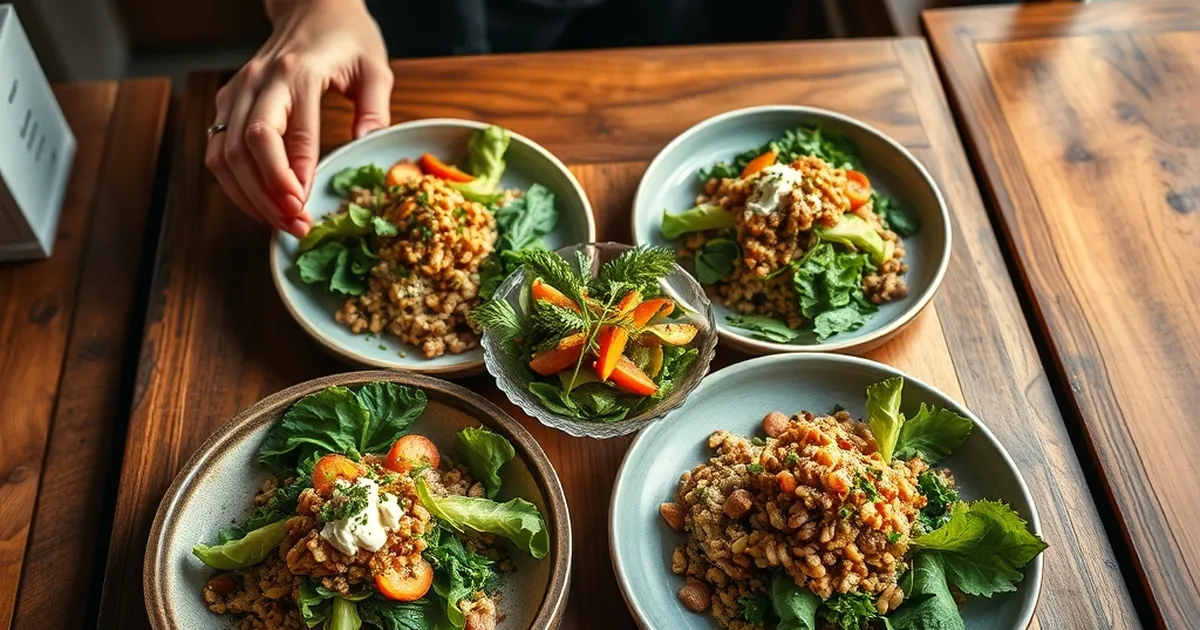
A café near my old apartment ran a lunch menu with twelve items. It was a good menu. It was also exhausting. I'd stand at the counter, read all twelve, panic quietly, and order the same turkey sandwich I always ordered. Then a new owner cut the menu to four items. Within a month, I was eating there twice as often. Not because the food improved — because deciding got easier. That experience sent me down a rabbit hole into what behavioral science actually says about choice, and why a shorter menu so often wins.
The Paradox of Choice, in a Lunch Line
Barry Schwartz's 2004 book The Paradox of Choice popularized an idea that researchers had been circling for years: beyond a certain point, more options make us less satisfied, not more. The classic demonstration is Iyengar and Lepper's 2000 jam study. Shoppers who encountered a display of 24 jams stopped to browse more often than shoppers who saw six — but only 3% of the big-display group bought a jar, versus 30% at the small display. More browsing, fewer purchases. The same dynamic plays out at a lunch counter: a long menu invites browsing, but a short one invites ordering.
Decision Fatigue Is Real, and Lunch Is Peak Hour
By noon, most of us have already made hundreds of small decisions. Roy Baumeister's work on ego depletion — since debated, but still useful as a frame — suggests that self-regulatory capacity wears down over the day. Choice overload hits hardest when we're tired, hungry, and time-pressed, which is exactly the state lunch customers are in. A four-item menu doesn't just reduce options; it reduces the cognitive tax of choosing, which is the thing people are actually trying to avoid at 12:15 on a Tuesday.
Why Four Items Create a Return Loop
Here's where it gets interesting. When a menu is short enough that you can hold it in your head, you start building a mental map: "I get the grain bowl on Mondays, the soup when it's cold." That map creates a mild anticipatory pull — you know what you're coming back for before you arrive. It also lets a café rotate one item weekly without disrupting the map, which is a gentle version of what psychologists call variable-ratio reinforcement: predictable structure with a small, reliable surprise. The result is a habit loop that feels fresh instead of stale.
The Risk of Cutting Too Deep
Short menus have a failure mode, though. Kahneman and Tversky's work on loss aversion tells us that removing a beloved item feels like a loss, and losses sting roughly twice as much as equivalent gains please. If you cut twelve items to four, cut the ones nobody ordered — not the cult favorite. The goal isn't minimalism for its own sake; it's a menu where every item earns its place and no regular feels robbed.
What to Watch For Next
The next wave of café design is likely to treat the menu as a behavioral artifact, not just a list. Expect to see four-item boards with one rotating slot, clear "most ordered" markers, and staff who can describe each dish in a sentence. If you run a café, try the experiment: pick your four best sellers, add one wildcard, and watch your repeat visits over six weeks. If you're a customer, notice how often you return to the places where deciding is easy. The shorter menu isn't a compromise. It's a design choice that respects the person standing in line.