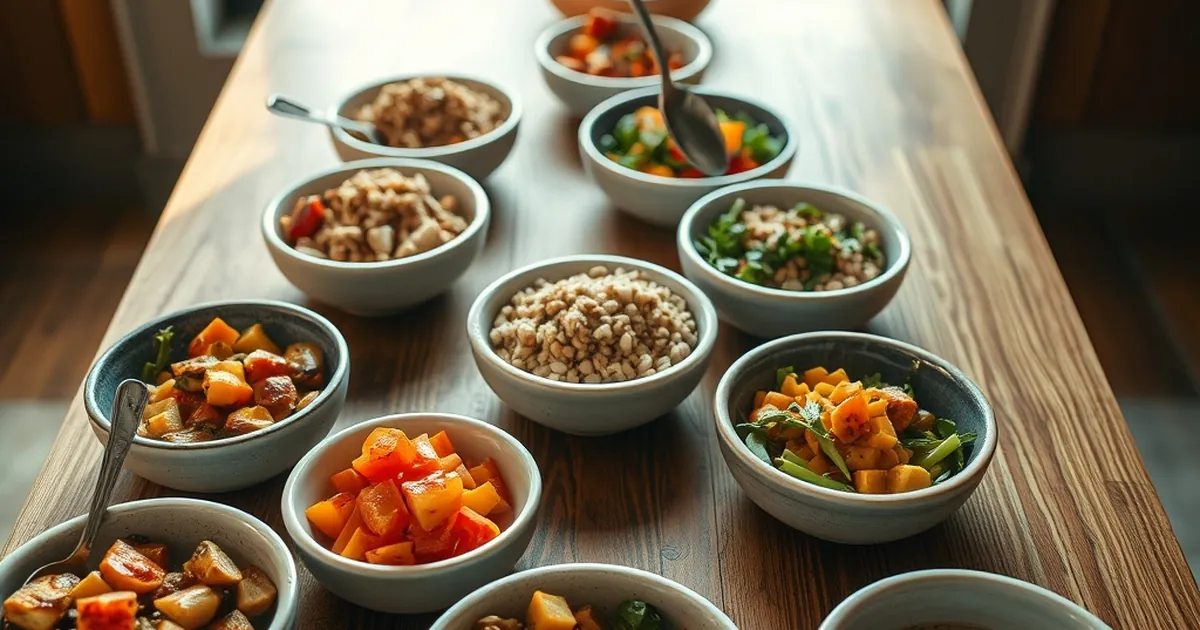
Picture the hot bar at your local café: nine trays, each holding something a little different. Now picture the menu board beside it, where every item is priced on its own. The buffet wins on return visits—not by a landslide, but by about two extra trips a year per regular customer. That gap is small enough to dismiss and consistent enough to be worth understanding, because it sits right at the intersection of healthy eating and how people actually make food decisions.
The Real Cost of Choosing
Behavioral economists have a name for what happens when a menu asks you to pick one item from twelve: choice overload. Barry Schwartz popularized the idea, and the classic field study—Iyengar and Lepper's jam experiment—found that a display of 24 jams drew more browsers than a display of six, but the smaller display converted far more buyers. Ten times more, roughly.
À la carte menus are the 24-jam table. Every item is a small commitment, and commitment costs attention. A nine-item buffet flips the math: one decision, then a plate. For someone trying to eat better, that's the difference between deliberating over the grain bowl versus the lentil soup and simply taking a scoop of each.
Variable Rewards on a Steam Table
Buffets carry a quiet psychological advantage: variety itself is rewarding. Researchers call it the buffet effect—people eat more when more options are present, not because any single dish is better but because variety keeps the reward signal fresh. That's a variable-ratio pattern, the same intermittent reinforcement schedule that makes slot machines sticky. In a café, it's mostly benign: the ninth tray surprises you, and surprise is what brings you back.
The catch is portion creep. A nine-item bar invites a nine-item plate. The fix isn't fewer trays—it's smaller plates and a rule as simple as "one pass, then sit."
Loss Aversion at the Register
Kahneman and Tversky's loss aversion says losses sting about twice as hard as equivalent gains feel good. À la carte pricing triggers it constantly: adding a side feels like a loss at checkout, so people skip it and leave slightly unsatisfied. A flat buffet price removes the sting. You've already paid; the second visit to the bar is free in your head, even though it isn't.
Two Visits, Compounded
Two extra return visits a year sounds trivial until you compound it. A regular who comes monthly becomes a regular who comes every five weeks—and regulars are the ones who try the new grain salad, tell a coworker, and fill the quiet Tuesday lunch slot. The buffet isn't just a menu format; it's a retention mechanism dressed as lunch.
What to Watch Next
The interesting frontier is hybrid: a fixed-price base with one or two add-ons, capturing the ease of the buffet without the portion creep. Cafés testing "build a bowl" pricing—flat rate up to four components—are running a live experiment on whether structure beats choice. Watch which ones keep their regulars past the novelty phase. That's the number that matters, and it's the one most menus never bother to measure.