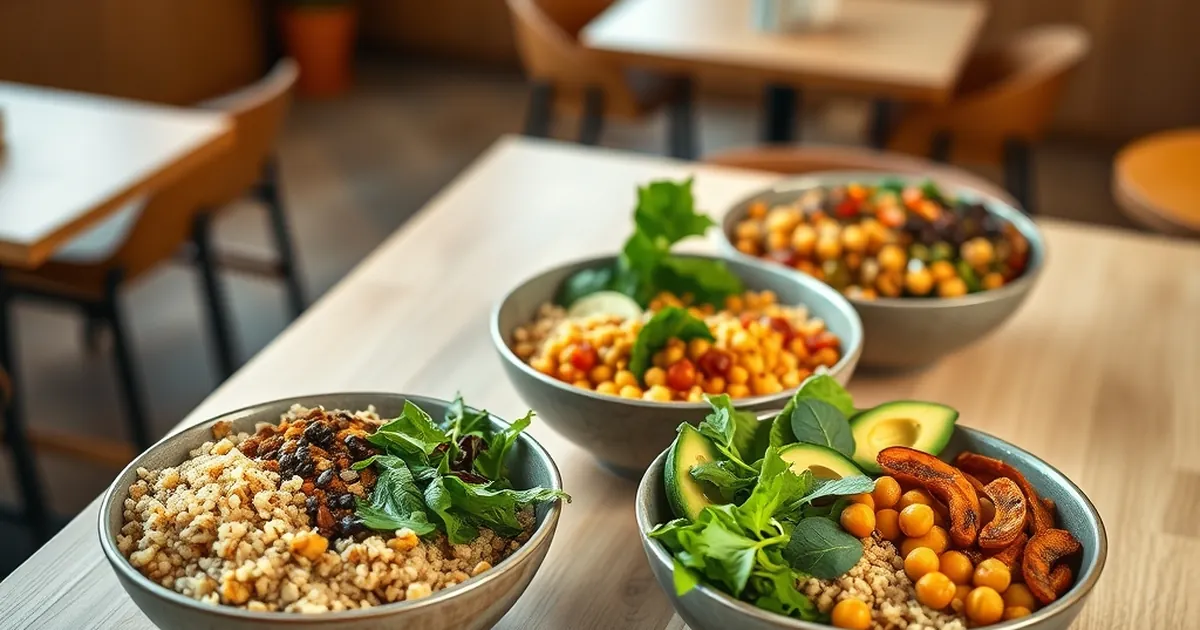
Walk into a build-your-own bowl café and the chalkboard can read like a small novel: twelve bases, fourteen proteins, nine sauces. It feels generous. It also feels paralyzing. So what's the actual number of options that helps a hungry person decide well — and where does the menu start working against itself?
The Number That Keeps Showing Up
Psychologists Sheena Iyengar and Mark Lepper ran the study most of us have heard about, even if we don't know the name. At a grocery store in California, they set up a tasting table for jam. Some shoppers saw 24 varieties; others saw 6. The big display drew more attention — about 60 percent of passersby stopped versus 40 percent at the small table. But here's the twist: only 3 percent of the people who saw 24 jams bought one. Of the shoppers who saw 6, roughly 30 percent bought. More choices pulled a crowd and then sent almost everyone home empty-handed.
Café bowls behave the same way. Five decisions — base, protein, two or three toppings, sauce — feels like freedom. Twelve decisions feels like homework.
Why the Brain Taps Out Around Five
The short answer is working memory. Most people can hold roughly four to seven items in mind at once, which is why phone numbers got chunked into groups. Every additional bowl ingredient is another comparison your brain has to run: Is quinoa better than brown rice here? Does peanut sauce clash with pickled onion? Each pairing is a tiny cost, and those costs stack.
Behavioral economists call part of this the paradox of choice. Barry Schwartz popularized the term, and the underlying mechanics trace back to work by Daniel Kahneman and Amos Tversky on how we evaluate options. We don't judge a menu in absolute terms. We judge it against what we're giving up — the lentils we didn't pick, the miso dressing we skipped. With five options, that regret is manageable. With twelve, it's a background hum of low-grade loss.
The Menu Designer's Version of This
Restaurant consultants have quietly absorbed the lesson. In-N-Out has run essentially the same short menu for decades. Chipotle's build line offers a lot, but it's structured in sequential steps — one decision at a time, not twelve at once. The format matters as much as the count. A long list overwhelms; a guided sequence doesn't.
What Five Gets Right
Five options per category hits a sweet spot for a few reasons:
- Comparison stays possible. You can actually weigh five things against each other without losing track.
- Variety still feels real. Five bases times five proteins is 25 combinations before you touch toppings. That's plenty of novelty.
- Decisions stay fast. Speed matters at lunch. A line that moves is a line that comes back.
There's also a reward-loop angle worth noticing. When a choice is easy and the bowl is good, your brain links the café to a pleasant, low-effort outcome. When every visit requires five minutes of agonizing, the association sours — even if the food is excellent. Friction erodes habits.
A Test You Can Run This Week
Next time you're at a bowl spot, try a version of the jam experiment on yourself. Pick your five go-to combinations and order only from that list for two weeks. Track how you feel before and after each visit — rushed, satisfied, regretful, indifferent. Most people find the shorter list produces faster decisions and less post-meal second-guessing.
The forward-looking piece is this: menus are going to keep growing, because adding an ingredient is cheap and removing one feels risky to operators. The people who eat well in that environment won't be the ones who sample everything. They'll be the ones who build a personal shortlist and trust it — treating five good options as a feature, not a limitation.