You've probably done it: pulled a jar of homemade granola off the shelf, dug in with a spoon, and hit a sad, stale layer that tastes like cardboard. Meanwhile, the stuff you sealed up tight is still shattering between your teeth weeks later. So what's actually going on inside that sealed jar — and why does it buy you so much more crunch?
Why Air Is the Enemy of Crunchy Granola
Granola goes stale for one main reason: moisture. The oats, nuts, and seeds in your mix are hygroscopic, which is a fancy way of saying they pull water vapor straight out of the air around them. Once they absorb enough, the starches soften and that satisfying snap turns chewy.
A sealed jar cuts off that supply of airborne moisture. The small pocket of air trapped inside has only a limited amount of water vapor to give, and once the granola absorbs it, there's no fresh air cycling in to replace it. An open bag or a loosely folded chip clip, on the other hand, lets your kitchen's humid air keep flowing in all day long.
The Humidity Factor Nobody Talks About
Here's where it gets interesting. On a rainy week in Houston or a muggy July in Atlanta, your kitchen air might sit at 60 to 70 percent relative humidity. That's a lot of water vapor looking for somewhere to land, and your exposed granola is a willing host. Even a "closed" bag with a folded top isn't airtight — it just slows the process down.
What a Good Seal Actually Does
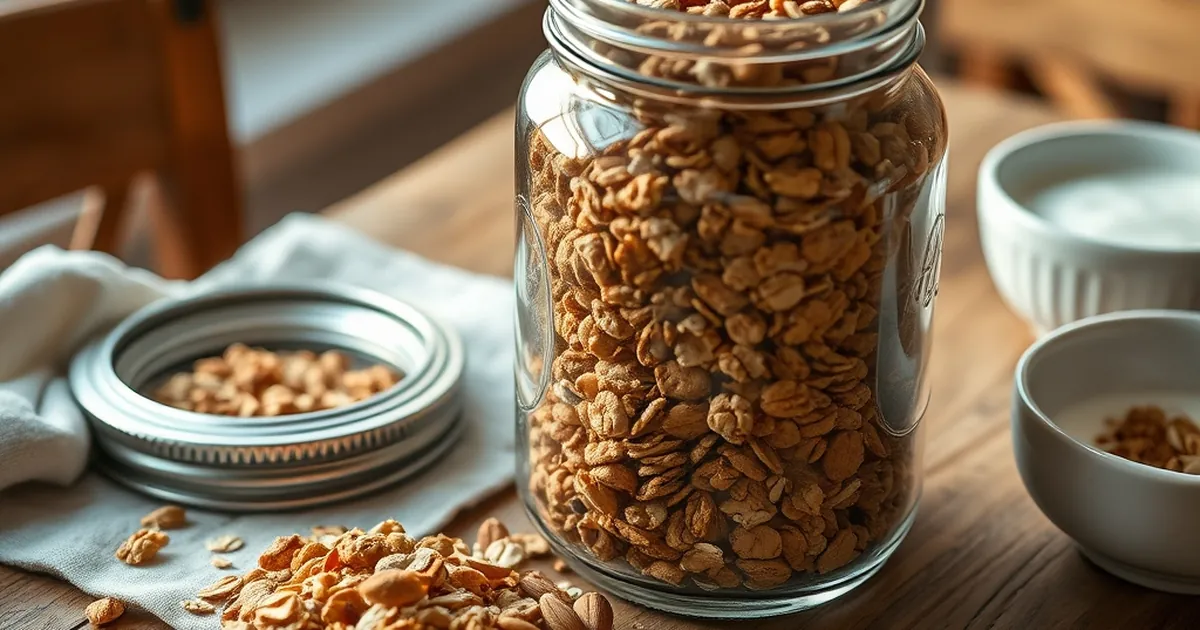
A proper sealed jar — the kind with a rubber gasket and a locking lid, or a Mason jar with a tight ring — creates a real barrier. It doesn't just keep air from moving; it keeps new moisture from entering at all. That's the difference between granola that lasts a week and granola that stays crunchy for a month or more.
I tested this myself last fall. I baked one big batch of maple-pecan granola, split it in half, and stored one portion in a latch-top jar and the other in a zipper bag I pressed closed by hand. After ten days, the jar granola still cracked loudly in a bowl of milk. The bag version had gone soft enough that my kids stopped eating it.
Glass Beats Plastic More Often Than You'd Think
Plastic containers can work, but many are slightly permeable to vapor over time, and their lids warp after a few trips through the dishwasher. Glass doesn't breathe, doesn't hold onto odors, and doesn't stain. If you're serious about crunch, glass with a gasket is the reliable choice.
Three Habits That Keep the Crunch Going
Cool completely before sealing. Warm granola releases steam into the jar, and that moisture has nowhere to go but back into your oats.
Use a jar that's actually full. Less headspace means less trapped air and less vapor to absorb. If your jar is half empty, move the granola to a smaller one.
Scoop with a dry utensil. A damp spoon or a wet hand introduces moisture directly. It sounds fussy, but it matters.
One more tip: if your granola already feels a little soft, spread it on a sheet pan and toast it at 300°F for about ten minutes. You can usually bring it back.
Next time you pull a batch out of the oven, let it cool, then commit to the jar. Your future self — the one craving a crunchy handful on a Tuesday afternoon — will thank you.