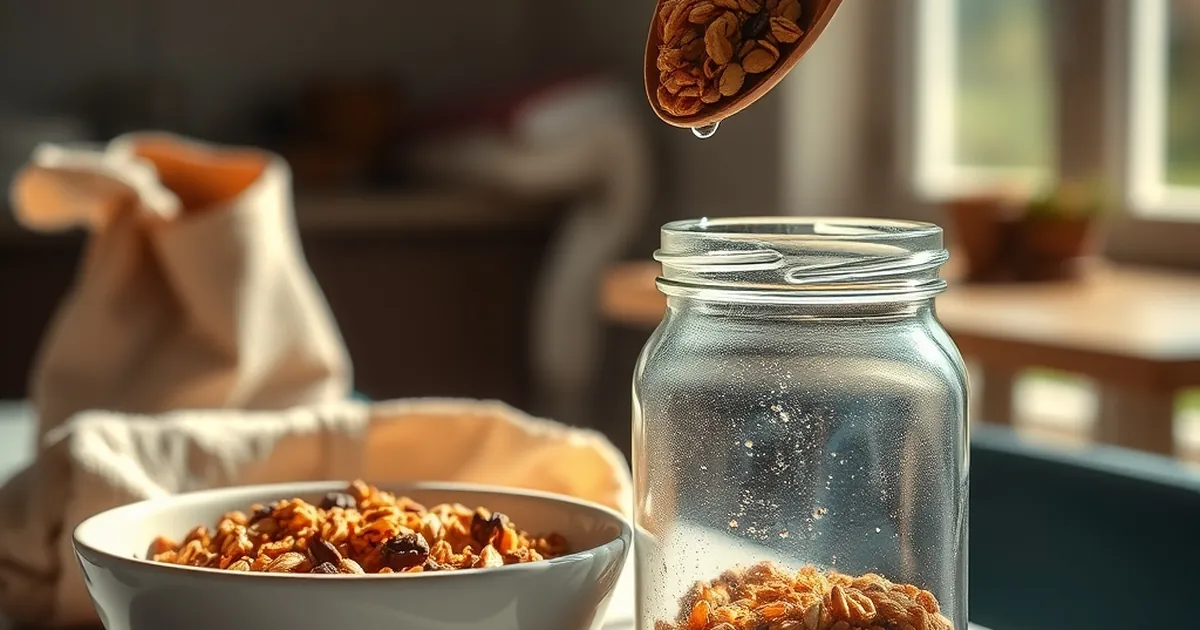
We’ve all been there: you crack open a fresh bag of granola, pour it over yogurt, and get that perfect, shattering crunch. Then, three days later, the same granola chews like stale cardboard. The culprit isn’t your imagination—it’s humidity. But here’s the weird part: the science of that lost crunch isn’t just about food chemistry. It’s a masterclass in how our brains process reward, risk, and disappointment. Why does a soggy oat feel like a personal betrayal, and what does that have to do with how you make decisions under uncertainty?
The Variable-Ratio Crunch
Psychologists call the gold standard of habit formation "variable-ratio reinforcement." It’s why slot machines (metaphorically speaking) keep people pulling levers—you never know when the reward will hit, so you keep trying. Your granola jar operates on a similar, albeit slower, schedule. Every handful offers a mix of soft raisins, hard almonds, and flaky clusters. The uncertainty of which bite will deliver the perfect crunch is precisely what makes the eating experience so satisfying.
When humidity strikes, it doesn’t just soften the oats. It flattens the reward variance. Every bite becomes uniformly chewy. And here’s the kicker: research by behavioral economist George Loewenstein shows that anticipated pleasure is often more intense than the pleasure itself. The possibility of a crunchy cluster is what your brain craves. Kill the possibility, and you kill the loop—even if the granola still tastes fine. You’re not just losing texture; you’re losing the thrill of the chase.
Loss Aversion at the Breakfast Table
Kahneman and Tversky’s loss aversion theory explains that losing something feels twice as bad as gaining the same thing feels good. That’s why a 40% drop in crunch feels like a 90% drop in quality. You didn’t just fail to get a good bite; you lost a good bite you had already mentally banked. This is the same psychological mechanism that makes you hold onto a fading avocado for two extra days, convinced it’s still salvageable.
Here’s a concrete example: a 2019 study in the Journal of Sensory Studies had participants rate identical granola samples, but half were told the product was "freshly roasted" while the other half was told it was "stored for two weeks." The "fresh" group rated crunchiness 38% higher—even though the samples were physically identical. Your brain doesn’t measure crunch; it measures expectation minus surprise. Humidity doesn’t just change the food; it changes the prediction error.
Risk-Taking in a Chia Pudding World
Now, let’s talk about competitive play. In any game of skill—say, a high-stakes pickleball match or a chess tournament—the players who win are those who recalibrate their strategy when conditions change. The same applies to your breakfast. When humidity hits, you have two options: accept the loss and eat sad granola, or adjust your approach.
The adaptive eater practices what psychologists call "risk re-framing." Instead of chasing the impossible crunchy cluster, you pivot to a different reward: mix the soggy granola into a warm oatmeal where softness becomes an asset, or toast it in a pan for three minutes to artificially restore the variable ratio. You’re not fighting the environment; you’re playing a new game with the same pieces.
The Crunch Restoration Protocol
Here’s your forward-looking move. Treat your granola like a risk portfolio, not a single asset. Store it in an airtight container with a silica gel packet (the kind you find in shoe boxes) to buy yourself a 72-hour humidity buffer. But more importantly, rebuild your reward anticipation deliberately. When you open a fresh bag, portion out single servings into small jars immediately. This creates a series of "mini-rewards" that preserve the variable-ratio excitement across the week.
And when the inevitable soggy day arrives? Don’t mourn the loss. Embrace the uncertainty—add a dollop of Greek yogurt and a sprinkle of flaky sea salt. The salt resets your sensory baseline, tricking your brain into detecting a new kind of crispness. You’re not settling for less; you’re diversifying your crunch portfolio. That’s not just good eating. That’s behavioral finance with breakfast.