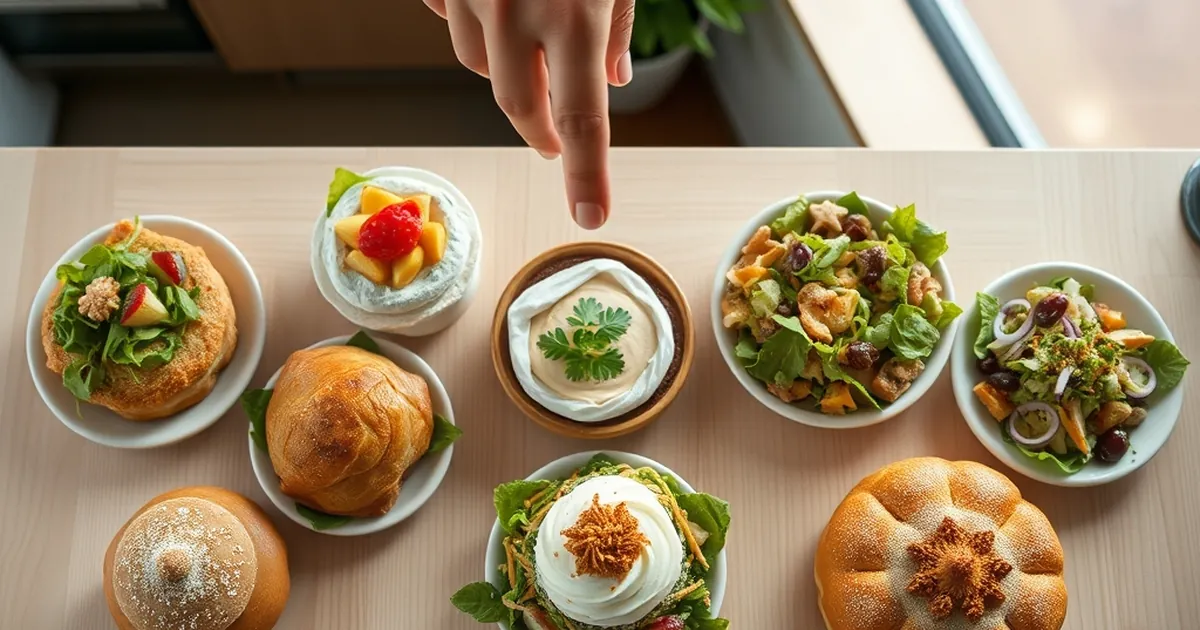
Walk into a café at 8 a.m. and you're facing a menu with seven espresso drinks, four milk options, and a pastry case that seems to multiply by the minute. Does that abundance make you happier, or does it just make you slower? The answer matters more than you'd think—and it has real consequences for how café owners design menus and how the rest of us order.
The Jam Study and the Cost of Plenty
The classic reference here is Sheena Iyengar and Mark Lepper's 2000 field experiment, often called the "jam study." Shoppers at an upscale grocery encountered a display of either 24 or 6 varieties of jam. The larger display drew more browsers—about 60 percent stopped versus 40 percent—but only 3 percent of those browsers bought a jar. At the smaller display, roughly 30 percent bought. Ten times the conversion, from a third of the attention.
The lesson isn't that choice is bad. It's that choice has a cost, and past a certain point the cost starts to outweigh the appeal. Seven options don't just feel like more freedom than three. They feel like more work.
What Your Brain Does With a Long Menu
Behavioral economists describe this as decision fatigue: the quality of your choices degrades as you make more of them. Each option requires evaluation, comparison, and a small act of self-control—should I get the oat milk latte or the cold brew?—and that effort is finite.
Daniel Kahneman's work on loss aversion adds a wrinkle. When you pick from seven drinks, you're not just choosing one; you're implicitly rejecting six. The imagined regret of picking wrong grows with the size of the field. That's why a long menu can leave you second-guessing a drink you'd have ordered without hesitation from a short one.
Why "90 Seconds" Is the Number That Matters
Here's where it gets practical. A 90-second difference between a seven-item and three-item decision sounds trivial until you put it in context: it's the gap between making your train and missing it, between a calm morning and a rushed one, between a line that moves and a line that stalls.
Think about the last time you stood behind someone staring at a menu board like it owed them money. That person wasn't indecisive by nature. They were doing arithmetic—comparing prices, calories, and the vague sense that they should try something new. Reduce the field and the arithmetic gets easier.
Cafés Are Already Catching On
Some of the sharpest operators have figured this out. A short "signature" list—three to five drinks the barista can make quickly and describe confidently—often outsells a sprawling board. It also shortens lines, which shortens waits, which makes the whole experience feel smoother. The menu shrinks; satisfaction grows.
There's a reward-loop angle too. A café that reliably delivers a good drink fast trains you to come back, because the reward is predictable. A café that makes you deliberate for two minutes trains you to associate it with friction. Predictability, not variety, is what builds the habit.
What to Do With This Tomorrow
Next time you're at a counter with too many options, try a simple rule: pick from the first three things that catch your eye and stop looking. You'll almost certainly be just as happy with the drink—and you'll have bought yourself a minute and a half.
For café owners, the forward-looking move is to treat menu length as a design decision, not a marketing one. Test a trimmed board for a month. Watch the line speed and the average ticket. You may find that fewer choices don't shrink your sales—they just make every decision, and every customer, a little lighter.