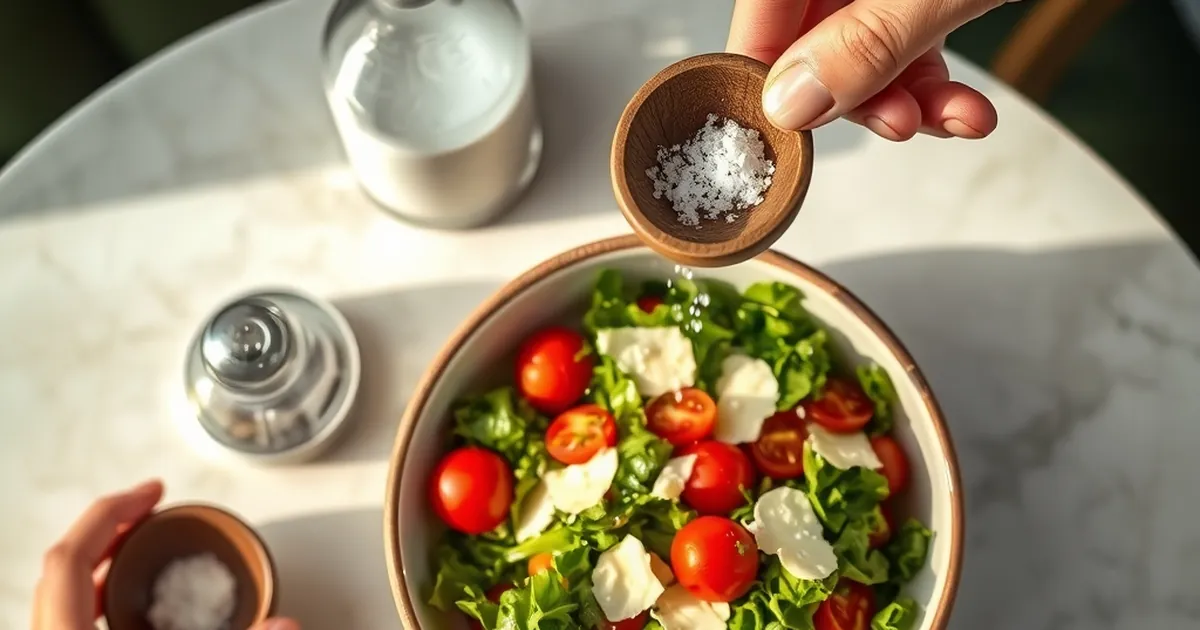
A pinch of salt on a wedge of watermelon. A crack of sea salt over a dark chocolate chip cookie. We've all had that moment where salt does something strange and wonderful to something sweet. So when a café salad lands on your table tasting flat, is salt really the secret to making it taste sweeter than a packet of sugar would?
Why Salt Reads as Sweetness on Your Tongue
Salt doesn't actually contain sugar, obviously. But it can behave like a sweetness booster because of the way your brain processes flavor.
Your taste receptors don't work in isolation. Sodium ions from salt suppress your perception of bitterness, which frees up your palate to notice the natural sugars already hiding in your food. That's why a tomato tastes sweeter with a little salt on it — the salt isn't adding sugar, it's removing the bitter notes that were masking it.
The Watermelon Test
Try this at home. Cut two slices of watermelon. Leave one plain, sprinkle a few flakes of salt on the other. The salted slice will taste noticeably sweeter, even though you added zero sugar.
That's the whole trick in a nutshell. Salt is a spotlight, not a sugar cube.
What Sugar Actually Does to a Café Salad
Here's where people get tripped up. Adding sugar to a salad — even a pinch — doesn't brighten the flavors the way salt does. It coats your tongue and mutes the sharper, more interesting notes: the peppery arugula, the tangy vinaigrette, the bite of raw red onion.
Sugar can rescue a dressing that's too acidic. A half-teaspoon of honey in a lemon vinaigrette balances things out beautifully. But sprinkled directly onto greens? It mostly just makes them taste dusty and sweet in a way that feels like an accident.
A Quick Story From the Counter
I watched a regular at our café once ask for sugar packets to sprinkle on her kale salad. She'd read somewhere that it made greens less bitter. She took one bite, made a face, and asked me for salt instead. Two pinches later, she was genuinely surprised. "It tastes like a different salad," she said. It basically was.
The Real Fix for a Flat-Tasting Salad
If your café salad tastes dull, salt is almost always the answer — but how you use it matters.
Salt the Components, Not Just the Top
Salt the tomatoes, cucumbers, and greens separately as you build the bowl. This lets the salt dissolve and distribute evenly instead of sitting in little crunchy clumps on the surface.
Use Flaky Salt for Finishing
Kosher or flaky sea salt gives you texture and a burst of salinity right at the end. A finishing salt is different from the salt you cook with, and it earns its place on a salad.
Balance, Then Taste Again
Salad dressing is a balance of fat, acid, salt, and a touch of sweetness. If it tastes flat, add salt. If it tastes harsh, add a drop of honey or maple. If it tastes heavy, add acid. Never add sugar to fix a salt problem.
What to Do at Your Next Café Visit
Next time a salad underwhelms you, reach for the salt shaker before the sugar bowl. Ask your server for flaky salt if they have it — good cafés usually do. Then taste, adjust, and notice how much sweeter everything seems without a single grain of sugar in sight. Your taste buds are doing more work than you think, and salt is the tool that lets them.