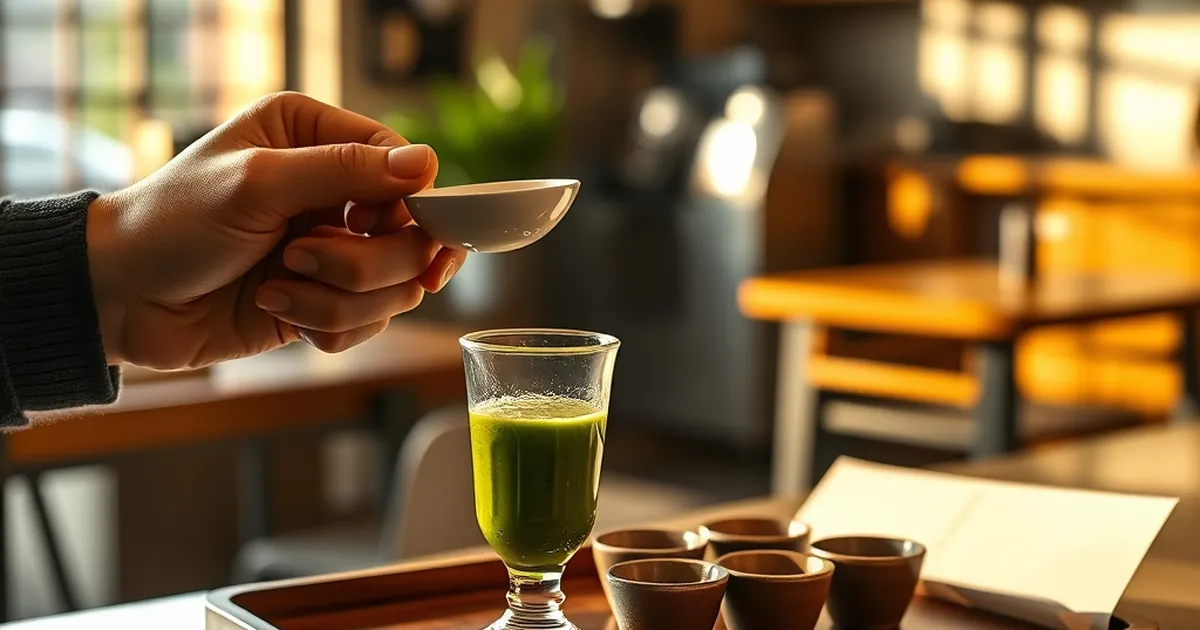
Walk into a busy café at 8:15 on a Tuesday and watch what happens at the counter. Some people order in under ten seconds; others stand there, eyes flicking across a menu board, locked in a small but real decision crisis. If free samples really do speed up orders three times faster than menus, the question isn't whether people like free food—it's why tasting something short-circuits a choice that reading a list turns into a chore.
A menu is a test; a sample is an answer
A menu asks you to predict the future. You read "smoked gouda and kale frittata" and try to simulate how it will taste, how heavy it'll feel at 9 a.m., whether you're the kind of person who orders that. That's a forecasting problem, and humans are famously bad at forecasting their own preferences—what researchers call affective forecasting. We misjudge how much we'll enjoy things, and we know it, so we stall.
A sample replaces the forecast with evidence. One bite of the frittata and the uncertainty collapses. You're no longer deciding whether you'll like it; you're deciding whether you want more of it, and that's a much faster question. This is why the sample-versus-menu gap shows up so reliably: it's not that the sample is persuasive, it's that it eliminates the cognitive work the menu demands.
Why uncertainty makes us slow, not careful
You might assume people linger over menus because they're being thoughtful. Often it's the opposite. Behavioral economists have documented that ambiguity—not just risk, but unknown odds—makes people freeze or defer. In café terms, a menu full of unfamiliar items is an ambiguity machine. The sample converts ambiguity into a known quantity in about four seconds.
There's a second effect working in the sample's favor: decision fatigue. By mid-morning, most customers have already made dozens of small choices. A menu adds one more comparison task to a depleted tank. A sample asks for a single yes-or-no reaction, which is roughly the cheapest decision the brain can make.
The variable-ratio thing (and why it's not what you think)
Cafés that sample a rotating item—today the lemon-olive oil cake, tomorrow the cold brew tonic—tap into something behavioral psychology has studied since B.F. Skinner: variable-ratio reinforcement, where rewards arrive on an unpredictable schedule. Unpredictable rewards tend to produce persistent, engaged behavior. The catch: this is about attention and return visits, not about getting people to order faster. Don't confuse the two. The speed comes from reducing uncertainty; the draw comes from the variability. They're separate mechanisms that happen to stack nicely.
What this means for how cafés design the counter
If the three-times-faster number holds up in your shop, the operational implications are concrete. Put the sample tray where the line forms, not at the register—let the tasting happen during the wait, so the decision is already made by the time someone reaches the counter. Sample the item you most want to move, and sample it in a portion small enough that it reads as a taste rather than a snack. Keep the menu, but treat it as a reference for regulars who already know what they want.
There's a loss-aversion angle worth watching too. Kahneman and Tversky showed that people weigh losses more heavily than equivalent gains, which is part of why a menu full of options feels risky—every choice is a chance to pick wrong. A sample removes the sense of risk entirely. Nobody regrets a bite they didn't pay for.
The forward-looking move for café owners is to start measuring this rather than assuming it. Time a hundred orders with samples out and a hundred without. Watch whether the sampled item's share of sales climbs. The interesting question isn't whether free samples work—it's how much of the effect comes from speed, how much from preference discovery, and whether a well-designed menu could ever close the gap.