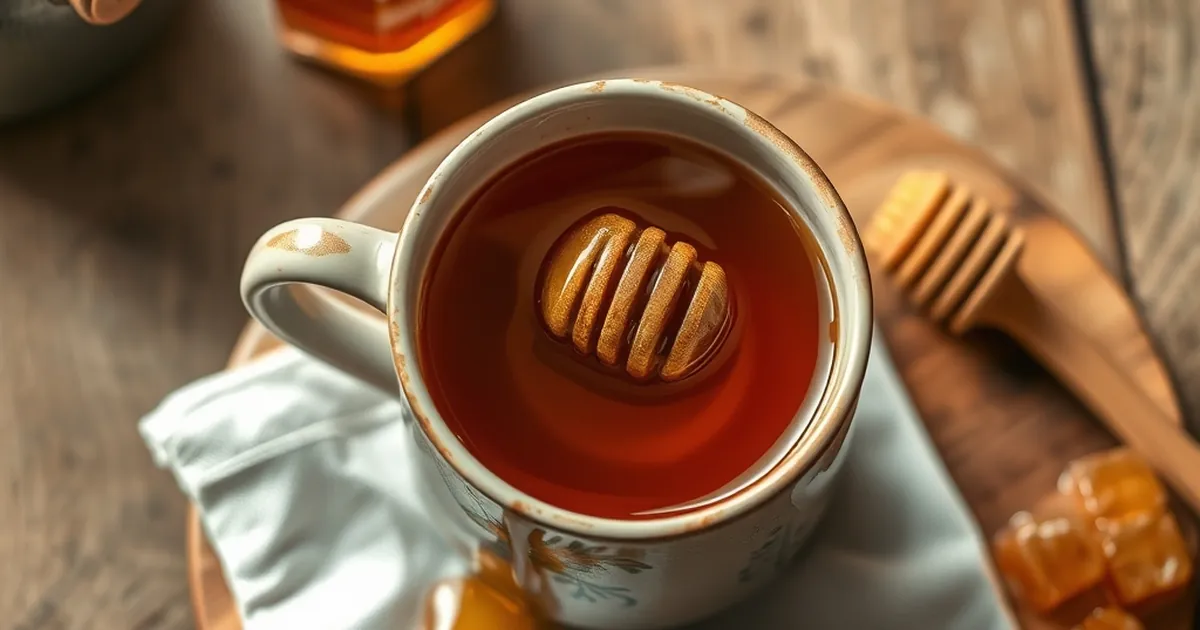
You know that moment when you’re stirring a spoonful of honey into your afternoon tea and you feel a tiny bit smug about skipping the sugar? That smugness is actually well-earned. But here’s the thing—honey is doing a lot more heavy lifting in that mug than just making your Earl Grey taste like a warm hug. We’re talking about a complex biological substance that changes how your body processes the tea itself, not just a liquid sweetener.
The real question isn't "is honey better than sugar?" It's "what is honey actually doing to my system that white sugar can't?" Let's break down the science and the flavor, because the answer is genuinely surprising.
The Chemistry of a Spoonful: It’s Not Just Fructose and Glucose
When you add refined sugar to tea, you’re adding empty calories—plain sucrose that spikes your blood sugar and fades fast. Honey, on the other hand, is a supersaturated solution of sugars, but it brings a whole entourage of compounds to the party. Raw honey contains trace enzymes, amino acids, B vitamins, and minerals like potassium and magnesium that are simply absent from the white stuff.
But the most fascinating part is the glycemic response. Because honey’s natural sugar profile is slightly more complex, your liver processes it differently, leading to a slower, steadier energy release. That means that 3 PM slump you get from a sugary latte? You’re far less likely to hit that wall after a honey-sweetened cup of green tea. It’s not a miracle, but it’s a metabolic difference you can actually feel.
The Heat Factor: Don’t Ruin the Good Stuff
Here’s where most people mess up. If you’re dumping honey into boiling water, you’re killing off the beneficial enzymes and some of the volatile aromatic compounds that give honey its character. The general rule of thumb is to let your tea cool for a minute or two before adding the honey. You still get the sweetness, but you preserve those delicate floral notes that make honey taste like a specific season or region, not just "sweet."
The Flavor Pairing That Changes Everything
Forget just "sweetening" your tea. Honey is a flavor modifier. It has its own terroir, just like wine. A light orange blossom honey will brighten a delicate white tea, while a dark buckwheat honey can stand up to a robust black breakfast blend. I had a customer last week who swore she hated chai until we swapped the sugar for a spoonful of wildflower honey—the spices mellowed out, and the honey’s woody undertones actually amplified the cinnamon and cardamom. It was a completely different drink.
That’s the secret: honey doesn't just mask bitterness; it balances it. The complex sugars in honey interact with the tannins in tea, softening that astringent, dry feeling on your tongue. This is why a mediocre tea can taste premium with the right honey. You’re not covering up flaws; you’re rounding them out.
A Quick Anecdote From the Café Counter
I remember a regular who always ordered a large English Breakfast with two sugars. One day we were out of sugar packets, and I offered him a taste of our local sourwood honey instead. He looked skeptical but agreed. The next week he came back and asked for "that honey stuff" again. He said it didn’t taste as "sharp" and that he didn’t get that weird aftertaste he usually got. He wasn't a foodie; he was just a guy who liked his tea. That’s the practical proof—it’s not just for health nuts.
The Takeaway: Upgrade Your Ritual, Not Just Your Cup
So, what should you do with this info? Don’t just swap the sugar for honey in the same old way. Treat it as an ingredient. Buy local raw honey if you can—it reflects the plants in your area and often contains pollen that can help with seasonal allergies. Start by adding a small spoonful to a milder tea like chamomile or a jasmine green, and really pay attention to the mouthfeel.
The future of your tea ritual is about intention, not just sweetness. Every time you stir that honey in, you’re adding a layer of complexity that sugar can never touch. So go ahead, let that spoonful sit in the warm water for a second, watch it swirl, and know you’re doing way more than just sweetening your drink. You’re flavoring your whole afternoon.