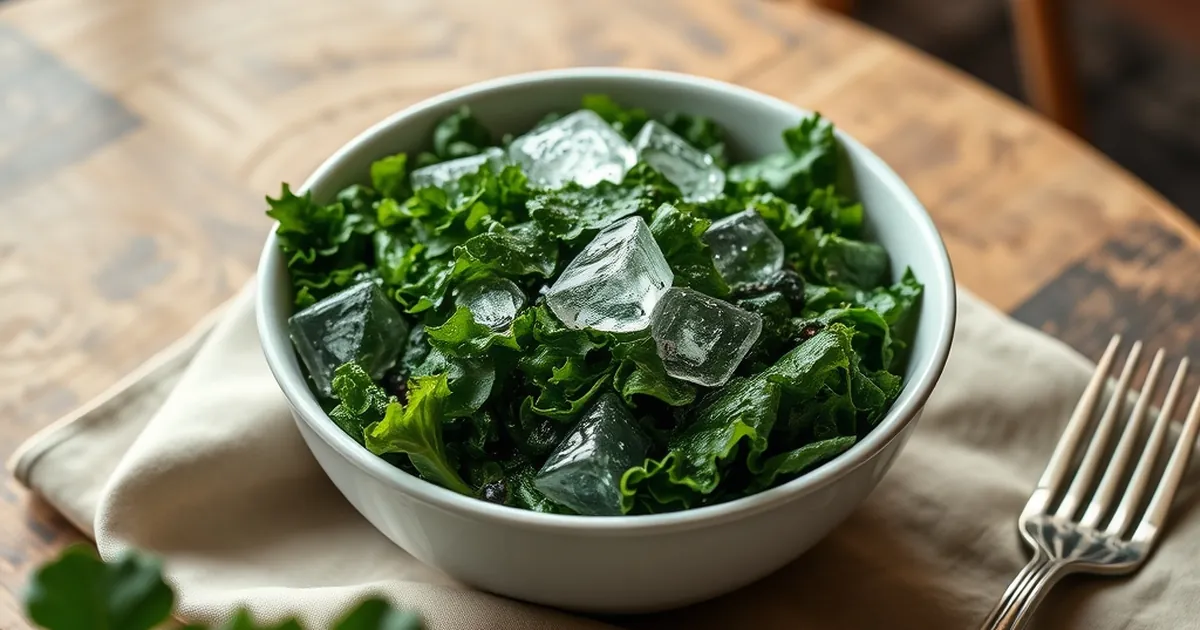
You've spent twenty minutes massaging kale, whisking a lemon dressing, and toasting almonds for the perfect lunch. Then you box it up, drive to the office, and by noon the leaves look like something you'd scrape off a lawnmower deck. What gives? If you've ever watched a gorgeous kale salad turn limp and sad in the fridge, there's a cheap, weird-sounding trick that actually works: toss a few ice cubes in the bowl.
Why Kale Salads Wilt in the First Place
Kale doesn't wilt the way spinach or arugula does. Those tender greens collapse fast because they're mostly water and thin cell walls. Kale is a sturdy brassica with thick, waxy leaves, which is exactly why it holds up to dressing and sitting overnight.
But sturdy isn't indestructible. Two things kill a kale salad: moisture loss from the leaves themselves, and dressing that slowly pulls water out of the cells through osmosis. Salt and acid in your vinaigrette are the culprits — they draw moisture out, and the leaves deflate from the inside.
The Osmosis Problem
Think of it this way. Your dressing is salty and acidic. The inside of a kale cell is not. Nature hates that imbalance, so water migrates out of the leaf and into the dressing pooled at the bottom of the bowl. The leaf loses its internal pressure, and that's the exact moment it goes from crisp to chewy-sad.
How Ice Cubes Actually Help
Here's the counterintuitive part: ice doesn't water down your salad into soup, and it doesn't make the leaves soggy — not if you use it right.
Ice keeps the leaves cold and, more importantly, keeps the air around them humid. A sealed container with a few cubes inside creates a tiny microclimate at nearly 100 percent humidity. The leaves can't lose moisture to air that's already saturated.
Cold Slows the Breakdown
Lower temperatures also slow the enzymatic activity that turns kale from bright green to olive drab. And cold firms up the cell walls, so the leaves hold their structure longer. That's why restaurant salad bars keep greens nestled over ice — it's not decoration.
I tested this last month with two identical kale salads. One went into a plain container, the other got three ice cubes tucked under the leaves. Four hours later, the plain one was limp and pooled with dressing. The iced one still crunched. The next day, the difference was even more obvious.
The One Rule You Can't Skip
Don't just dump ice on top and walk away. Nestle the cubes under the leaves or along the side of the container, and use a container with a lid. Ice sitting directly on the greens for hours can leave bruised, water-spotted patches. Also, if you're dressing the salad ahead of time, go lighter on the salt and acid than you normally would.
A Better Way to Pack a Kale Salad
Massage the kale with a little olive oil first — this coats the leaves and creates a barrier against the dressing. Keep the dressing in a separate small jar if you can, then toss at the last minute. Add the ice cubes, seal the lid, and refrigerate.
Crunchy toppings like almonds, sunflower seeds, or crispy chickpeas should always go in a separate bag. They're the first thing to go soft, and no amount of ice will save a soggy almond.
Try it with your next meal-prep batch. Pack two containers on Sunday — one with ice, one without — and taste them side by side on Wednesday. That little experiment will teach you more about how greens behave than any article can, and you'll never pack a kale salad the old way again.