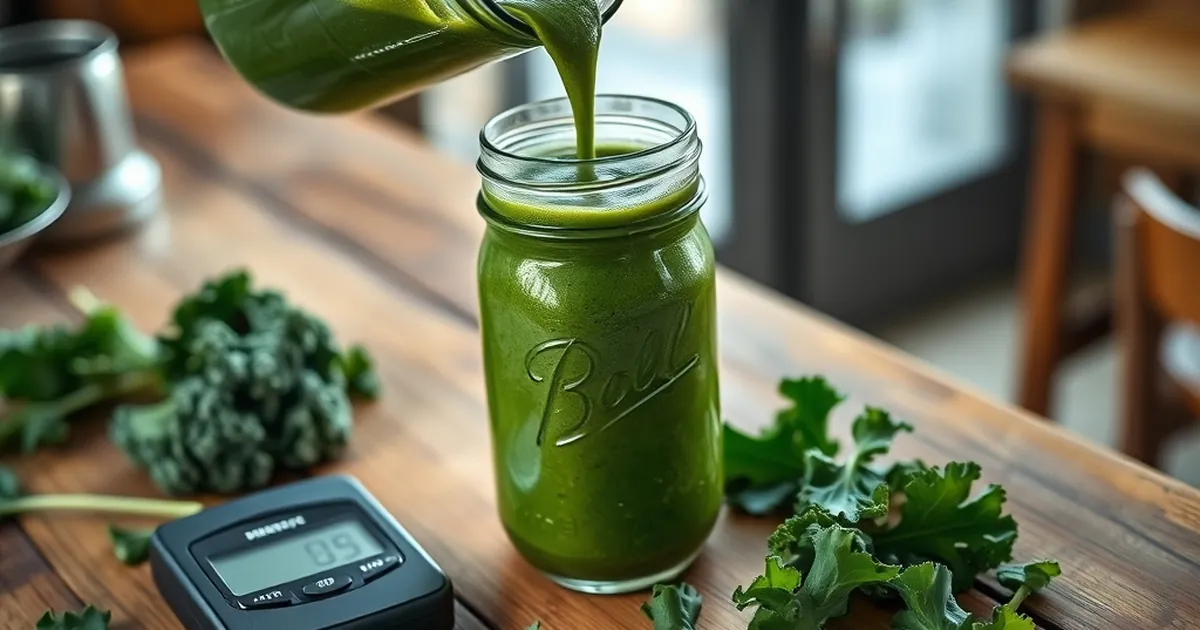
I’ve watched countless people dump a beautiful bunch of kale into a $600 blender, only to grimace at the glass two minutes later. They blame the machine, the recipe, or their own taste buds, but the real culprit is hiding in plain sight: the ratio of kale to everything else. You aren’t dealing with a blending problem; you’re dealing with a math problem where bitterness is the variable you forgot to solve for.
The good news is that you don’t need a chemistry degree or a new appliance to fix it. You just need to understand why kale turns aggressive in the first place, and then flip the numbers in your favor.
The Science of the Squeeze (and the Leaf)
Kale contains calcium oxalate and glucosinolates, which are fancy words for "plant defense mechanisms." When you chop or blend the leaves, you break cell walls, releasing these compounds, and that’s where the sharp, almost peppery bite comes from. It’s not a flaw in the kale; it’s the plant’s way of saying it doesn't want to be eaten.
Here’s the kicker: your taste receptors are incredibly sensitive to these compounds, but they can be easily fooled by volume and fat. A handful of kale in a cup of mango is a totally different experience than a cup of kale with a handful of mango. Most smoothie recipes fail because they treat kale like spinach, assuming a "handful" of greens is a safe bet. It’s not.
The 1:3 Rule That Saves Breakfast
I started using a simple benchmark in our café kitchen, and it works every single time: one part kale to three parts sweet or creamy base. That means if you use one cup of packed, chopped kale, you need at least three cups of combined fruit, banana, yogurt, or milk. This isn’t about hiding the kale; it’s about giving the bitter compounds a fair fight.
Think of it like salting a dish—you don't add salt to make food salty; you add it to make the other flavors pop. Here, the fruit and fat don't mask the kale; they balance it. The sweetness from a ripe banana or the creaminess from Greek yogurt coats the tongue and blocks those bitter receptors from firing at full strength.
The Texture Trap: Why Blending Longer Makes It Worse
I see people make the second mistake right after the ratio error: they blend for 90 seconds to "break down" the leaves. This is counterproductive. Over-blending creates friction and heat, which can actually accelerate the release of those bitter compounds. You aren’t smoothing out the taste; you’re infusing it.
The goal is to just break the leaves down enough to drink them, not to puree them into oblivion. I recommend pulsing the blender 5-6 times, then running it on low for just 15-20 seconds. You want a slightly textured smoothie, not a liquefied salad.
A Quick Fix for the "Too Late" Smoothie
If you already blended and it tastes like a lawn clipping, don't toss it. You can't un-blend it, but you can change the ratio post-blast. Add half a frozen banana and a tablespoon of almond butter directly into the blender, then pulse twice—do not run it on high. The fat in the nut butter and the cold temperature of the banana will instantly mute the bitter edge without watering down the drink.
The Takeaway: Stop Fighting the Leaf
The next time a smoothie tastes like regret, don’t look at the blender with suspicion. Look at your measuring cup. Adjust the ratio, respect the blending time, and you’ll find that kale isn’t your enemy—it’s just a very assertive friend who needs a little more company in the glass. Start with that 1:3 rule, and you’ll actually start craving the green stuff by Thursday.