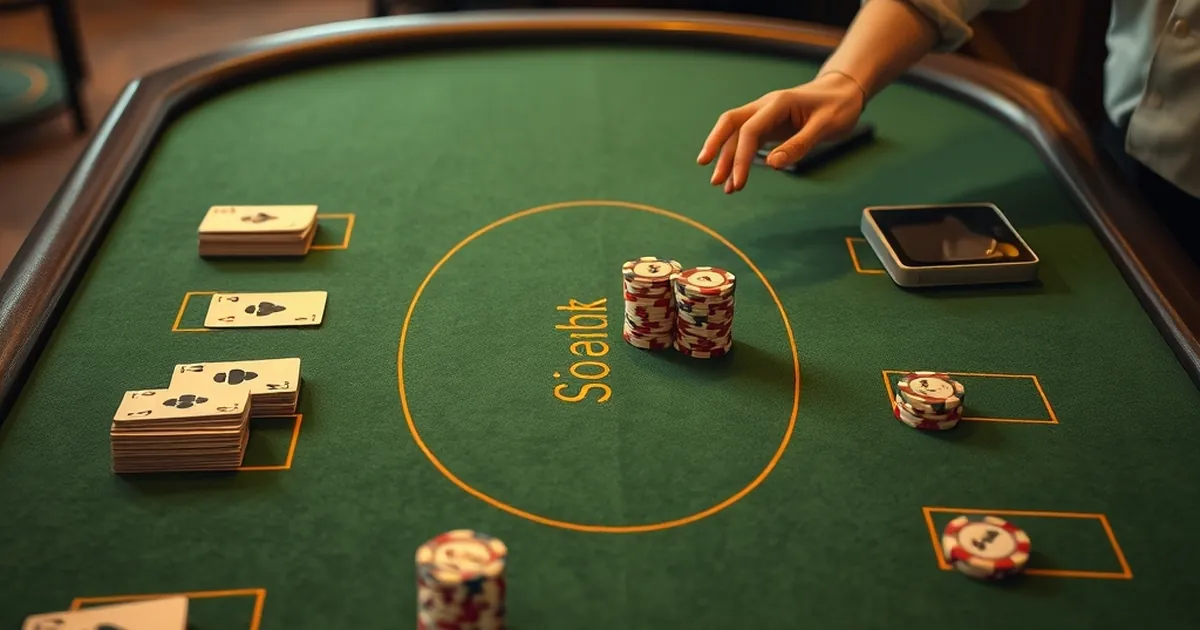
Live dealer blackjack tables that seat six players deal roughly 23% fewer hands per hour than heads-up or three-seat formats. That gap doesn't show up in the advertised RTP, because RTP assumes you play a certain number of hands. Fewer hands per hour means less money cycling through the table per session, which cuts both ways: smaller expected losses per hour, but also fewer chances to clear a bonus or grind out a playthrough requirement before you get bored and leave.
Where the 23% Comes From
The math is straightforward once you count the moving parts. A seven-seat live table with a physical dealer runs somewhere between 55 and 65 hands per hour under normal conditions. A single-player RNG table can push 200 or more. The live six-seat format lands in the middle, and the drop from a full table to a short one is almost entirely about dealing time.
Each round involves the dealer sweeping cards, resolving side bets, collecting and paying chips across six hands, and waiting on the slowest player to act. On a busy table, one person splitting a pair and taking 40 seconds to decide costs everyone else a hand. Multiply that across a session and the 23% figure holds up: a six-seat table deals about 48 to 52 hands per hour versus 62 to 68 at a three-seat or heads-up live table.
Why It Matters More Than RTP
Blackjack's house edge is fixed by the rules — dealer stands on soft 17, blackjack pays 3:2, double after split allowed or not. What changes with seat count is your exposure. At $25 a hand, 50 hands per hour is $1,250 in action; 65 hands is $1,625. At a 0.5% edge, that's $6.25 versus $8.13 in expected loss per hour. Small numbers, but they compound over a three-hour session and they matter enormously if you're trying to clear a wagering requirement on a live dealer bonus.
The Bonus Problem Nobody Mentions
Live dealer games are frequently excluded from bonus wagering, and when they aren't, they're often weighted at 10% or less. If you find a live blackjack bonus that counts, the slower six-seat deal works against you. A $500 playthrough at $25 a hand needs 20 hands minimum if you're counting only the bonus, but with a 10% weighting you're looking at 200 hands of real play. At 50 hands per hour, that's four hours of table time. At a heads-up live table, closer to three.
That's the trade-off: the six-seat table gives you a more social, more realistic casino feel, and it costs you throughput.
What to Actually Do With This
If you're playing for entertainment and a fixed bankroll, the slower deal is a feature. Your money lasts longer, the variance per hour is lower, and you're less likely to tilt through 300 hands in an evening. If you're grinding a bonus or testing a strategy, look for three-seat or heads-up live tables — most major studios now offer both, and the rules are usually identical.
One caveat: hand counts vary by studio and by time of day. A six-seat table at 2 a.m. with three occupied seats deals faster than the same table at 9 p.m. full. If you're timing sessions, watch the actual pace for ten minutes before you commit.
The open question is whether studios will start advertising hands-per-hour the way they advertise RTP. Right now you have to count it yourself — and most players don't.