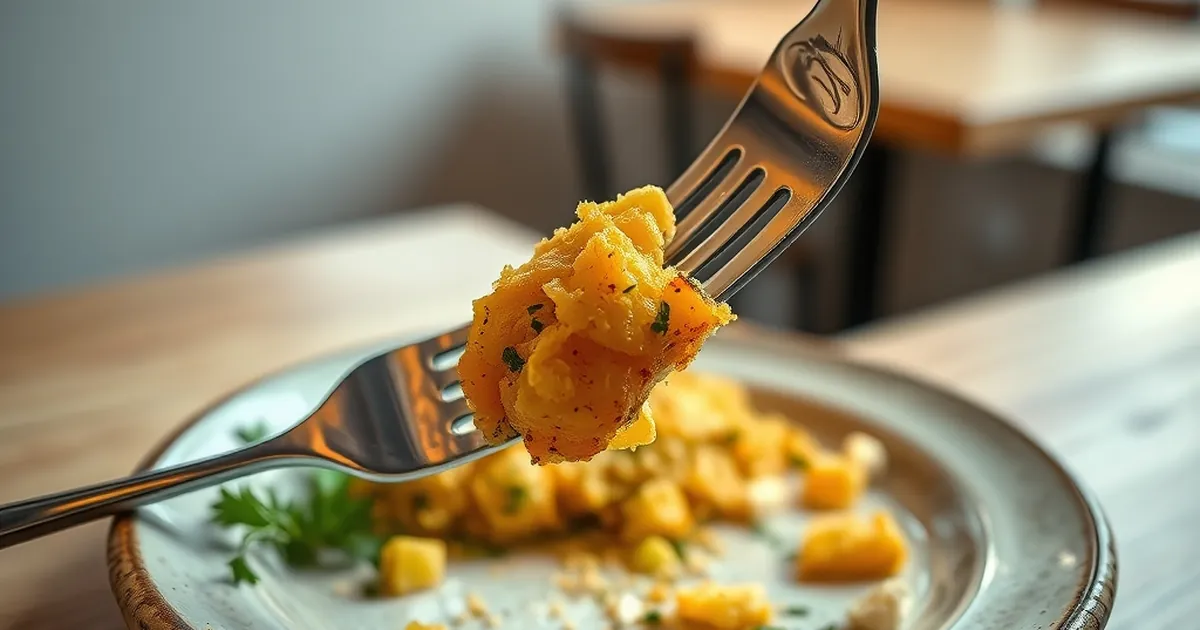
Why does the first bite of a crisp apple or a just-fried tortilla chip taste so much better than the fifth? And why, once you hit that fifth bite, do you keep going anyway? There's a real split happening between what your brain registers as new and what your mouth registers as texture, and understanding that split changes how you build a plate, a menu, or a snack drawer.
Novelty Burns Off Fast
Behavioral economists have a name for the way pleasure from a repeated stimulus declines: hedonic adaptation. You notice it in the lab as "sensory-specific satiety," a term researchers at Penn State and elsewhere have used for decades. The gist is that your enjoyment of a specific flavor drops steeply after just a few bites, even if you're still hungry. The first bite is a signal. The third bite is a memory of a signal.
This is why a tasting menu works and a giant bowl of the same pasta doesn't. Your reward system is tuned to change, not to volume. The dopamine response is tied to prediction error — the gap between what you expected and what you got. Once the flavor is predicted, the gap closes, and the reward fades.
Crunch Doesn't Adapt the Same Way
Here's the part that surprised me. Texture doesn't seem to flatten out the way flavor does.
A 2011 study in the journal Appetite found that people rated foods as more filling and more satisfying when they were crunchy or had a more complex texture, even when the flavor was identical. Other work on "oral processing" has shown that the sound and resistance of a crunch keeps attention on the food longer. You're not just tasting — you're hearing and feeling each bite.
Think about a bag of good kettle chips versus a bowl of soft bread pudding. The pudding's flavor might be objectively better on bite one. By bite four, the chips are still winning, because every chip delivers a small acoustic event. Your brain can't fully predict a crunch the way it predicts a flavor.
Why this matters for a café
If you run a healthy café or you're just trying to eat better without white-knuckling it, this is actionable. A salad with toasted seeds, shaved fennel, and a few chickpeas keeps your attention longer than a smoothie bowl with the same calories. Same nutrition, different reward curve.
The Reward Loop You Actually Want
Variable-ratio reinforcement — the classic finding from B.F. Skinner's work — says that unpredictable rewards drive the most persistent behavior. You don't need to engineer a slot machine in your lunch. But a bowl where some bites have a toasted almond and some don't is literally a variable-ratio schedule. Your fork keeps moving because the next bite might be the good one.
The trap is the opposite: ultra-smooth, ultra-consistent foods. Ice cream, milkshakes, soft pastries. Zero texture variance means zero prediction error, which means the reward fades fast — and you eat more chasing a hit that isn't coming.
Loss Aversion on the Plate
Kahneman and Tversky's loss aversion work adds a wrinkle. People feel losses roughly twice as strongly as equivalent gains. On a plate, the "loss" is the end of a pleasant texture. When you're eating something crunchy, finishing the bowl means losing the crunch. That mild anticipated loss keeps you engaged in a way that finishing a soft food doesn't.
What to Do With This Tomorrow
Build texture into the first three bites and the last three. Add something that snaps, something that pops, something that needs chewing. Roasted chickpeas, raw jicama, toasted nori, a scatter of pomegranate seeds. You're not tricking yourself — you're giving your reward system something to actually track.
Then notice what happens when you switch from a smooth breakfast to a crunchy one. Most people report eating less and feeling more satisfied, and the mechanism isn't willpower. It's that the food finally has somewhere to go in your attention.