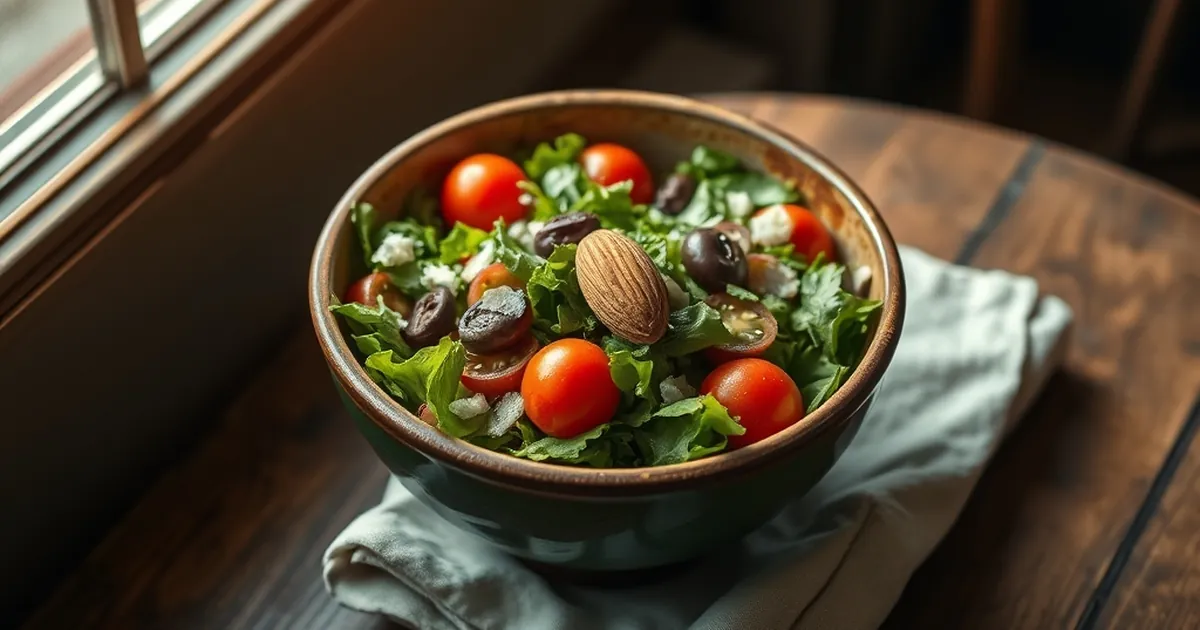
You're standing at the salad bar, and everything looks the same as it did last Tuesday. Greens, chickpeas, a sad pile of shredded carrot. So why does one bowl leave you satisfied and the other leaves you hunting the pantry an hour later? It might come down to a single almond.
Not literally one nut, of course. But the small, deliberate choices we toss in — the fat, the crunch, the acid, the salt — are what separate a bowl you tolerate from a bowl you actually crave. Let me show you what I mean, because this changed how I build lunch.
A Bowl Is a Balance Sheet, Not a Checklist
Most people build salads like they're filling out a form: some lettuce, some protein, a dressing. That gets you a technically complete meal and a completely forgettable one.
A great bowl balances four things at once — fat, acid, salt, and crunch. Miss one and your brain notices, even if your taste buds can't name it.
Here's the thing about that almond. On its own, it's just a nut. In the bowl, it's doing three jobs: it adds fat that helps you absorb vitamins from the greens, it adds texture so every bite isn't mush, and it adds a toasty flavor note that makes the whole thing feel intentional.
The Fat-Soluble Vitamin Trick
Dark leafy greens are loaded with vitamins A and K, but your body needs fat to actually absorb them. A study from Iowa State University found that adding fat to a salad bumped carotenoid absorption significantly — in some cases several times over.
So the almond isn't decoration. It's the difference between eating nutrients and absorbing them. A drizzle of olive oil does the same job, which is why fat-free dressing is one of the saddest inventions in American lunch history.
The Crunch Problem Nobody Talks About
Texture is the most underrated part of healthy eating. We talk endlessly about macros and calories, but we rarely talk about whether a meal is pleasant to eat.
Soft foods get boring fast. When every bite has the same resistance, your mouth stops paying attention, and you start eating on autopilot. That's when you finish the bowl and immediately wonder what else is in the fridge.
Build in Three Textures, Minimum
Try this rule: one creamy element, one crisp element, one chewy element. Roasted sweet potato (creamy), sliced cucumber (crisp), toasted almonds (chewy-crunchy).
I learned this the hard way. For months I ate a kale-and-quinoa bowl that was nutritionally perfect and emotionally bleak. I added toasted almonds and a handful of pickled onions and suddenly I was making it three times a week. Same ingredients, different bowl.
Acid Is the Quiet Hero
If your salad tastes flat and you can't figure out why, you're probably missing acid. Lemon juice, vinegar, pickled anything — it wakes up everything else.
A squeeze of lemon over greens does more than a heavy pour of ranch ever will. It cuts through fat, brightens bitter greens, and makes the whole bowl taste fresher than it is.
Keep a jar of quick-pickled red onions in your fridge. Thinly slice an onion, cover it with vinegar and a pinch of salt, and let it sit. Twenty minutes minimum, a week ideally. You'll use them on everything.
What to Do Tomorrow
Before you build your next bowl, do one thing: taste it before you sit down. If it's missing something, you'll know within a second. Nine times out of ten, it's acid or salt. The tenth time, it's crunch.
Then add the almond. Or the pumpkin seed, or the toasted walnut, or whatever has a little fat and a little snap. It's a two-second decision that changes how the entire meal lands — and how long you stay full afterward.
Build bowls you actually want to eat. That's the whole game.