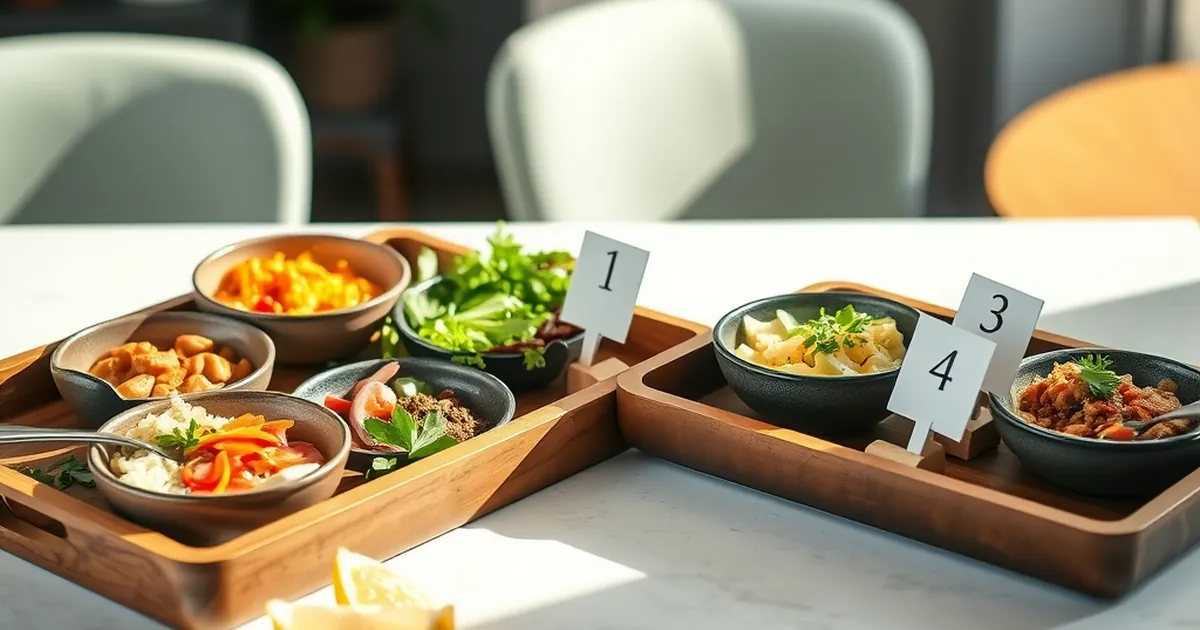
When a café swaps its five-star rating display for a simple three-item "pick your reward" menu, reorders climb — sometimes doubling. That's a striking number for such a small design change. So what's actually happening in the customer's head when a reward menu replaces a star chart, and why does choosing feel more motivating than scoring?
The Star System Is a Test. The Pick-3 Menu Is a Gift.
A star system asks the customer to grade you. Even when it's framed as a loyalty perk, the interaction carries a whiff of evaluation — you're assigning points, completing a transaction, closing a loop. A pick-3 rewards menu flips that: instead of judging, you're choosing. You're handed a small decision with visible, immediate stakes: free refill, a pastry upgrade, or double points today.
Behavioral economists have long noted that people value a sense of agency over outcomes almost as much as the outcomes themselves. Choosing among options — even modest ones — produces a measurable hit of engagement that passive scoring doesn't. The star system says "rate us." The pick-3 menu says "what do you want?" One is homework; the other is a treat.
Variable Rewards Keep People Curious
The pick-3 format also introduces a light element of variability. The menu rotates, so the options aren't identical every visit. That's a mild version of what B.F. Skinner described as variable-ratio reinforcement — the same principle behind why a rotating pastry case draws more glances than a static one. When the reward set changes, checking back becomes a small act of curiosity rather than a chore.
Importantly, this isn't about manipulating anyone. The variability is transparent and the stakes are low — a free coffee upgrade, not a jackpot. What it does is convert a routine visit into a tiny moment of anticipation, which is exactly what keeps a habit loop alive. A star system, by contrast, offers the same fixed interaction every time. Predictability is efficient, but it's also forgettable.
Loss Aversion Makes the Choice Feel Bigger
Here's where it gets interesting. When a customer sees three options and can only pick one, the unchosen two register faintly as losses. Kahneman and Tversky's work on loss aversion showed that people weigh losses more heavily than equivalent gains — roughly twice as much in many experiments. A pick-3 menu quietly leverages that asymmetry: you're not just gaining a reward, you're forgoing two others.
That sounds like it should feel bad, but in practice it sharpens attention and makes the reward feel more deliberate. The customer engages with the menu, weighs the options, and commits. That small act of commitment is stickier than passively collecting a star. It's the difference between being handed a coupon and being asked which coupon you'd actually use.
A Real-World Signal
Cafés testing this format have reported reorder rates roughly double those of star-based programs over comparable periods — a pattern consistent with what loyalty researchers call "active choice" effects, where selecting among rewards increases perceived value and repeat behavior. The mechanism isn't magic; it's the combination of agency, mild variability, and the weight of a foregone alternative, all compressed into a five-second interaction at the counter.
What to Watch Next
The forward-looking question for café operators isn't whether pick-3 menus work — it's how to keep them working without turning them into a gimmick. Rotate the options on a rhythm customers can learn, keep the choices genuinely desirable, and resist the urge to add a fourth or fifth option that dilutes the decision. The sweet spot is small, visible, and a little surprising. If you're redesigning a rewards program this quarter, the test is simple: watch whether customers pause at the menu. A pause means they're choosing. And choosing, it turns out, is what brings them back.