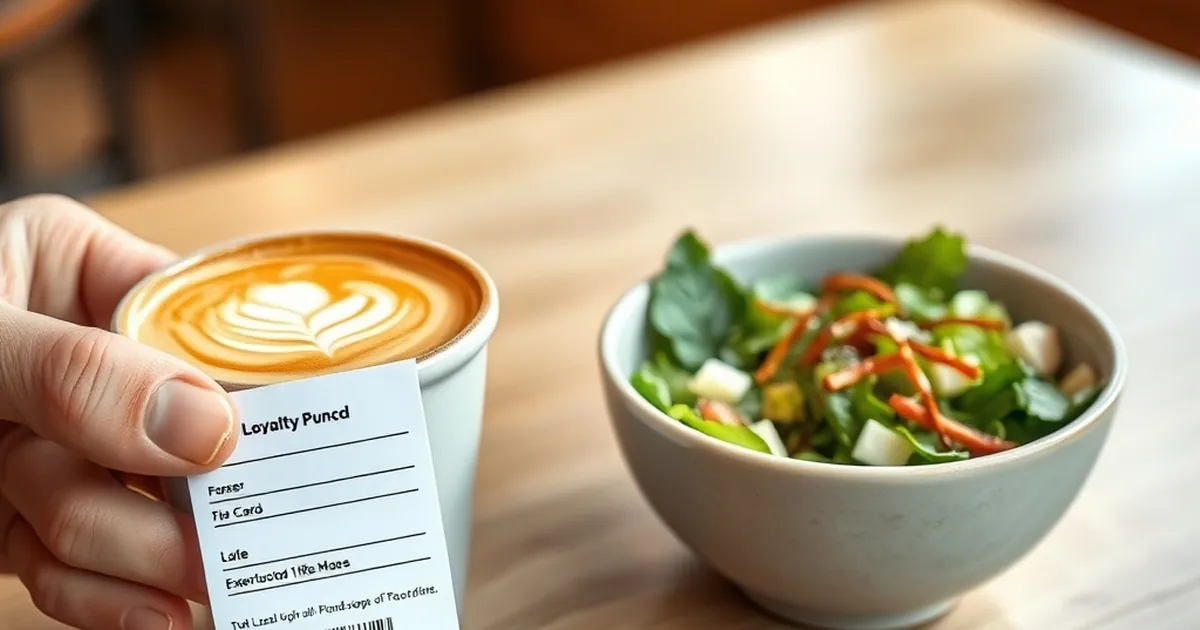
Why does a free latte on your fifth visit feel more satisfying than a dollar off every single time? Café owners have experimented with both for years, and the pattern keeps showing up: punch cards that reward a visit later beat instant cash discounts on both redemption rates and how good the reward feels. The interesting part isn't the loyalty math — it's what this says about how our brains handle effort, delay, and reward.
The Punch Card Is a Progress Bar for Your Brain
A buy-four-get-one-free card isn't just a discount in disguise. It's a visible record of accumulated effort. Every punch marks a decision you already made, and the card turns those scattered decisions into something that looks like a goal.
Behavioral economists call the underlying pull the goal-gradient effect: people accelerate their behavior as they approach a finish line. The classic demonstration is a 2006 study by Ran Kivetz, Oleg Urminsky, and Yuhuang Zheng on coffee cards. Customers with a 12-stamp card (two already filled in) bought coffee more frequently than customers with a 10-stamp card starting empty — even though both required ten purchases for a free drink. Being partway there changed their behavior, not the size of the reward.
That's the first edge over cash back. A dollar off is a transaction that ends the moment it's done. A punch card is an unfinished story.
Cash Discounts Disappear Into the Noise
Here's the uncomfortable truth about instant rewards: they're easy to ignore. A fifty-cent discount on a five-dollar coffee registers faintly, blends into the price you already expected, and vanishes from memory by lunch.
A free drink, by contrast, is a discrete event. It's a $5-ish gift arriving on a specific Tuesday, tied to a specific habit. In behavioral terms, the cash discount gets mentally accounted as a slightly cheaper coffee. The punch card reward gets accounted as winning something — and that framing survives the week.
There's a loss-aversion angle too. Once you've got four punches on a card, an unpunched visit feels like leaving something on the table. Kahneman and Tversky's work on loss aversion suggests that losing a punch you'd earned stings more than gaining one pleases — which is exactly the asymmetry a card exploits, gently.
Delay Is the Feature, Not the Bug
Our instinct says rewards should arrive fast. But a short delay does something useful: it lets anticipation do work. The fifth-visit reward is mildly uncertain in timing — you know it's coming, you don't know exactly when you'll next walk in — and that gap keeps the reward mentally alive between visits.
This is the same machinery behind variable-ratio reinforcement, the schedule B.F. Skinner found produces the most persistent behavior. Café cards aren't random, and they shouldn't be — fairness matters. But the small unpredictability of when you'll complete the card borrows just enough of that persistence without turning your morning coffee into a compulsion. The line between a nudge and a trap is real, and a well-designed card stays on the right side of it.
Where This Leaves Your Next Café Visit
If you run a café, the practical takeaway is to make progress visible and the reward concrete — a named drink, not a percentage. If you're a customer, pay attention to which rewards actually change your behavior. A punch card that makes you want to return is doing something a discount can't; a punch card that makes you feel obligated is a different animal, and worth noticing.
The genuinely interesting question for the next few years is what happens when digital cards get smarter — personalized rewards, streaks, surprise bonuses. The psychology that makes the paper card work will scale right along with it. Whether that's used to build genuine habits or just extract more visits is a design choice, and increasingly, a public one.