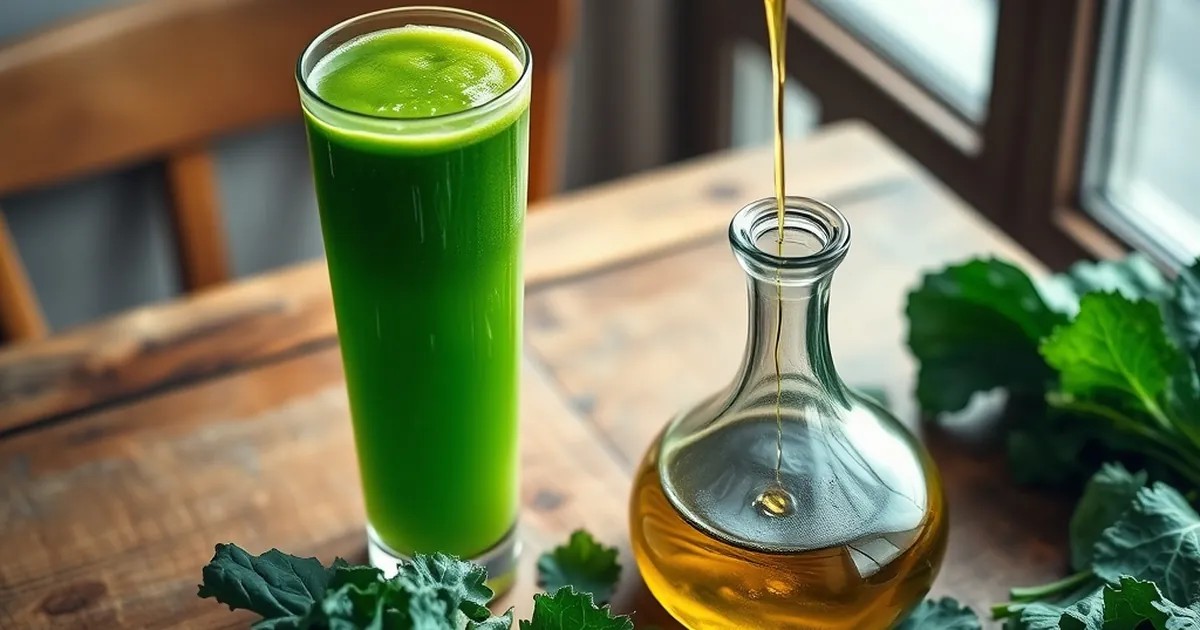
I used to drink my morning green juice on an empty stomach and wonder why I was starving by 9:30 a.m. — shaky, irritable, and hunting for a bagel. Then a nutritionist friend told me to add a tablespoon of olive oil to the blender. That single change made my juice feel like an actual meal instead of a sugar bomb in a mason jar. So what's really going on when fat meets green juice?
Why Green Juice Spikes Your Blood Sugar
Here's the uncomfortable truth: juicing strips away most of the fiber that keeps fruit sugar from hitting your bloodstream all at once. Blend a green apple, a banana, and a handful of pineapple, and you've basically made a glass of candy with a health halo.
Your body breaks that liquid sugar down fast. Glucose and fructose flood in, your pancreas pumps out insulin, and you get that quick lift followed by the crash. For anyone watching their blood sugar — or just tired of the mid-morning slump — that's a real problem.
Fiber is the brake pedal. Remove it, and the sugar train has no brakes at all.
How Olive Oil Changes the Equation
Fat slows gastric emptying, meaning your stomach releases that juice into your small intestine more gradually. Instead of a sugar wave, you get a slow trickle. That's the whole trick.
Olive oil also triggers a hormonal response that works in your favor. When fat hits your digestive tract, your body releases cholecystokinin (CCK), a hormone that promotes satiety and steadies the pace of glucose absorption. You feel fuller longer, and your blood sugar curve flattens out.
The Research Behind Fat and Blood Sugar
This isn't folk wisdom. Studies on meal composition consistently show that adding fat to a carbohydrate-heavy meal lowers the post-meal glucose spike compared to eating the carbs alone. A 2015 study in the Journal of Nutrition found that adding fat to a meal reduced postprandial glucose response in healthy adults.
A Real-World Example
My client Dana, a teacher in her forties, drank a fruit-heavy green juice every morning for years. She'd crash during her second-period class and raid the vending machine by 10 a.m. We added a tablespoon of extra-virgin olive oil and a scoop of chia seeds to her usual recipe. Two weeks later, she told me she'd stopped thinking about food until lunch. Same juice. Different fat.
Which Olive Oil — and How Much?
You want extra-virgin olive oil, not the refined "light" stuff. EVOO retains polyphenols and oleocanthal, compounds tied to anti-inflammatory benefits. The flavor also matters — a peppery, grassy oil actually tastes good against tart greens.
Start with one tablespoon per 12–16 ounces of juice. That's roughly 120 calories, which is a fair trade for stable energy. If you're new to this, begin with a teaspoon and work up.
A Quick Recipe to Try
Blend: 2 cups spinach, 1 celery stalk, half a cucumber, half a green apple (not a whole one), juice of half a lemon, 1 tablespoon EVOO, and a pinch of sea salt. Add water or coconut water to thin it out. The salt and lemon keep it from tasting like salad dressing.
What to Do Tomorrow Morning
Grab your olive oil before you grab your blender. Pour a tablespoon into the pitcher first, so it emulsifies evenly instead of pooling on top. Then sip slowly — this isn't a chugging contest.
If you take blood sugar medication or have a history of pancreatitis, check with your doctor before making fat a regular part of your morning routine. For everyone else, this is one of the easiest upgrades you can make to a juice habit. Your 10 a.m. self will thank you.