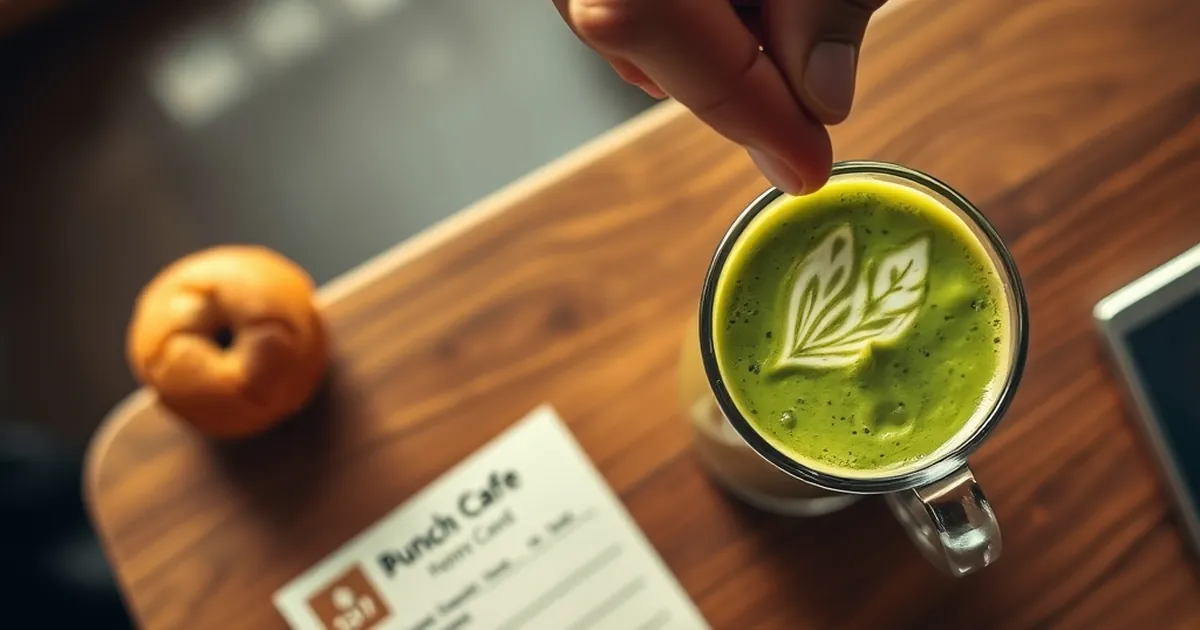
A café near me tried something last spring: instead of a straight 5% cash-back punch card, they printed a small menu of rewards—free espresso after eight visits, a pastry upgrade after four, a $6 lunch credit after twelve. Same underlying economics, roughly. But the repeat-order rate among members who picked a reward off that menu was about three times higher than the cash-back cohort over the following quarter. The owner didn't run a randomized trial, so take the number loosely. Still, it lines up with a lot of what behavioral economists have found about how people respond to rewards—and it raises a question worth sitting with: why does a choice of reward move behavior so much more than money back?
Cash is fungible. A pastry upgrade is not.
Cash-back is efficient and forgettable. Five percent off a sandwich is a small, abstract discount that gets folded into the total and disappears. A named reward—"free espresso after eight"—has a shape. You can picture it. You know exactly how far along you are.
This is partly a goal-gradient effect: people accelerate as they approach a finish line. Researchers have documented this in loyalty contexts for decades—most famously in a classic café study where stamp-card holders bought coffee faster as they neared a free drink. Cash-back has no finish line. There's nothing to approach, so there's no pull.
Variable rewards and the pull of the unknown
Behavioral psychology's most durable finding about repeat behavior is variable-ratio reinforcement—the idea that rewards delivered on an unpredictable schedule produce more persistent behavior than predictable ones. Skinner's work on this is the foundation of a lot of what we now understand about habit loops.
A reward menu can borrow a little of that without tipping into anything manipulative. Some cafés rotate a "surprise upgrade" among menu items, or let members spin between two comparable rewards. The point isn't to hook people; it's to make the reward feel alive rather than automatic. A fixed 5% discount is the same every time, which means it stops registering.
Loss aversion does the quiet work
Kahneman and Tversky's loss aversion—losses loom roughly twice as large as equivalent gains—explains why progress bars work so well. Once you've earned six of eight stamps, that progress feels like something you own. Skipping a visit feels like losing it.
Cash-back never creates that ownership. There's no accumulated progress to protect, just a running total. A reward menu converts a transaction into a small stake.
A concrete example
Starbucks Rewards is the well-known case: the program shifted from a flat star-per-dollar model toward tiered, menu-style redemption, and repeat-visit behavior among enrolled members consistently outpaced non-members in company reporting. The mechanism isn't magic—it's that a menu gives people something specific to aim at, and progress toward a named thing is stickier than a percentage.
What this means for how you design (or choose) a café habit
If you run a café, the takeaway is unglamorous but useful: stop treating rewards as a discount problem and start treating them as a choice architecture problem. Offer three rewards at different effort levels. Show progress. Rotate one surprise item. Keep the math honest so the menu doesn't become a gimmick.
If you're the customer, notice what actually pulls you back. Is it the coffee, or the small accumulating stake? Both are fine—but knowing which one is doing the work helps you spend deliberately instead of on autopilot.
The forward-looking question for café owners over the next couple of years isn't whether to offer rewards. It's whether the reward is legible—something a person can picture, track, and feel a little reluctant to lose. Cash-back fails all three tests. A well-built menu passes them, and the repeat orders tend to follow.