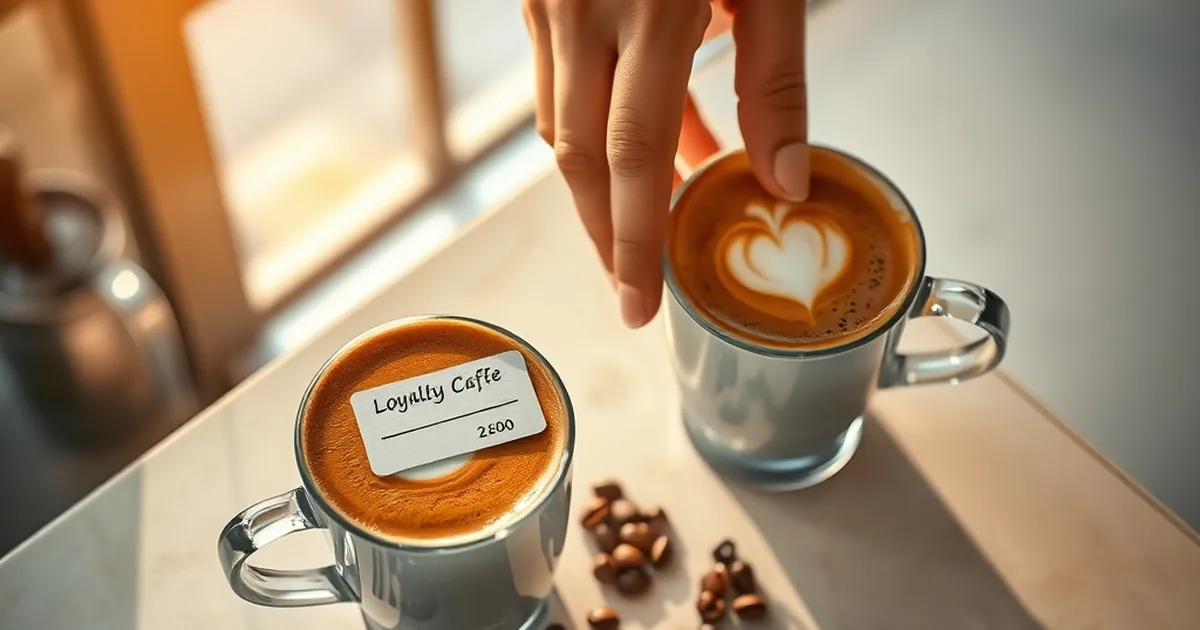
Why does the tenth coffee taste better than the first? Not the flavor — the feeling. There's a small, specific pleasure in handing over a fully stamped card and walking away with a drink that registers as free, even though you paid for it across nine previous visits. The math is obvious. The psychology is not. What exactly is happening in your brain at that moment, and what does it mean for how we think about eating well?
The Punch Card Is a Slot Machine With Better PR
Behavioral psychologists have a name for the engine inside a loyalty card: variable-ratio reinforcement. B.F. Skinner mapped this out in the 1950s — behavior that gets rewarded unpredictably tends to persist longer than behavior rewarded every single time. Cafés rarely give you a free drink on visit three or seven. You don't know exactly when the payoff lands, and that uncertainty keeps the card in your wallet instead of the trash.
Then there's the framing trick. Richard Thaler's research on mental accounting shows we sort money into separate psychological buckets. The $5 you spent on Tuesday's latte went into the "groceries" bucket. The free drink on Saturday comes out of a different bucket entirely — the one labeled gift. Same five dollars. Different feeling.
Loss Aversion, Applied to Foam
Daniel Kahneman and Amos Tversky's work on loss aversion found that losses sting roughly twice as much as equivalent gains feel good. A half-stamped card isn't a neutral object. It's a small asset you'd hate to waste. Abandoning it after seven stamps means admitting you lost seven stamps — and your brain weights that loss heavily.
This is why the barista says "you're only two away" instead of "you've earned seven." Same fact. The first phrasing points at what you'd lose by stopping.
Where This Connects to Eating Well
Here's the part that genuinely interests me. The same mechanics that sell lattes can be pointed at vegetables, and some cafés are already doing it.
Consider the "salad streak" model some fast-casual spots have tested: buy five grain bowls, get the sixth free. On paper it's identical to a coffee card. In practice, it reframes a healthy choice as a accumulating win rather than a daily act of restraint. A 2019 study in Nature Human Behaviour on habit formation found that the feeling of progress mattered more than the size of the reward for sustaining a behavior. A stamp is a visible unit of progress. Broccoli has no stamps.
There's a risk here too. Reward loops can backfire when the reward itself undermines the goal — the free pastry after ten healthy lunches. Behavioral economists call this licensing: doing something good gives you permission to do something less good. The card giveth, the card taketh away.
What a Smarter Card Looks Like
Forward-looking cafés are experimenting with rewards that compound instead of cancel out. A free drink upgrade. A dollar off a smoothie. A stamp that unlocks a new menu item rather than a dessert. The design question isn't whether to use reward loops — they work, and customers like them — but whether the reward pulls you toward the behavior or away from it.
Next time you get that free coffee, notice the small lift. Then notice what it's actually rewarding. The card is teaching you something every visit. The only question is whether it's teaching you what you meant to learn.