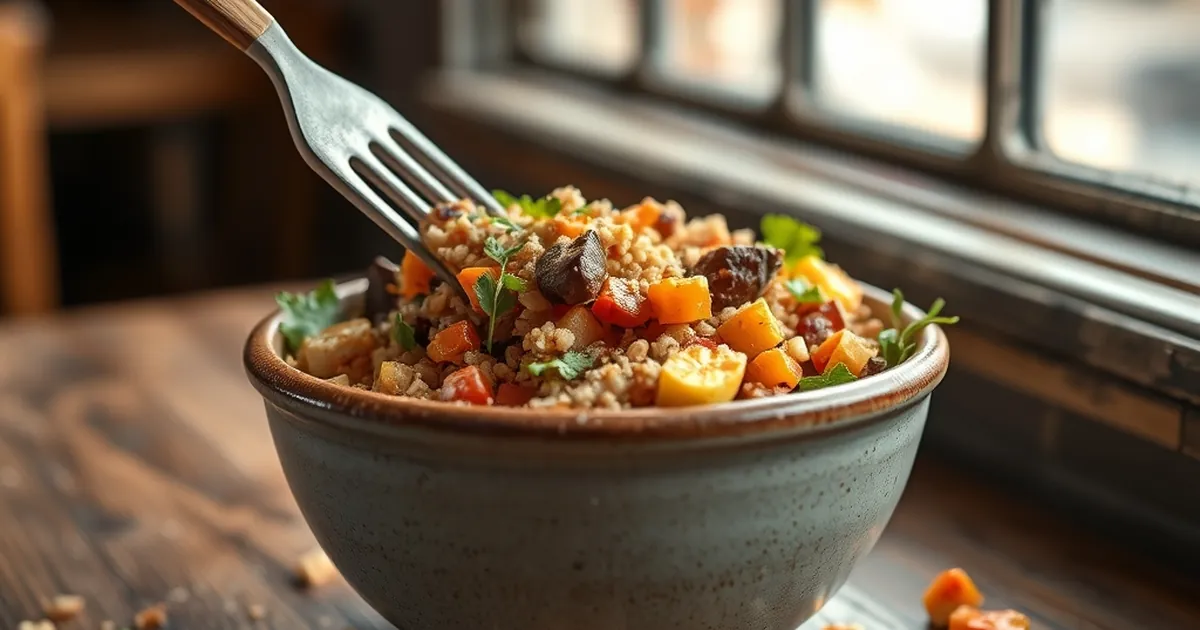
There's a moment about seven bites into a really good bowl of something — ramen, a grain bowl, a perfectly dressed salad — when the flavor stops registering the way it did on bite one. And yet you keep going. Not because it tastes amazing anymore, but because something about the chew holds you there. What's happening in that gap between flavor fading and your spoon continuing to move?
Your Taste Buds Are Quitters (Fast Ones)
Taste receptors are built for novelty, not endurance. Sensory-specific satiety is the term researchers use for it: as you eat a food, your enjoyment of that specific taste declines, bite by bite. This is why the first bite of chocolate cake is transcendent and the twelfth is a chore. It's also why a buffet works on you — variety resets the signal.
But texture doesn't follow the same curve. Mouthfeel — the resistance of a noodle, the snap of a cucumber, the slow dissolve of a good shortbread — is processed through different channels. Touch and pressure receptors in your mouth don't habituate nearly as quickly as taste does. So while flavor quietly exits stage left around bite seven, texture is still in the building, holding the door open.
The Reward Is in the Rhythm, Not the Flavor
This is where it gets genuinely interesting for anyone who thinks about eating well.
Behavioral psychologists have long studied variable-ratio reinforcement — the pattern where a reward arrives unpredictably, which produces the most persistent behavior. You don't know which bite will deliver the hit, so you keep taking bites. Food manufacturers know this instinctively. So does anyone who's ever eaten a bag of chips past the point of enjoyment.
But here's the reframe I keep coming back to: texture gives you a reliable reward, not a variable one. The chew is always there. The crunch is always there. You're not chasing a disappearing high — you're settling into a steady physical rhythm that your nervous system finds calming. That's a different loop entirely, and a much less exhausting one.
What This Means at the Table
If flavor fades but texture sustains, then the way to build a meal you actually enjoy eating slowly isn't to pile on more seasoning. It's to build in textural contrast.
Think about what makes a great bowl of congee work: it's soft, yes, but it's topped with scallions, maybe fried shallots, a swirl of chili oil. The base is monotonous by design — that's the comfort. The toppings are where your attention lives. Same logic with a salad: creamy dressing, crisp greens, something toasted, something pickled. Four textures, four reasons to keep eating after the flavor has flattened out.
There's a well-known study on this from the food science world — researchers found that people eat more of a food when it has multiple textures versus a uniform one, even when the flavor is identical. The texture is doing the work.
The Practical Move
Next time you're building a meal and want it to feel satisfying all the way through, ask yourself a different question than "does this taste good?" Ask: how many textures are in this bowl? If the answer is one, you'll likely lose interest around bite seven and either stop or keep eating mechanically.
Add a crunch. Add something chewy. Add something that dissolves. You're not gaming your own brain — you're just giving it something to hold onto after the flavor has moved on.