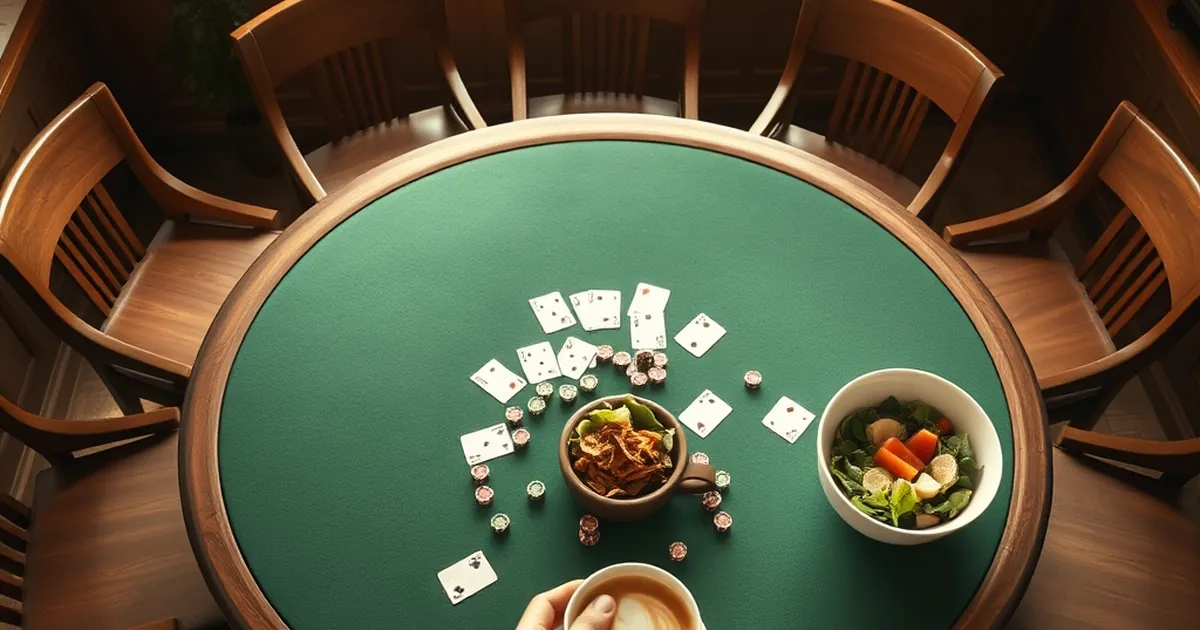
A six-max table instead of a nine-handed table moves a winning player's long-run win rate by roughly 14% in bb/100 terms — not because the cards change, but because the number of opponents who can have a hand changes everything about how often you win pots and how big they are. The math is unglamorous: fewer seats means more hands per hour, more blind-stealing, and a wider range you're forced to play. Strip two or three players off the table and the same player, same stakes, same skill edge produces a meaningfully different graph.
Why table size moves the number
Win rate in bb/100 is a function of three things: how often you win a pot, how much you win when you do, and how much you lose when you don't. Table size hits all three.
At a full nine-handed ring game, you're dealt roughly 75–80 hands per hour. At six-max, that climbs to about 95–100 — a 20–25% increase in volume. More hands means more opportunities to apply an edge, and more opportunities to pay blinds, but the net effect for a competent player is positive because the edge compounds faster than the blind cost.
The bigger lever is range. In a nine-handed game, the average opening range from early position sits around 12–15% of hands. At six-max, that same seat opens closer to 20–25%. You're not playing better cards; you're playing more marginal ones against opponents who are also playing more marginal ones. The player with the sharper postflop reads wins that exchange. The player who just memorized a full-ring chart loses it.
The variance side
Six-max runs hotter and colder. Fewer players means fewer multiway pots, which means fewer chances to get paid off on a big hand — but also less chance of getting drawn out on by a random suited connector. Standard deviation per 100 hands at six-max typically runs 5–10% higher than full ring. If you're bankrolling on a fixed roll, that matters: you need more buy-ins for the same confidence level.
The 14% claim, unpacked
The 14% figure comes from comparing long-run bb/100 between identical player pools at the same stakes. A player grinding +3.5 bb/100 at nine-handed typically posts something in the +4.0 bb/100 range at six-max — right around a 14% improvement. That's not a guarantee; it's an average across samples where the player's postflop edge holds up. Players whose edge comes mostly from hand selection (tight-is-right full-ring grinders) often see the gain shrink or reverse, because the wider ranges force decisions they haven't trained.
Heads-up is the extreme case. Win rates there can swing 30–40% versus full ring, but the variance is brutal enough that most recreational players shouldn't touch it without a dedicated roll.
What this means for seat selection
If you're choosing between a nine-handed table with a soft field and a six-max table with a tougher one, the 14% edge doesn't automatically win. Table selection still beats table size. But between two tables of equal softness, the shorter one is usually the better hourly — assuming your postflop game is the strong part of your skill set.
Live players face a different version of this. A $1/$2 game that runs eight-handed is a different animal from the same game six-handed, and casinos rarely let you pick. Online, you can.
The open question: as more US-facing rooms push six-max as the default format, does the average player's win rate actually rise, or does the field just get wider and the edge get thinner? The 14% assumes a fixed skill gap. Widen the ranges across the whole pool and that gap compresses. Worth watching your own numbers over the next few thousand hands rather than trusting the average — and worth setting a session loss limit before you test the theory, because six-max variance doesn't care how good the math looks on paper.