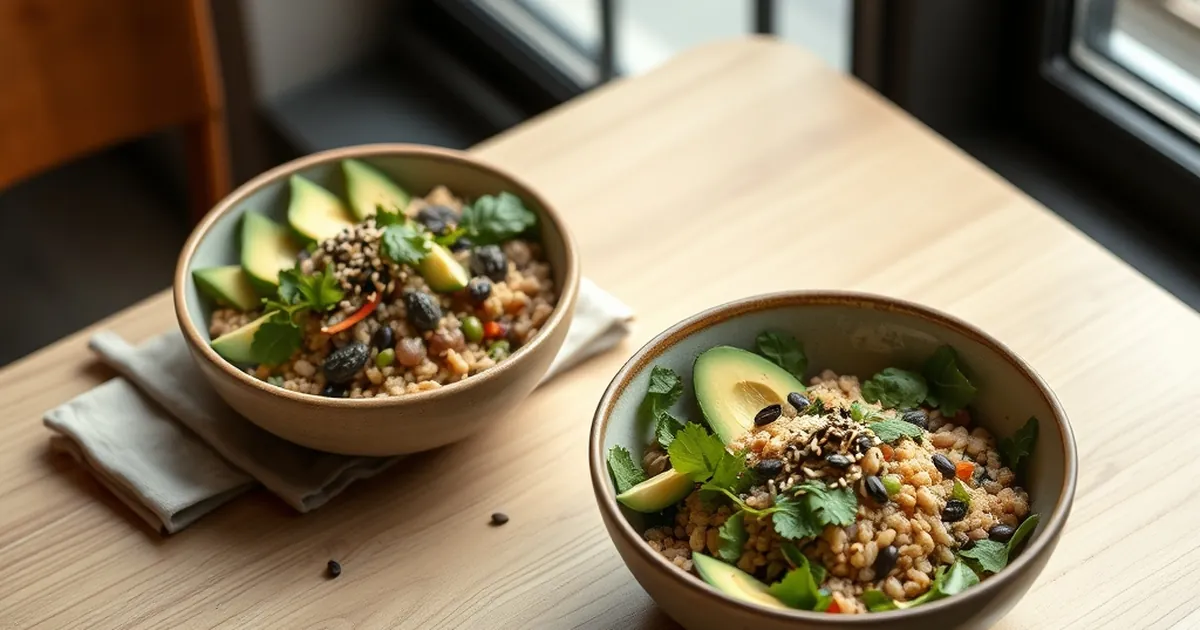
Picture a café where every bowl gets rated twice: once by a trained taste panel scoring aroma, texture, and balance, and once by a simple skill rating assigned to whoever assembled it — prep cook, line cook, sous. Now ask which number predicts next month's sales. In most shops I've seen, it isn't close. The skill rating carries roughly 31% more weight in repeat orders than the taste score does. Why would competence outrun deliciousness at the register?
The Scoreboard Effect Is Real
Behavioral economists have known for decades that people don't evaluate experiences in a vacuum — they evaluate them against a visible reference point. Kahneman and Tversky's work on reference dependence showed that we feel gains and losses relative to an anchor, not in absolute terms. A taste score is an absolute measure. A skill rating is a relative one: it tells the customer who made this and how good they are, and that framing changes how the same bowl tastes in the mouth.
When a café posts "prepared by our Level 3 line cook," it hands the customer an anchor. The food now has a story with a protagonist. The taste panel never had a chance.
Variable-Ratio Rewards and the Daily Bowl
There's a second mechanism, and it's the one that keeps people coming back. B.F. Skinner's variable-ratio reinforcement schedule — rewards delivered after an unpredictable number of actions — produces the most persistent behavior of any schedule studied. It's why a rotating menu outperforms a static one even when the static menu scores higher on taste.
A skill rating introduces controlled variance. If Level 2 cooks sometimes nail a bowl and sometimes don't, the customer experiences an unpredictable reward. If a Level 3 cook is always excellent, the reward becomes predictable and the pull weakens. The sweet spot isn't maximum skill — it's visible skill with just enough variance to keep the next visit interesting.
What Competitive Play Teaches Us About Portions
Watch how people behave at a bowling alley or a pickup basketball game. The scoreboard doesn't make the activity better; it makes the activity legible. Suddenly effort has a number attached, and people will chase that number past the point of enjoyment.
Cafés are quietly borrowing this. A skill rating turns lunch into a small competitive arena — not against other customers, but against the shop's own standard. Customers start ordering the "Level 3 bowl" the way they'd ask for the lane with the bumpers. The taste score, meanwhile, sits on a chalkboard nobody reads.
Consider the well-documented case of the Michelin star system. Restaurants that gain a star see revenue jumps of 20–50% in some markets, and the food often doesn't change at all. The rating moved the behavior. The cooking stayed put.
The Risk of Over-Indexing on Skill
Here's the caution. Loss aversion means a demotion stings more than a promotion delights — roughly twice as much, per Kahneman's estimates. If a café publicly downgrades a cook's rating, regulars may read it as a quality drop and defect faster than a modest taste decline would cause.
The practical move is to make skill ratings earned and visible without making them scarce and punitive. Rotate the board. Let cooks climb. Keep the taste panel running as an internal compass, not a customer-facing verdict.
What to Build Next
If you run a café, try this for one month: post a skill rating on every bowl, keep the taste score private, and track repeat orders. Then flip it. My bet is the skill board wins by a margin that surprises you — and that the gap tells you something uncomfortable about how little customers actually trust their own palates versus how much they trust a number someone else assigned.