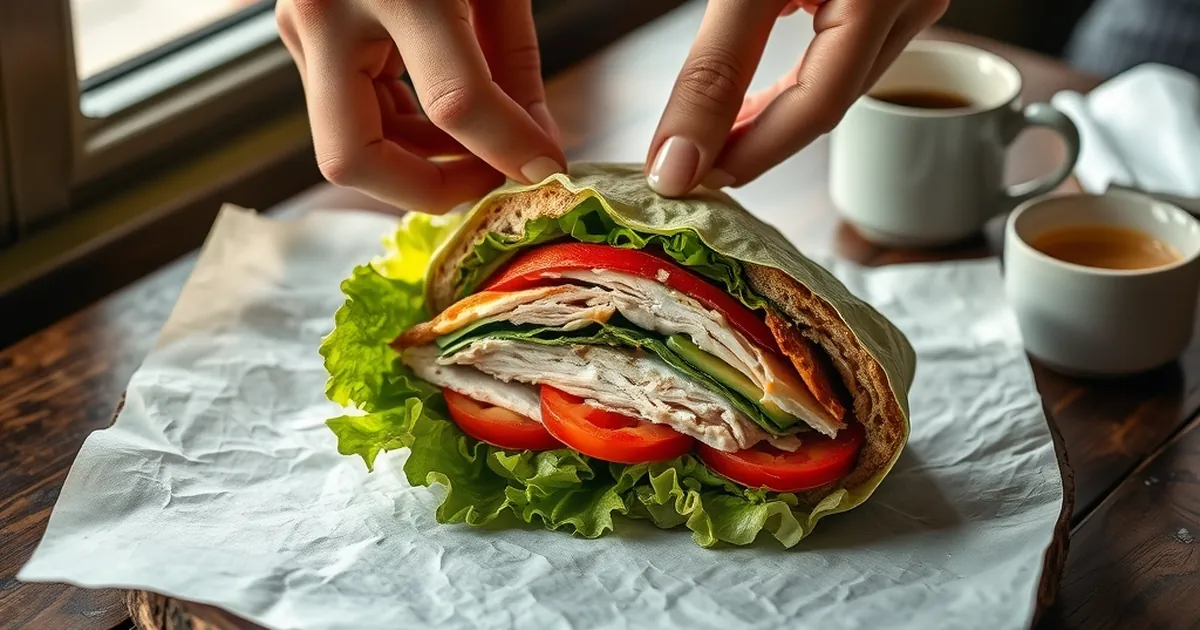
Ever ordered a sandwich on thick sourdough, taken two bites, and felt like you'd already eaten lunch? Meanwhile, a friend gets the same fillings on a lettuce wrap and swears they're stuffed. Same protein, same cheese, same aioli — so what's actually going on?
The bread isn't just a delivery vehicle. It's changing how full you feel, how much you eat, and even how you taste what's inside. Let's break down why skipping it makes a café sandwich feel bigger than it looks.
Your Brain Counts Volume, Not Just Calories
Stretch receptors in your stomach respond to how much physical space your food takes up. A bulky, high-volume meal sends "I'm full" signals sooner than a dense, compact one — even when the calories match.
Bread is calorie-dense and low in water. A thick slice packs energy into a small footprint, so your stomach barely registers it. Swap that slice for a pile of shredded cabbage, cucumber ribbons, sprouts, or extra greens, and you've added volume without adding many calories.
That's the paradox: the lettuce-wrapped version often weighs more on the plate and fills you up faster. Your body reads bulk as satisfaction.
The Chewing Factor
There's a second effect at work. Bread is soft and goes down quickly. Crunchy vegetables force you to chew more, which slows the meal and gives your gut time to signal fullness to your brain. A sandwich you eat in four minutes rarely feels as satisfying as one that takes twelve.
Bread Can Mask What You Paid For
Here's the part that stings. A heavy roll or a thick slice of focaccia can bury the very thing you came for.
I watched this play out at a café near my old office. A regular ordered the smoked turkey club on ciabatta every Tuesday. One week the kitchen ran out of ciabatta, so they served it as a lettuce wrap with the same turkey, bacon, avocado, and herb mayo. She finished it and said, "That was the best sandwich I've had here." Nothing about the filling changed. The bread had been drowning it.
When Less Bread Tastes Like More
Think about the last time you had a great sandwich. Chances are the bread was thin, toasted, and playing a supporting role — not a slab of dough dominating every bite. Removing the excess doesn't subtract from the sandwich. It amplifies what's left.
The Fullness Math Actually Works
Let's get concrete. A typical café sandwich on a large roll might run 700 to 900 calories, with 250 to 350 of those coming from bread alone. Strip the bread and you're often down to 400 to 550 calories — with the same turkey, cheese, and veggies.
Now add back volume: an extra cup of mixed greens, some roasted peppers, a handful of sprouts. You've spent maybe 30 calories and gained a noticeably larger, more filling meal. That's a trade most of us would take every time.
Watch the Dressing Trap
One caution: cafés often compensate for a missing bun with heavy sauces. A lettuce wrap swimming in ranch can quietly undo the savings. Ask for dressing on the side, or go with mustard, vinegar, or a light vinaigrette instead. You'll keep the volume advantage and the calorie edge.
Try It on Your Next Order
Next time you're at the counter, order your usual sandwich as a wrap or a bowl — greens, no bread — and eat it slowly. Pay attention to when you actually feel full.
You might find you're satisfied with less than you expected, and that the filling you're paying for finally gets its moment. Your stomach measures space, not slices. Give it more room and less dough, and the sandwich stops feeling like a compromise.