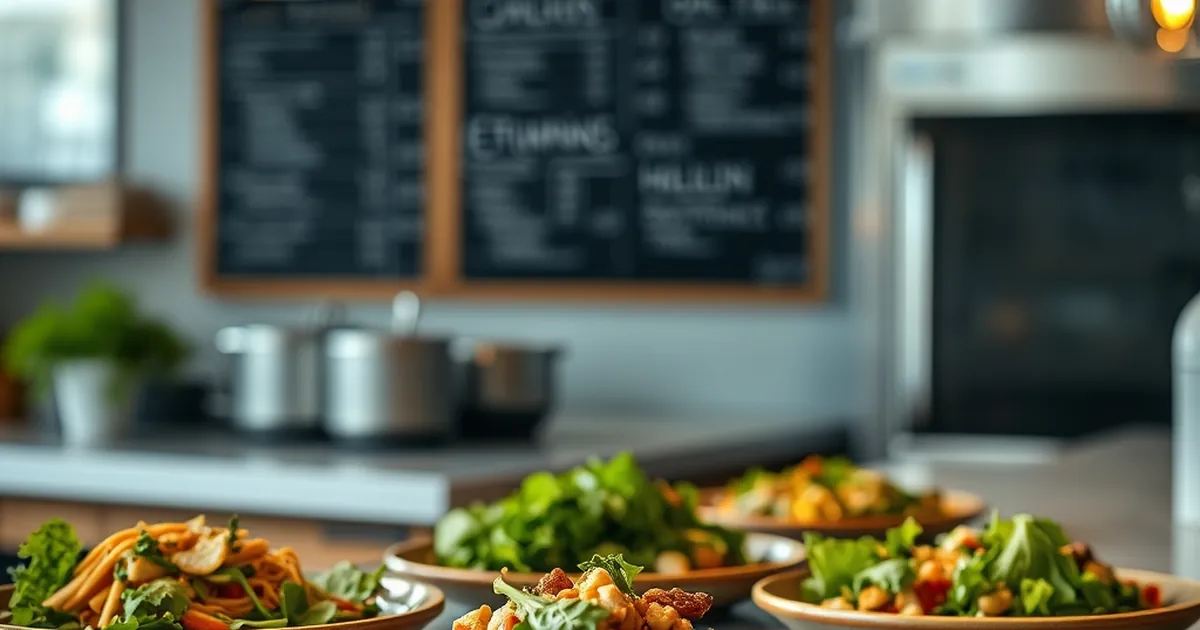
Walk into a café at noon and you'll usually see two kinds of menus: the twelve-item board with a sandwich for every mood, and the four-item line where the kitchen has already made the call. The twelve-item board feels generous. The four-item line feels like a constraint. So why does the short line so often produce the better lunch—and the calmer customer?
Choice Overload Is Real, and Lunch Is Where You Feel It
The classic demonstration is Iyengar and Lepper's 2000 jam study: a tasting table with 24 varieties drew more browsers than one with 6, but only about 3 percent of the 24-jam browsers bought, versus roughly 30 percent at the 6-jam table. More options pulled people in and then paralyzed them.
Lunch has an extra wrinkle the jam table didn't: a clock. You're deciding while hungry, while standing, while a line forms behind you. Hunger makes the decision feel urgent; the clock makes deliberation feel expensive. Under that combination, most people don't optimize—they satisfice. They grab the first item that clears the bar of "fine," which is rarely the item the kitchen is proudest of.
The Hidden Cost of "I'll Just Pick"
Behavioral economists describe the mental ledger we keep for decisions. Richard Thaler's work on mental accounting suggests we don't just weigh outcomes—we weigh the effort of the choice itself. A twelve-item menu imposes a small tax on every visit: scanning, comparing, second-guessing, the faint regret of the road not taken. None of that tax shows up on the receipt, but it shapes whether you come back tomorrow.
There's also a quieter effect. When a menu is short, the kitchen's confidence becomes visible. Four items means someone tasted, cut, and committed. Twelve items often means someone hedged. Diners read that signal even when they couldn't articulate it.
A Concrete Example
Think about a small café that trims its lunch board from eleven items to four: one grain bowl, one sandwich, one soup-and-salad combo, one daily special. The owner's fear is always the same—regulars will feel boxed in. What usually happens is the opposite. Prep gets tighter, ingredients turn over faster, the sandwich gets made better because it's made two hundred times instead of forty. Customers stop asking "what's good?" and start asking "is today the special day?" The menu stopped being a test and became a promise.
Fewer Choices, Better Feedback Loops
A short menu also changes what the kitchen learns. With twelve items, sales spread thin and feedback is muddy—did the bowl underperform because it was bad, or because it was buried between two louder options? With four, the signal is clean. You can iterate weekly. That's a tight feedback loop, and tight loops are how quality compounds.
There's a behavioral parallel in how people respond to variable rewards. A rotating daily special—sometimes great, always different—creates a mild pull to check back, the same intermittent-reinforcement pattern that makes routines sticky. The key is that the variability lives inside a stable, trustworthy frame. Four reliable items plus one rotation is a structure, not a gamble.
What to Do With This Tomorrow
If you run a café, try a two-week experiment: cut the lunch board to four, keep your best sellers, and watch average ticket, prep waste, and the number of "what do you recommend?" questions. If you're the one eating lunch, notice what happens when you pick a place with a short line—whether you leave more satisfied or just faster.
The interesting question isn't whether fewer options are better. It's which four you'd choose if the board had to shrink tomorrow. Most cafés already know the answer. The menu just hasn't caught up yet.