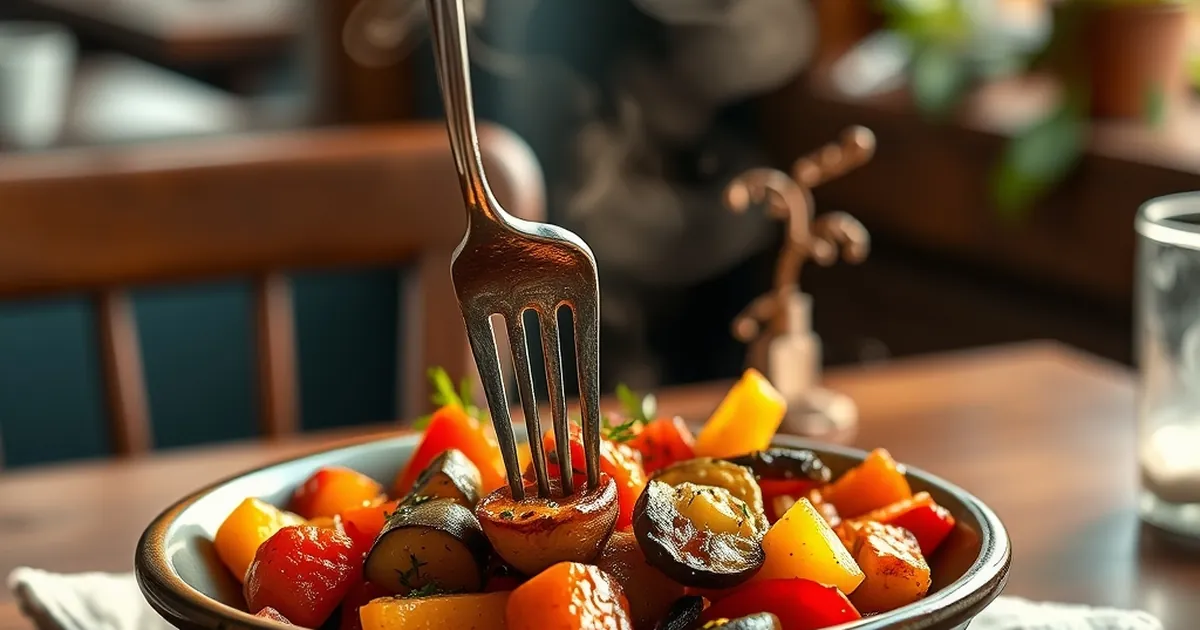
There's a moment in every café visit when the food is in front of you and your hand is already moving. The question I keep coming back to: what happens in the five seconds after that first bite, and why does rushing through it flatten the whole experience? It turns out the space between bite one and bite two is where a surprising amount of behavioral science lives.
The Second Bite Is a Different Decision
The first bite is mostly anticipation. You've read the menu, smelled the espresso, watched the plate arrive. By the time the food hits your tongue, your brain has already been rewarding you for a while, and the actual taste is partly confirmation of a story you told yourself.
The second bite is different. Anticipation is gone. Now you're making a fresh judgment, and that judgment is anchored to the first. This is where a short pause earns its keep. Give yourself five seconds, put the fork down, and the second bite gets evaluated on its own terms instead of being swept along in the momentum of the first. Most of us never notice the difference because we never leave a gap wide enough to feel it.
Reward Loops Run on Speed, Not Pleasure
Behavioral psychologists describe variable-ratio reinforcement, the pattern where rewards arrive unpredictably, as one of the stickiest ways to shape behavior. It's why the first bite of a great pastry feels electric and the tenth feels like habit: the reward stopped being a surprise.
Eating fast is essentially self-administered variable-ratio training. Every quick bite is a small pull of the lever, and the pleasure dulls in proportion. Slowing down interrupts the loop. The five-second pause reintroduces just enough unpredictability, a sip of water, a glance out the window, a real conversation, that the next bite registers as an event again rather than a reflex.
Loss Aversion Shows Up on the Plate
Kahneman and Tversky's work on loss aversion found that losses feel roughly twice as powerful as equivalent gains. At the café table, this shows up as a quiet fear of missing the food at its best: the warm sandwich cooling, the salad wilting, the pastry losing its edge. That fear is a genuine driver of fast eating.
The counterintuitive fix is to treat the pause as protecting the experience rather than wasting it. Five seconds is not enough time for a croissant to go stale. It is enough time to actually taste the thing you paid for. Framing the wait as loss prevention, rather than as deprivation, makes it far easier to keep.
Uncertainty Is the Point, Not the Problem
There's a study worth knowing about: researchers found that people enjoy a experience more when they can't fully predict it, and that anticipation itself accounts for a meaningful share of reported pleasure. The same logic applies to a plate of food. If every bite is identical and immediate, there's nothing left to discover.
A short wait restores a little uncertainty. You notice the crust's texture on bite two in a way you didn't on bite one. You catch the acid in the dressing. You find the thing you'd have missed. Competitive eaters and speed runners optimize for time; the rest of us are eating for the experience, and the experience rewards a slower clock.
What to Try at Your Next Table
Pick one meal this week and set a five-second rule after the first bite. Fork down, hands still, one breath. Then take bite two and pay attention to whether it tastes different. Most people report it does, not because the food changed, but because the judgment did.
The forward-looking version of this is a small habit shift: cafés could lean into it too, serving water alongside the plate or pacing courses slightly, giving customers permission to slow down. Whether they do or not, the five seconds are yours to take.