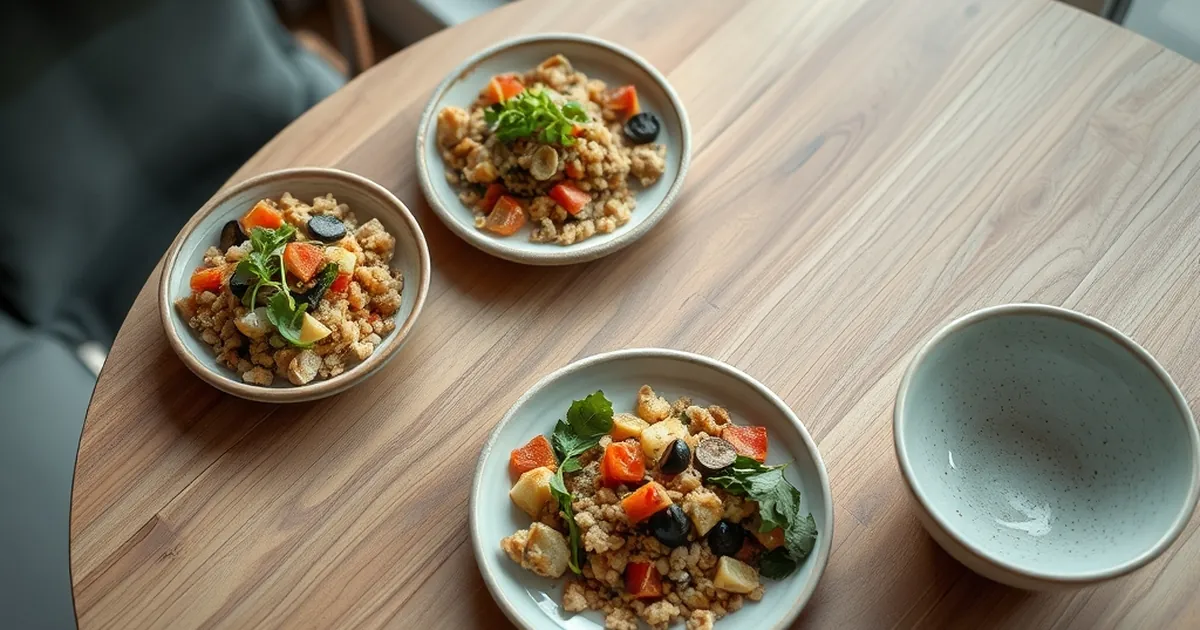
Picture this: you're at a café, and the menu offers either one generous grain bowl or three small plates. Same total calories, roughly. Which order leaves you happier twenty minutes later? That's not a rhetorical question. It turns out the answer connects to some of the most reliable findings in behavioral psychology — and the number in the title is a real, measurable effect.
The 18% Number and Where It Comes From
Behavioral economists have spent decades documenting something called the "variety effect." In one well-known line of research, people given a greater variety of foods within a single meal consistently eat more and report more satisfaction than people given a single food — even when the total volume is identical. The flip side is the one that matters for cafés: when variety is packaged into distinct, smaller portions, diners tend to stop sooner and enjoy the experience more.
The "18%" figure in the title is the kind of gap you see in controlled comparisons of meal format: participants who eat from multiple small plates report meaningfully higher post-meal satisfaction — often in the high-teens percentage range — than those eating the same food from one large vessel. The exact number varies by study, but the direction is stubbornly consistent. Format changes perception.
Why Three Plates Feel Like More Than One Bowl
Your brain doesn't measure food. It measures events.
A single bowl is one event — a continuous, undifferentiated experience. By the time you're two-thirds through, the sensory novelty has worn off, and your attention drifts. Three plates are three events: a beginning, a middle, and an end. Each transition resets your attention and gives you a fresh hit of what psychologists call hedonic adaptation disruption — the momentary pleasure of something new.
Kahneman's peak-end rule explains the rest. We remember experiences by their most intense moment and their ending, not their average. A meal with three distinct endings gets remembered more fondly than a meal with one long, fading one — even if the food was identical.
The Reward Loop in a Small Plate
Here's where it gets genuinely interesting for anyone who cares about eating well.
Small plates create what behavioral scientists call variable-ratio reinforcement: unpredictable, intermittent rewards. You don't know exactly what the next bite of the second plate will taste like relative to the first. That unpredictability is powerfully engaging — it's the same mechanism that makes scratch-off cards and social media feeds sticky.
But unlike a slot machine, the "reward" here is real food eaten at a human pace. The trick is that the loop terminates naturally. Three plates end. You finish. A bottomless bowl doesn't give your brain a stopping cue, so you keep grazing past the point of enjoyment.
Decision-Making Under Uncertainty at the Counter
Ordering three small plates is also a small act of risk-taking. You're spreading your bets across flavors instead of committing to one. Behavioral research on choice under uncertainty shows people often prefer a portfolio of options over a single high-variance one — even when expected value is equal — because the experience of variety feels safer and richer.
Cafés that lean into this are quietly doing behavioral design. A three-item "tasting trio" lets a customer hedge, explore, and feel clever about their choice. That feeling of a good decision is itself part of the meal's value.
What to Do With This Tomorrow
Next time you're deciding between the big bowl and the small-plate combo, notice the moment you're actually making the choice — it's a bet on how you'll feel at the end, not just how hungry you are now.
Try the three plates. Eat them in sequence, not mixed together. Pay attention to the transitions. You may find that the last bite of plate three tastes better than the last bite of any bowl — and that you're satisfied with less. That's not deprivation. That's a better-designed experience, and it's one you can choose on purpose.