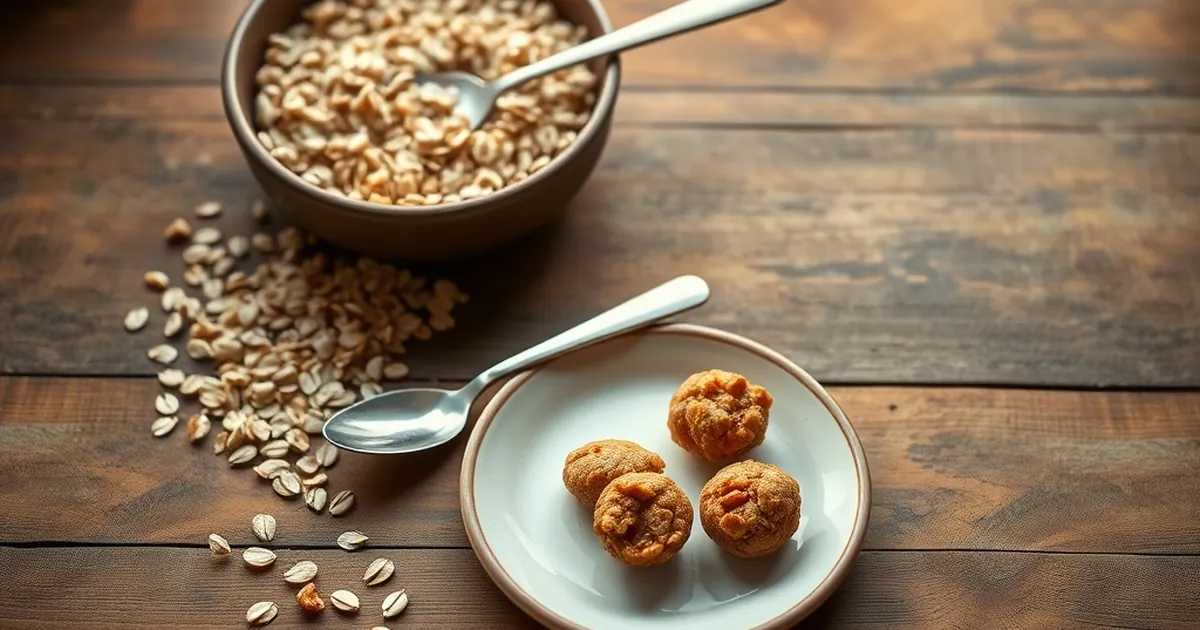
Why does a small bowl of granola with two crunchy clusters on top feel more satisfying than a giant bowl of plain oats? It's not just about flavor. There's something happening in your brain around portion size, texture, and expectation that changes how full — and how happy — you feel after breakfast. The answer sits at the intersection of behavioral psychology and how we actually eat.
The Portion-Size Illusion
We tend to assume bigger equals better. More food, more satisfaction. But research on food perception keeps complicating that story. In one well-known study, participants who ate from larger bowls served themselves more and still reported feeling less satisfied than those who ate from smaller bowls — a mismatch between volume and perceived reward. The brain seems to track sensory hits, not just calories.
That's where crunch comes in. A single loud, textural bite can register as a distinct event. Two crunchy clusters on top of yogurt create two events. A giant bowl of soft oats creates one long, undifferentiated experience. The smaller, crunchier option wins on perceived satisfaction even when it delivers fewer calories.
Texture as a Reward Signal
Crunch is not just a cooking detail. It's a reward signal. Humans are wired to notice contrast — soft against crisp, sweet against tart. Behavioral psychologists call this a variable-ratio pattern when it's unpredictable, but even predictable texture contrast creates what's called a "peak" in the eating experience.
Think about a study from the University of South Florida on "sensory-specific satiety." Participants who ate a single-textured meal grew bored faster than those who ate a meal with varied textures. The takeaway: a bowl of oats that's all one note loses its appeal halfway through. A smaller bowl with two crunchy bites keeps the reward loop alive.
The Loss-Aversion Trap of Big Bowls
Kahneman and Tversky's work on loss aversion tells us we feel losses roughly twice as strongly as gains. At breakfast, that shows up as a subtle fear of not getting enough. So we over-serve. But over-serving a low-contrast food doesn't fix the fear — it just makes the meal feel like a chore.
A smaller bowl with a couple of crunchy, flavorful bites flips the frame. You're not losing volume. You're gaining a finish. That's a small but real decision-making shift: choose the option that ends on a high note rather than the one that maximizes quantity.
What This Means for Your Morning
Try this: keep your base modest — a half-cup of oats or yogurt — and spend your "crunch budget" deliberately. Two tablespoons of toasted seeds, a couple of crushed crackers, or a small handful of granola. Eat the crunchy parts last. Notice whether you feel more satisfied than you did after a full bowl.
This isn't about restriction. It's about designing a meal that respects how reward actually works in the brain: contrast beats volume, and a good finish beats a bigger middle. Tomorrow morning, try the smaller bowl. See what your appetite remembers.