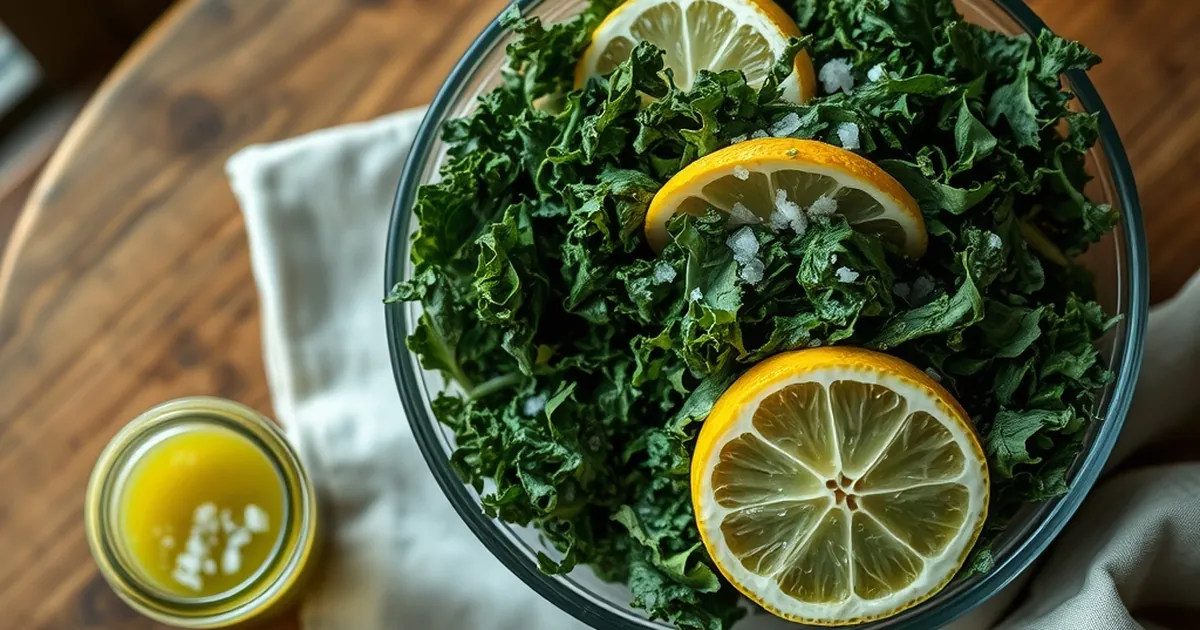
You've spent twenty minutes massaging olive oil and lemon into a gorgeous bowl of lacinato kale, feeling virtuous about your meal prep for the week. Then you pack it in the fridge and don't touch it until Tuesday. What actually happens in that container between Sunday night and your Tuesday lunch?
The answer isn't as simple as "it wilts" or "it gets better." Kale does something genuinely strange when it sits in dressing, and understanding the science means the difference between a salad that improves with age and one you'd rather toss than chew.
The First Thirty Minutes: Kale Starts Drinking
Kale is a tough green, and that's exactly why it works so well in a dressed salad. Its cell walls are thick and sturdy, built to survive frost and wind on a farm. When acid and salt from your dressing hit those walls, they start breaking down the pectin holding everything together.
Salt is the real workhorse here. It draws water out of the kale's cells through osmosis, which softens the leaves and makes them more pliable. Lemon juice or vinegar helps too, but acid alone mostly works on the surface. The combination of salt, acid, and a little time is what transforms raw kale from a chewy chore into something silky.
This is why so many recipes tell you to massage kale with olive oil and salt before dressing it. You're just speeding up a process that happens on its own.
Why Oil Matters More Than You Think
Fat doesn't just carry flavor. A good coating of olive oil slows down the water loss that salt triggers, so the leaves soften without turning limp and soggy. Skip the oil and your kale goes from tough to sad in record time.
The Overnight Zone: Where Things Get Complicated
Here's where the timeline splits into two very different outcomes.
Scenario One: The Kale That Gets Better
If your dressing is oil-based, heavy on the acid, and light on watery ingredients, kale can hold up beautifully for 24 to 48 hours. I learned this the hard way at a dinner party last fall — I dressed a big bowl of curly kale with lemon, olive oil, garlic, and parmesan about six hours before guests arrived, then forgot about it. It came out of the fridge softer, glossier, and more flavorful than any kale salad I'd made fresh. My friend asked for the recipe and I had to admit the secret was neglect.
The salt had fully penetrated, the acid had mellowed, and the leaves had absorbed the dressing instead of just wearing it.
Scenario Two: The Kale That Turns to Mush
Add tomatoes, cucumbers, or a watery vinaigrette and the story flips. Those ingredients keep releasing liquid, and after a day or two your kale is floating in a diluted puddle. The leaves go from tender to mushy, and the flavor turns flat and slightly sour. Two days is usually the ceiling before texture becomes a real problem.
The Ingredients That Change the Clock
Some mix-ins accelerate decay. Others buy you time.
- Tomatoes and cucumbers: Release water constantly. Keep them separate until serving.
- Hearty add-ins (nuts, seeds, parmesan, roasted vegetables): Neutral or helpful. They add texture without adding liquid.
- Creamy dressings: Usually fine for a day, then the dairy starts to separate and weigh down the greens.
- Citrus-heavy vinaigrettes: Great for softening, but too much acid over 48 hours can make kale taste bitter.
How to Dress Kale Early Without Ruining It
The practical move is to dress kale in stages. Toss it with oil, salt, and acid up to a day ahead — that's the marinade phase, and it only helps. Hold back anything watery, creamy, or crunchy until you're ready to eat.
If you're meal-prepping, pack the dressing in a separate container and combine the morning of. Or go the opposite route: dress it fully the night before with an oil-based vinaigrette and let it marinate. Just know that once tomatoes enter the picture, your clock starts ticking fast.