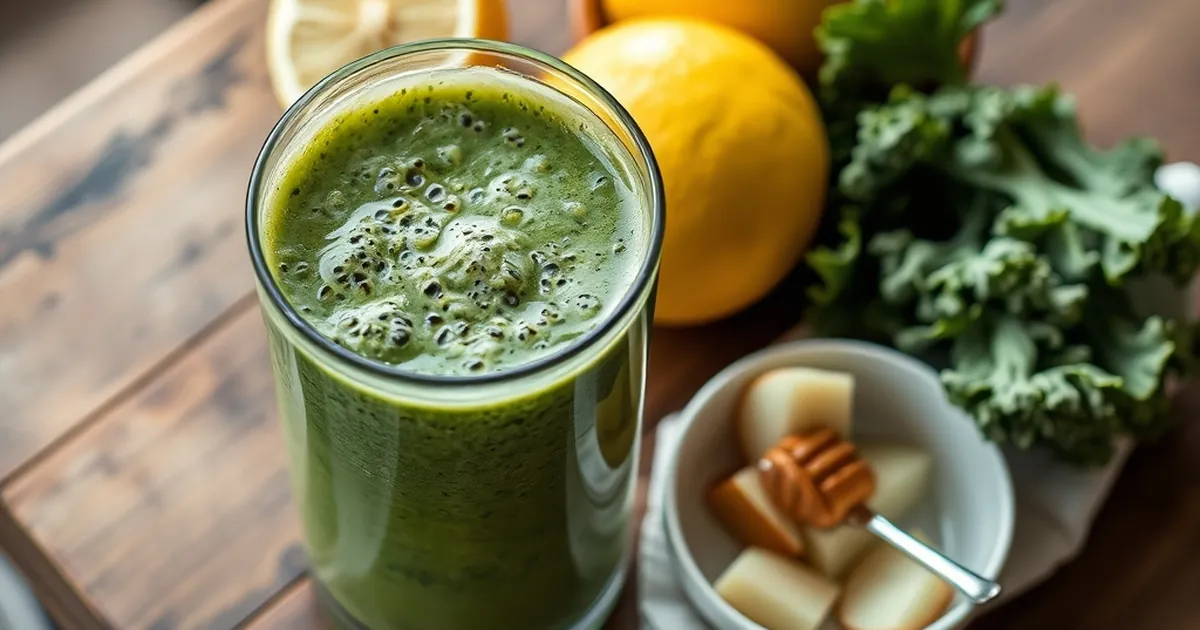
You blended the kale, poured the glass, took a confident sip—and immediately winced. That sharp, almost chemical bite is a classic smoothie sabotage, and it’s the number one reason people swear off greens entirely. The good news? Your kale isn’t the enemy; it’s just a little misunderstood.
The Real Culprit: It’s Chemistry, Not Your Recipe
That bitterness comes from compounds called glucosinolates, which kale produces as a natural defense mechanism. When you blend or chew the leaves, these compounds mix with an enzyme called myrosinase, creating that harsh, pungent flavor.
But here’s the kicker: not all kale is created equal. The variety, the season, and even the size of the leaf play a massive role. That giant, dark, dinosaur kale from the back of your fridge? It’s likely older, tougher, and packing more bitter compounds than a tender, baby kale bunch.
The Age and Size Factor
If you’re buying mature kale with thick, woody stems, you’re basically setting yourself up for a bitter brew. Baby kale leaves are harvested young and have a milder, almost nutty flavor profile. They’re a lifesaver for smoothie beginners.
Fix #1: The Massage Trick (Yes, for Smoothies)
This sounds weird, but it works wonders. Before you toss kale into the blender, massage it with a tiny pinch of salt or a squeeze of lemon juice for about 30 seconds. This physically breaks down the cell walls and deactivates the enzymes that cause bitterness.
I learned this from a chef friend who refused to eat my “green sludge” until I tried it. The difference was night and day—the smoothie went from astringent to actually sweet.
Fix #2: Sweeten with Intent (Not Just Sugar)
You don’t need to dump a cup of honey to mask the taste; you need to balance it. The bitterness is alkaline, so you need to introduce acid and natural sweetness to neutralize it.
- Fruit Power: A half of a frozen banana is the MVP here. It adds creaminess and a natural sweetness that coats the tongue.
- Citrus Squeeze: A splash of orange juice or a wedge of lemon works chemically to tame the sharpness.
- Date It: One pitted Medjool date adds a caramel-like depth without a sugar spike.
The Tropical Bypass
If you’re still struggling, add pineapple or mango. These fruits contain bromelain and other enzymes that literally help break down the tough kale fibers, making it smoother and less bitter.
Fix #3: Upgrade Your Liquid Base
Are you just using plain water? That’s a recipe for a bitter disaster. Water does nothing to mask or transform the flavor. You need a liquid with some body and sweetness.
Try this swap: Use unsweetened almond milk or coconut water instead. The almond milk’s creaminess buffers the sharp edges, while coconut water adds a subtle, natural sweetness. For an extra creamy texture, toss in a spoonful of Greek yogurt or a quarter of an avocado.
Fix #4: Blanch It (The Pro Move)
Want to eliminate bitterness almost entirely? Blanch your kale for 30 seconds in boiling water, then shock it in an ice bath. This completely deactivates the myrosinase enzyme, killing the bitter reaction before it starts.
You can do this in bulk on Sunday. Just dry the leaves, store them in a zip-top bag, and grab a handful for your morning smoothie all week. It also makes the kale slightly more digestible.
The Takeaway for Tomorrow Morning
Don’t give up on kale—just be smarter about how you use it. Start with baby leaves, add a frozen banana and a squeeze of lemon, and swap your water for almond milk. Your taste buds will thank you, and you’ll finally get that vibrant green glow without the grimace. Your blender is waiting.