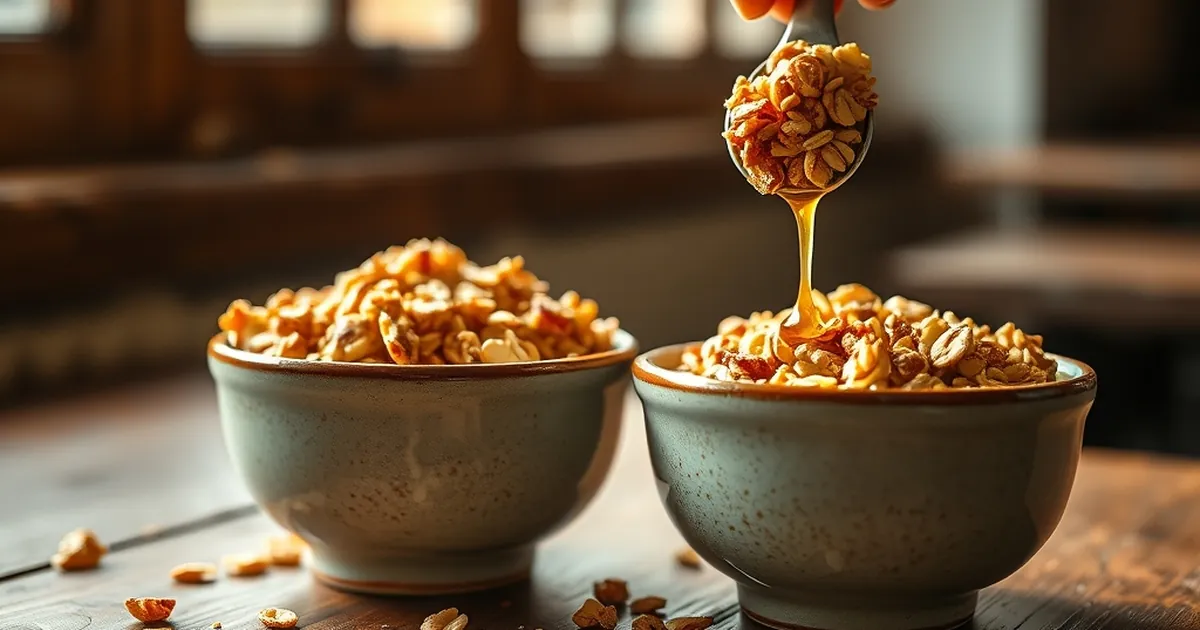
You’re three bites into your morning granola, and something strange happens. The first handful tasted fine—toasty, a little sweet, nothing remarkable. The second handful, though? It’s like someone sprinkled magic sugar over the bowl. Same granola, same milk, same spoon. So what changed?
Your Taste Buds Are Waking Up, Not Slowing Down
Most of us assume flavor fades with repetition. Take one bite of cookie, and the tenth bite should taste duller, right? For plain sugar, that’s often true. But granola isn’t plain sugar.
Your first bite hits a mouth that’s been neutral—maybe you just brushed your teeth, maybe you sipped coffee. The taste buds on your tongue are essentially cold-starting. By the second handful, saliva has fully coated your palate, your food’s aromas have traveled up your nasal passage, and your brain has context for what it’s tasting. That context makes the sweetness read louder.
The Role of Saliva and Aroma
Saliva contains enzymes that begin breaking down starches into simpler sugars. Oats and honey are packed with both. The more you chew, the more those enzymes get to work—so bite two genuinely contains more free sugar molecules than bite one.
Meanwhile, aroma compounds from vanilla, cinnamon, or toasted oats build up in your nasal cavity. Retronasal smell accounts for roughly 80% of what you perceive as flavor. Your second handful smells sweeter because your nose is already primed.
Contrast Makes Sweetness Pop
Here’s the part that surprises people: sweetness is relative. Your brain doesn’t measure sugar in absolute terms—it compares each bite to the one before it.
I learned this the hard way at a café in Portland last spring. I ordered a bowl of maple-pecan granola and thought the first scoop was almost bland. Then I took a sip of black coffee between handfuls. The next bite tasted like dessert. The bitterness of the coffee reset my palate, and the granola’s sugar rushed in to fill the gap.
Why the First Handful Gets Shortchanged
Your first handful often arrives alongside strong competing flavors—coffee, orange juice, mint toothpaste. Those flavors blunt your sweet receptors. By handful two, the competing taste has faded, and the granola gets a clear stage.
There’s also a psychological layer. Researchers call it “sensory-specific satiety,” but it works in reverse here. When a food is complex—crunchy, salty, sweet, nutty all at once—your brain keeps rewarding you for exploring it. Simple sugar bores your palate fast. Granola keeps offering new texture and flavor combinations, so your attention stays engaged and the sweetness feels amplified rather than diminished.
What This Means for Your Breakfast
If you want your granola to taste sweeter without adding sugar, try this: drink your coffee or tea first, then eat. Give your palate thirty seconds of neutral water between the first and second handful. You’ll likely find the second scoop hits harder than the first—no recipe change required.
Or flip it around. If you’re trying to cut back on sweetened granola, eat it alongside something bitter or tart. A handful with plain Greek yogurt will taste less sweet than the same handful eaten alone. Your taste buds aren’t lying to you—they’re just comparing notes. Once you understand the comparison, you can decide which version you actually want.