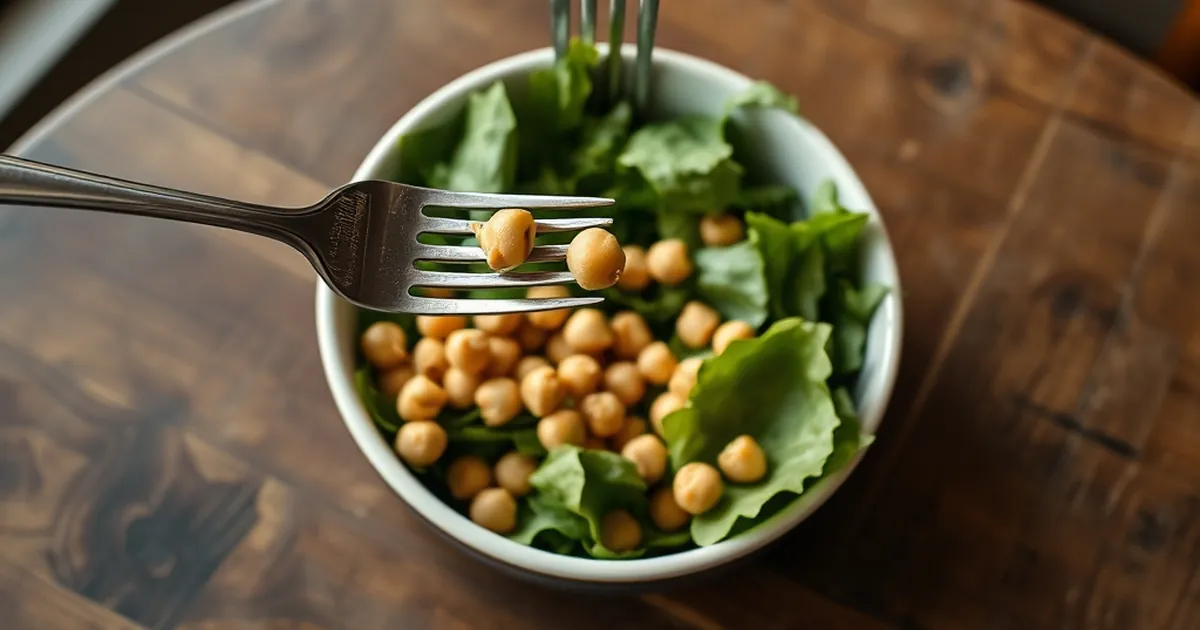
We’ve all been there: staring down a beautiful, carefully composed salad at noon, fully intending to eat the whole thing. Then, three bites in, your fork starts drifting toward the bread basket or the leftover fries on your colleague’s plate. It’s not a lack of willpower. It’s a decision your brain made before you even consciously registered it. So what actually happens in those first three bites that seals the salad’s fate?
The Brain’s Quick Cost-Benefit Analysis
Your brain is a lazy efficiency machine. When you take the first bite of anything, it’s not just tasting—it’s running a rapid-fire calculation: Is this worth the energy? This is where Kahneman’s fast thinking comes in. System 1, the automatic, intuitive processor, makes a snap judgment based on texture, temperature, and flavor intensity. If that first forkful of kale is dry or the vinaigrette is too tart, your brain flags it as low-reward. Suddenly, the effort of chewing feels heavier, and the salad’s fate is sealed.
The “Sunk Cost” Trap of the Clean Plate
Here’s the twist: the decision isn’t just about the salad itself. It’s about the projected effort of finishing it. Behavioral economists call this the sunk cost fallacy, but in reverse. You’ve already paid for the salad and sat down, so you feel committed. But three bites in, your brain recalculates the remaining effort against the perceived reward. If the reward is low (boring texture, bland flavor), your brain treats the rest of the bowl as a tax, not a treat. That’s why you might finish it out of guilt—but resent every bite—or abandon it guilt-free.
Variable-Ratio Reinforcement at the Salad Bar
This is where the psychology gets sneaky. The most compelling reason you’ll finish a salad isn’t the lettuce—it’s the hunt. Think about a salad with roasted chickpeas, crumbled feta, or a few candied pecans. Those are variable-ratio reinforcements. You don’t know exactly when you’ll hit a burst of salty, crunchy, or sweet goodness. That unpredictability keeps your brain engaged. It’s the same reason people can’t stop checking their phones—not every scroll yields a good post, but the chance of one keeps you going.
The “Jackpot” Bite
A study from Cornell’s Food and Brand Lab found that people eat more of a meal when they perceive it as having a “flavor burst” early on. The first three bites set a neurological expectation. If bite two has a surprise pop of cherry tomato or a creamy avocado chunk, your brain literally releases a small dopamine pulse. That pulse tells you, More of this might be coming. The salad becomes a slot machine of flavors, and you’re pulling the lever with every forkful.
Loss Aversion and the “Healthy” Identity
But there’s a deeper layer. You’re not just deciding about the salad; you’re deciding about who you are. Loss aversion—the principle that losses hurt twice as much as gains feel good—plays a huge role here. If you abandon the salad for a burger, you’re not just losing a meal; you’re losing the identity of being a “healthy person.” That loss feels heavy. So, you might finish the salad not because you’re enjoying it, but because quitting feels like a personal failure. The problem? That kind of forced completion often leads to a rebound binge later.
Making the First Bites Work for You
The practical takeaway isn’t to force yourself to love every salad. It’s to design your first three bites strategically. Start with the components you know are highest-reward: a bite with the dressing, a nut, and a dried fruit all at once. Create that early jackpot. Then, structure the salad so the variable rewards are spread out—don’t cluster all the good stuff on top. You want your brain to keep playing the game. And if you’re building a salad for yourself, add one unexpected element (pickled onions, toasted seeds, a spoonful of hummus) that you didn’t have yesterday. Novelty is a powerful trigger for engagement.
The next time you sit down to a bowl of greens, remember: your brain isn’t judging the entire meal. It’s judging the next three bites. Give it a reason to stay curious, and you’ll be surprised how often you’ll clean the bowl.