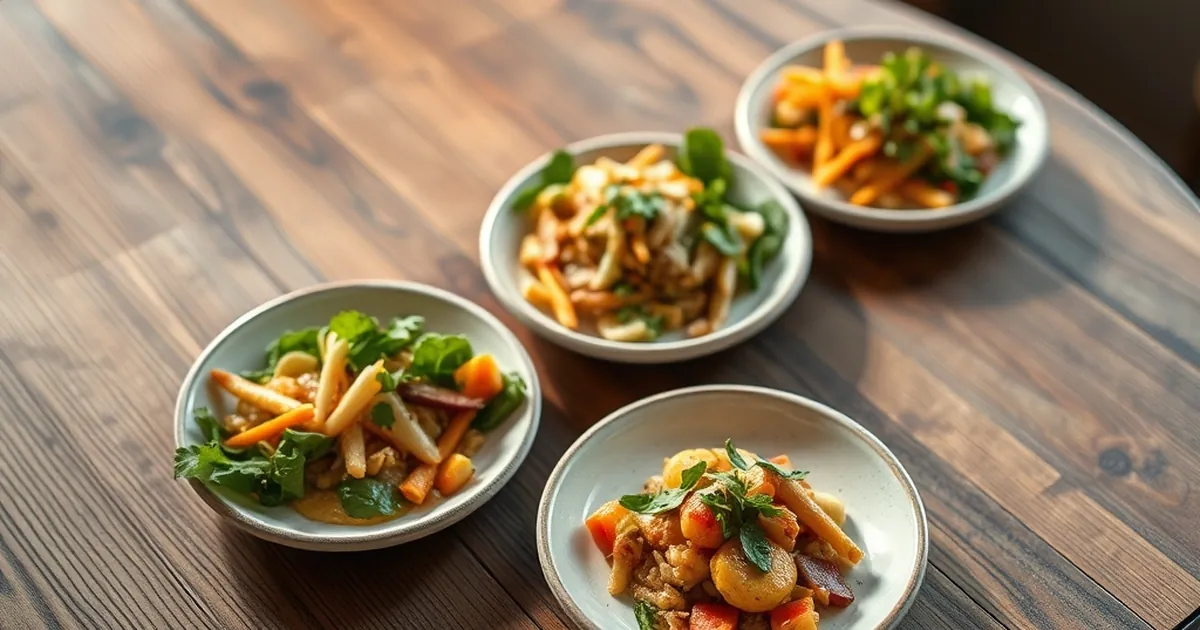
You're standing at the counter, and the first three items on the menu board are the ones the café actually wants you to order. That's not paranoia — it's design. The question worth chewing on is why the best-tasting thing in the building so often sits at the bottom of the list, and why we keep ordering from the top anyway.
The Menu Is a Decision Architecture
Behavioral economists have a term for what a menu does: it's a choice architecture. You walk in hungry, mildly rushed, and holding a phone in one hand. That's not a state built for careful deliberation, so your brain reaches for shortcuts. The first one it grabs is order — literally. Items at the top of a list get read more, remembered better, and chosen more often, a pattern researchers call the serial position effect. Cafés know this. So do grocery stores, which is why the cereal aisle puts the highest-margin boxes at eye level and the store-brand oats down by your shins.
But there's a wrinkle. If first position were purely about maximizing profit, every café would lead with the cheapest-to-make, highest-margin item — plain drip coffee, a day-old pastry. Many do. The interesting ones don't.
Third Bite Wins
Here's where it gets genuinely fun. A well-run café isn't just trying to get you to order something. It's trying to get you to order something you'll finish and come back for.
Consider the "third bite" idea, which shows up in food product development and in cookbook testing. The first bite of anything is unreliable — it's novelty, temperature, texture surprise. The second bite is comparison. By the third bite, you're actually tasting the food. A pastry that's all butter and sugar front-loads pleasure into bites one and two and turns cloying by bite four. A pastry with salt, or a little acid, or a coarser crumb keeps rewarding you deeper into the plate.
So the smartest cafés front-load their menu not with their sweetest item but with their most durable one. The thing that still tastes good when you're three-quarters through and no longer hungry. That's a bet on repeat business over one-time delight.
Variable Rewards, Without the Slot Machine
There's a behavioral concept called variable-ratio reinforcement: rewards that arrive unpredictably are stickier than rewards that arrive every time. It's the engine behind a lot of habit formation, and it's why a café with a rotating seasonal special can feel more alive than one with a fixed board. You don't know if this month's cardamom-orange scone is as good as last month's. You order it to find out.
The trick — and this is where a good café differs from a bad habit — is that the variation has to be quality variation, not just surprise. Kahneman's work on loss aversion tells us we feel a bad experience roughly twice as sharply as a good one. A café that gambles on novelty and misses loses more trust than it gained curiosity. The ones that pull it off rotate within a narrow band of things they're already good at.
What This Means for How You Order
Next time you're at a counter, try the third item down and the thing you can't quite categorize. Notice whether it's still good at bite three. If it is, you've found a kitchen that's cooking for the whole experience rather than the first impression — and that's a place worth building a habit around.