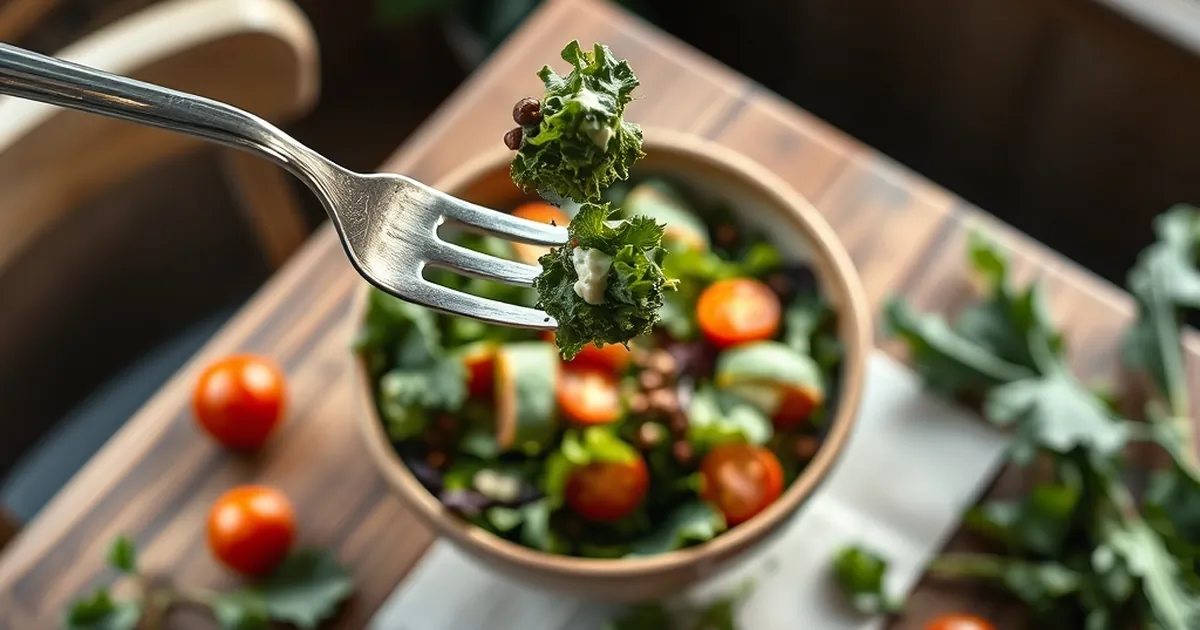
I watched a friend demolish a $14 kale salad in about four minutes last Tuesday. She barely chewed. By the time I finished my first few bites, she was already checking her phone. Here's what struck me: she'd paid extra for avocado and toasted seeds, and her body probably absorbed a fraction of what she thought she was getting.
Chewing isn't just table manners. It's the first stage of digestion, and it changes what your salad actually does inside you.
Why Salad Is the Hardest Meal to Digest
Raw vegetables come wrapped in cellulose, a fiber your body can't break down on its own. Your teeth and your stomach acid do the work instead. Chewing physically tears plant cell walls apart, releasing the vitamins and minerals locked inside.
Skip that step and you're swallowing intact plant cells. Your gut gets the fiber, sure, but the beta-carotene in your carrots and the lutein in your greens may pass right through.
The 90-Second Benchmark
Most nutrition researchers suggest chewing each bite 20 to 30 times. For a mouthful of crusty bread, that's maybe 15 seconds. For a dense kale leaf or a chunk of raw broccoli? Closer to 30 or 40 chews — roughly 90 seconds for a full fork-load if you're being honest about it.
Ninety seconds feels absurd at first. Try it with one bite and you'll notice something: the salad starts tasting sweeter. That's amylase, an enzyme in your saliva, breaking starches into sugar before you even swallow.
What Actually Happens in Those 90 Seconds
Saliva Goes to Work
Your mouth produces around a liter of saliva daily, and it's not just lubrication. It contains lipase for fats (hello, avocado and olive oil) and amylase for carbs. The longer food stays in your mouth, the more enzymatic digestion happens up top — which means less work for your stomach later.
Your Gut Gets a Head Start
Chewing also triggers what researchers call the cephalic phase of digestion. Your stomach starts producing acid before food arrives. Chew thoroughly and that acid is ready and waiting. Wolf your food down and you get bloating, sluggishness, and that heavy feeling that makes people swear off salads entirely.
Satiety Signals Have Time to Land
It takes about 20 minutes for fullness signals to travel from your gut to your brain. A salad eaten in four minutes is over before those signals arrive — which is why my friend was hunting for a snack an hour later.
A Real-World Test You Can Run Tomorrow
Order the same salad twice this week. First visit, eat at your normal pace. Second visit, commit to 90 seconds per bite — set your phone timer if you have to.
Notice three things: how long the meal lasts, how full you feel afterward, and whether you actually finish the whole bowl. Most people report eating less, feeling more satisfied, and tasting more.
Make It a Habit, Not a Chore
You don't need to count chews forever. Start with the first three bites of every meal. Put your fork down between them. That small pause is usually enough to reset your pace for the rest of the plate.
Your salad cost good money. Ninety seconds a bite is the cheapest way to make sure you get what you paid for.