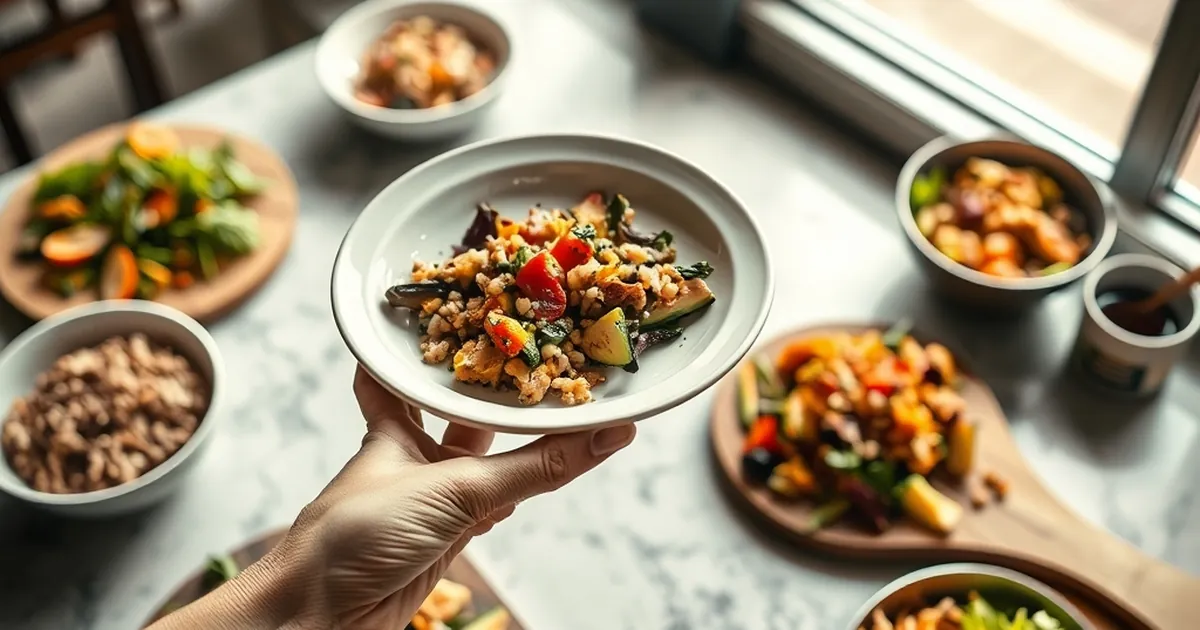
Picture a buffet line at a hotel conference lunch. The first people through take generous scoops of pasta and chicken; by the time the last few stragglers reach the trays, the serving spoons scrape bottom. Here's the question worth chewing on: when diners serve themselves last, do they eat less because less is there — or because something in the social and psychological setup changes how much they want? And what does that tell us about how the rest of us, who aren't at a buffet, end up over-serving at the dinner table?
The Setup Is the Portion
The headline claim — that self-served portions shrink about 20% when you go last — lines up with what researchers have found about self-service food generally: people are lousy at estimating how much they've taken, and they anchor that estimate on what's in front of them. Brian Wansink's work on "mindless eating" showed that larger bowls, wider spoons, and bigger plates all quietly increase how much people serve themselves, often by double digits, without anyone noticing. The portion isn't just a number on a label. It's a product of the container, the cue, and the moment.
So a later spot in line changes several things at once. The tray looks emptier. The visual anchor shrinks. There's also a social dimension: when you're at the back, you can see what everyone ahead of you took, and that becomes a reference point.
Watching Other People Is the Real Serving Spoon
This is where behavioral psychology gets interesting. People use other diners as a guide to what's "normal" — what researchers call a descriptive norm. If the person ahead of you takes a modest scoop, you tend to match it. If they pile it on, you recalibrate upward. At the back of the line, you've had a front-row seat to a dozen portion decisions before you touch a spoon.
There's a decision-making-under-uncertainty angle too. When the tray is nearly empty, you're not sure how much will be left for the people behind you, or whether there's more in the kitchen. That ambiguity nudges some people toward smaller, more cautious servings — a mild version of loss aversion, where the fear of taking "too much" of a scarce resource outweighs the pull of a bigger plate.
The Reward Loop That Keeps You Going Back
Buffets run on a variable-ratio schedule of reinforcement — the same intermittent-reward pattern that makes slot machines sticky, except here it's the surprise of a fresh tray of brownies appearing. You keep circling because you don't know what reward is coming next. That's not a moral failing; it's just how the brain responds to unpredictable payoff. The practical takeaway is that the structure of the meal — how food is presented, how often it's replenished, how far you are from the source — matters more than willpower.
A concrete example: university dining halls that switched from large serving bowls to smaller ones, and from trays to hand-carried plates, saw students take and waste less food, according to research summarized in Wansink's Slim by Design. Nobody gave a lecture about portions. The environment did the coaching.
What to Do With This at Home
You don't need a buffet to use the principle. Serve from the stove rather than family-style platters on the table, and you'll take less and go back less. Put the salad and vegetables first in the serving order, so the "norm" set by early servings is a lighter one. Keep the second-helpings dish across the kitchen, not within arm's reach.
For the week ahead, try one small experiment: plate your food in the kitchen, then sit down with nothing but your plate and a glass of water in front of you. Notice whether the meal feels different — and whether you reach for seconds out of hunger or out of habit. The answer might surprise you, and it's a cheap way to learn something about your own decision-making before the next buffet line forms.