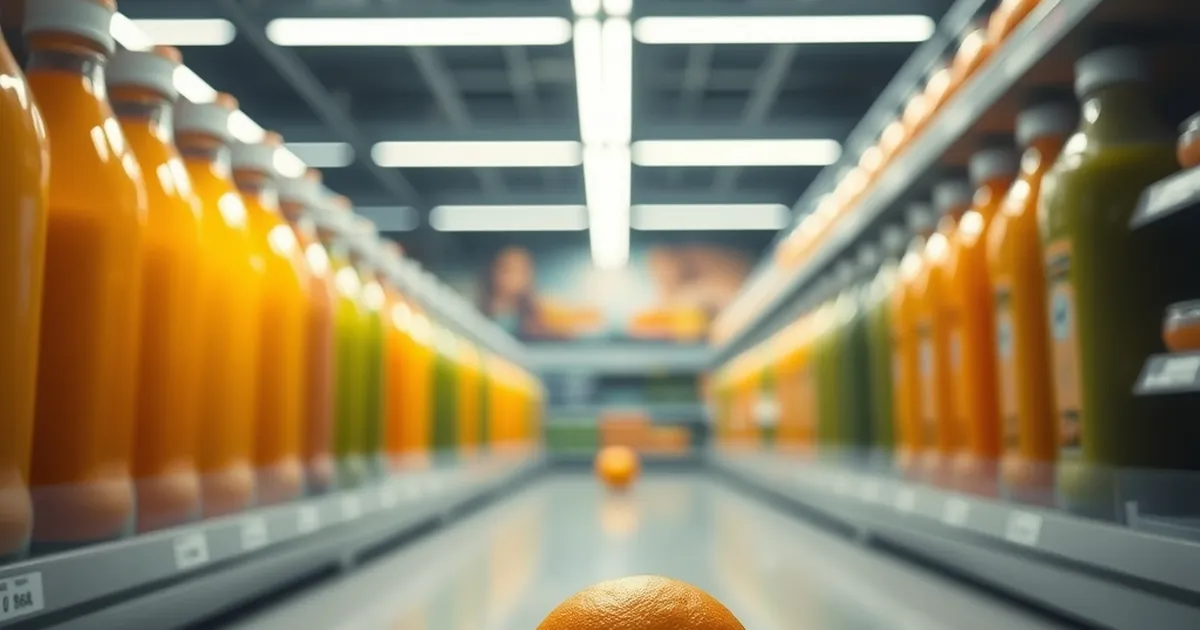
I get it. You’re standing in the refrigerated aisle, staring at a $9 bottle of "Green Goddess" juice, and you’re convinced you’re making the healthy choice. It’s cold, it’s vibrant, and it has kale in it—so it must be good for you, right?
Here’s the uncomfortable truth: that bottle might be doing more metabolic damage than a can of soda. When you strip the fiber out of fruit and vegetables, you’re left with a concentrated sugar solution that hits your bloodstream like a freight train. Let’s break down why that "clean" juice is actually a major sugar trap.
The Fiber Fallacy: Why Juicing Changes Everything
When you eat a whole apple, the fiber slows down sugar absorption, keeping your blood sugar steady. When you juice that apple, you remove the pulp and the fiber, leaving behind pure fructose and glucose in a glass.
Your liver has to process this sugar rapidly, and without fiber to slow things down, you get a massive insulin spike. This is the exact opposite of what you want for sustained energy or weight management.
A Quick Reality Check on "Healthy" Numbers
Take a typical 16-ounce bottle of cold-pressed orange juice. To make that, you need roughly four to five oranges. You probably wouldn’t sit down and eat five oranges in one sitting, but drinking them takes less than a minute.
That single bottle often contains 45 to 55 grams of sugar. For context, a standard 12-ounce can of Coke has 39 grams. So yes, your "healthy" juice is often sweeter and more concentrated than the soda you’ve been avoiding for a decade.
The "Green" Juice Illusion: Hiding Behind the Kale
I’m not saying all juice is evil. But here’s where the marketing gets sneaky: the bottles that look the healthiest—the dark green ones with celery and spinach—often have a base of apple, pineapple, or pear to make them palatable.
I remember a customer once telling me she was "detoxing" with a green juice that contained 32 grams of sugar. When she looked at the ingredient list, the first ingredient was actually apple juice, not kale. The vegetables were essentially garnish. If the first ingredient is a fruit, you’re drinking sugar water with a salad garnish.
The Blood Sugar Rollercoaster
High-sugar liquids cause a rapid spike in blood glucose, followed by a crash. That crash is what makes you feel hungry, tired, and cranky an hour later. This often leads to a cycle of snacking and cravings that you never get from eating a whole-food meal.
How to Actually Drink Juice Without the Sugar Crash
You don’t have to swear off juice entirely, but you do need to change the rules of engagement. Treat juice as a treat, not a health supplement.
- Stick to 4 ounces or less. A proper serving is a shot glass, not a Big Gulp. That gives you the vitamins without the sugar bomb.
- Look for "greens first." The ingredient list should start with cucumber, celery, or spinach. If a fruit is listed first, put it back.
- Better yet, blend instead of juice. A smoothie that includes the whole fruit keeps the fiber intact, which slows down sugar absorption and keeps you full.
The Bottom Line for Your Next Grocery Run
The next time you’re reaching for that cold-pressed bottle, flip it around and check the sugar content. If the number is above 15 grams for an 8-ounce serving, you’re better off eating a piece of fruit and a handful of almonds.
The real shift here is moving away from liquid calories entirely. Your body is remarkably good at regulating appetite when it gets to chew its food. The café culture has sold us on the idea that we need to drink our vegetables to be healthy, but the truth is, the whole vegetable is almost always the better deal. Save the juice for a rare treat, and your pancreas will thank you.