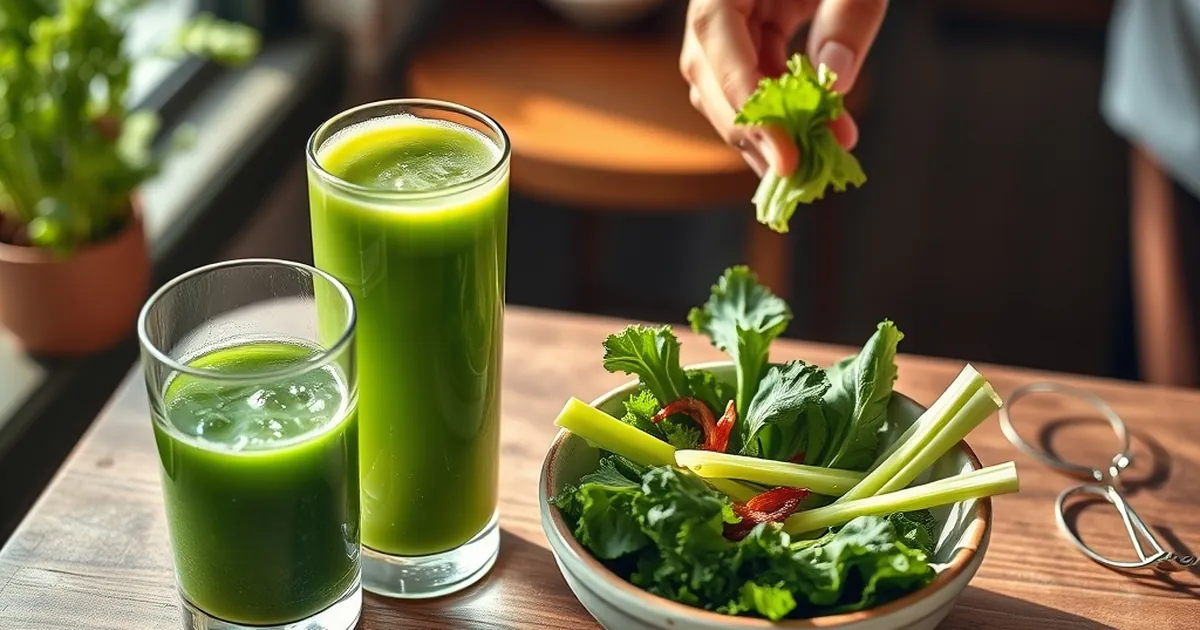
You know that feeling when you order a cold-pressed juice, take that first vibrant sip, and it tastes… like fruit salad with a fancy price tag? We’ve all been there. You’re paying for health, but your juice is basically a sugar bomb in a bottle, missing the one ingredient that actually balances it out: a vegetable.
It’s not your fault. Most juice menus are designed to appeal to our sweet tooth first. But here’s the thing—if your "green" juice isn't heavy on the greens, you're missing the entire point.
Why Your Juice Needs a Savory Sidekick
Let’s talk about the biology of a great juice. Fruit is delicious, but it’s naturally high in fructose. When you strip away the fiber by juicing, that sugar hits your bloodstream fast, leading to a quick spike and an inevitable crash.
Vegetables are the unsung heroes here. They add volume, essential minerals, and a dose of earthy flavor that slows down the absorption of sugar. More importantly, they bring the phytonutrients—the anti-inflammatory compounds—that make juicing worth the effort. A juice with just apple and pineapple is a treat; a juice with kale or cucumber is a tool.
The Usual Suspects (and What They Actually Do)
- Cucumber: It’s mostly water, but it’s the perfect base. It hydrates and dilutes the sweetness without overpowering the flavor.
- Celery: This is the workhorse. It adds a salty, savory note that actually makes the fruit taste sweeter by contrast, while providing electrolytes.
- Spinach or Kale: These are your heavy hitters for vitamins A, C, and K. They add a grassy note that tells your brain, "This is health food," and they’re packed with antioxidants.
The "Green" Juice Illusion
Here’s a personal confession: I used to order a juice called "The Green Monster" and wonder why I felt jittery afterward. I looked at the label one day—it had kale, sure, but it was 80% apple and pear juice. The kale was just for color.
That’s the illusion. We see a green bottle and assume it’s a vegetable smoothie, but the ratio is often flipped. A truly balanced juice should be at least 60% vegetables and 40% fruit. If you’re ordering a juice that looks like a sad, brownish-green, you’re probably on the right track. If it looks like a vibrant emerald, it’s likely just sugar water with a garnish.
A Quick Test for Your Next Order
Before you hand over your cash, ask the person at the counter two simple questions:
- What’s the base? (If they say "apple" or "pineapple," ask for more cucumber or celery.)
- Can you add extra spinach or kale? (Most places will do this for free, or for a small upcharge.)
I once asked a barista to "go heavy on the celery" in my standard order. The result was a slightly saltier, more complex juice that kept me full for three hours instead of thirty minutes. It was a revelation.
The Bottom Line on Balance
You don't need to swear off fruit—that would be miserable. The goal is balance. Think of the fruit as the vehicle to get the vegetables down. A little bit of green apple or lemon is the perfect bridge to get you drinking something that’s actually good for you.
Next time you order, challenge yourself. Look for the juice that has the most celery and cucumber listed first in the ingredients. Your blood sugar, your energy levels, and your taste buds will eventually thank you. Start there, and you might just find that the savory stuff is the new sweet.