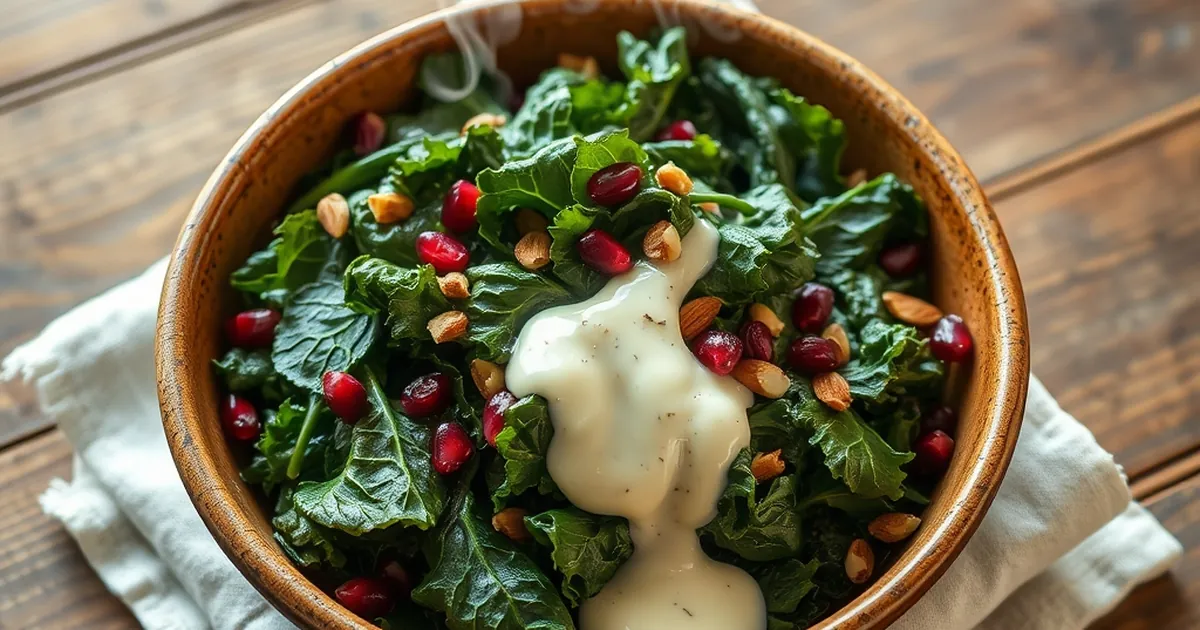
I still remember the first time I watched a line cook build a kale salad at a busy café in Portland. She massaged the leaves with lemon and olive oil, then pulled a tiny squeeze bottle from the lowboy and hit the bowl with something ice cold. The kale didn't wilt. It didn't turn to mush. It tasted sweeter, almost buttery, like a completely different vegetable than the raw stuff I'd been chewing through for years. That moment sent me down a rabbit hole: does the temperature of what you add to kale actually change how bitter it tastes?
Why Kale Tastes Bitter in the First Place
Kale belongs to the Brassica family, alongside Brussels sprouts, broccoli, and cabbage. These plants produce glucosinolates, sulfur-containing compounds that break down into isothiocyanates when the cell walls get damaged — by chewing, chopping, or even a rough massage. Those compounds are the source of the sharp, peppery bite that makes some people love kale and others reach for ranch.
Bitterness isn't a flaw to eliminate. It's a feature of the plant's defense system, and your palate reads it as intensity. The trick is managing how much of that intensity reaches your tongue at once.
The Role of Temperature
Heat does two things to bitter compounds. It deactivates the enzyme that creates them (myrosinase), and it softens the cell walls so your saliva releases fewer of them per bite. Cold does the opposite — it preserves structure and keeps those enzymes ready to fire. So a warm kale salad and a cold-dressed one are genuinely different eating experiences, not just a matter of preference.
What Happens When Warm Kale Meets a Cold Dressing
Here's the counterintuitive part. A cold dressing on warm kale isn't a mistake — it's a technique, and it works because the two temperatures do separate jobs.
The warmth of the greens (from a quick sauté, a roast, or just a hit of hot vinaigrette) relaxes the fibers and tames the raw edge. Then the cold dressing hits and shocks the surface, locking in a snap that keeps the leaves from going limp. You get tenderness and texture in the same bite.
My café experiment proved it. Same kale, same olive oil, same lemon. One batch dressed warm, one dressed cold, one dressed at room temp. The cold-dressed warm kale won by a landslide — brighter, less bitter, and somehow more filling.
A Quick Way to Try It
Warm a tablespoon of olive oil in a skillet, toss in torn kale for thirty seconds until it just starts to glisten, then slide it into a bowl. Whisk your dressing with ice-cold lemon juice and a pinch of salt, and pour it over while the greens are still steaming. Taste the difference immediately.
The Science of Saliva and Perception
Bitterness perception depends partly on how fast compounds dissolve in your saliva. Warm food dissolves them faster, which sounds like it would make things more bitter — and it can, if you overheat the greens. But a brief warm-up followed by a cold dressing slows the release rate right when you take your first bite.
Salt amplifies this. A little flaky salt in a cold dressing suppresses bitterness receptors directly, which is why the cold-dressed version tasted sweeter even though I hadn't added any sugar.
Order Is a Tool, Not a Rule
You don't have to follow any of this. Raw kale with cold dressing is a perfectly good salad, and if you love that crunch, keep it. But if bitterness has kept you from enjoying kale, try flipping the order: warm the greens, chill the dressing, and season aggressively.
Once you start thinking about temperature as an ingredient, you'll notice it everywhere — in how you dress grains, how you finish roasted vegetables, how you plate a simple bowl of greens. The order you build a dish in isn't fussiness. It's flavor, hiding in plain sight.