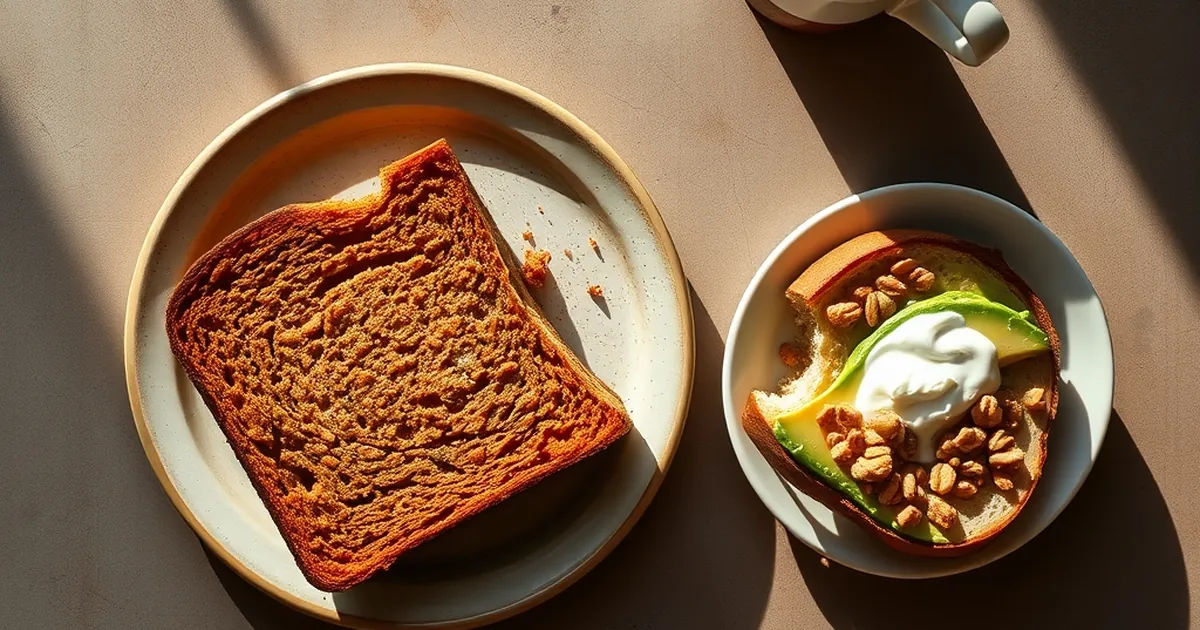
We’ve all been there: 7:45 a.m., running late, and you grab a thick slice of banana bread on your way out the door, telling yourself it’s basically a muffin. It’s sweet, it has fruit in the name, and it feels like a wholesome way to start the day. But is it actually breakfast, or is it just dessert wearing a flannel shirt?
The truth is, most bakery-style banana bread is a sugar bomb wrapped in a carb blanket, and it’s about to spike your blood sugar faster than your morning commute. That doesn’t mean you have to swear it off forever, but it does mean we need to have an honest conversation about what you’re really eating.
The Case Against the "Health Halo"
Here’s the uncomfortable math: a standard slice of café banana bread clocks in around 400 to 500 calories, with 30-plus grams of sugar and maybe 3 grams of fiber. For context, that’s more sugar than a glazed donut from your local shop, yet we give banana bread a pass because it contains mashed fruit.
The problem isn’t the banana itself. A medium banana has about 14 grams of natural sugar, which is fine. The problem is that we’ve piled on white flour, butter, and a cup of sugar to make it taste like a treat, and then we’ve rebranded it as a morning staple. Your body doesn’t care about the branding; it just sees a massive glucose spike followed by a crash that hits around 10:30 a.m.
Why the Crash Feels So Bad
When you eat that slice on an empty stomach, your insulin surges to handle the sugar load. Once the rush fades, your blood sugar drops, leaving you tired, hangry, and craving another carb fix. It’s a vicious cycle that has you reaching for a second slice before lunch, and suddenly you’ve eaten 1,000 calories before noon.
Can Banana Bread Ever Be Breakfast?
Yes, but only if you’re willing to flip the ratio. The goal isn’t to eliminate banana bread; it’s to make it work for you instead of against you. Think of it less like a cake and more like a quick bread that happens to be sweet.
The Protein and Fat Fix
Pair a thin slice with a protein source, like Greek yogurt or a couple of eggs, and you’ll slow down that sugar absorption significantly. The fat and protein act as a buffer, keeping your energy steady and your stomach full past the morning rush. I’ve also started toasting my slice and adding a smear of almond butter, which turns it from a sugar spike into an actual meal.
The Better Batter Approach
If you’re baking at home, you can easily cut the sugar in half and swap in whole wheat flour or oat flour. Add a handful of walnuts or some chia seeds for extra fiber and healthy fats. You’ll barely notice the difference in taste, but your body will thank you around 11 a.m.
The Real-World Test
I ran a little experiment last month with two of my regulars. One ordered our classic banana bread with a black coffee; the other ordered a half slice with a side of scrambled eggs. The first person was back at the counter by 10:15 for a latte and a cookie. The second person didn’t return until 1 p.m. for lunch. That’s not a coincidence; that’s blood sugar management.
The Takeaway: Keep the Bread, Lose the Lie
You don’t need to give up banana bread, but you do need to stop pretending it’s a health food. Treat it like the dessert it is when you’re at a café, or upgrade your homemade version so it earns its place on the breakfast plate. Next time you’re tempted, ask yourself: am I eating this because I’m hungry, or because I want a treat? Both are valid answers, but only one of them is breakfast.