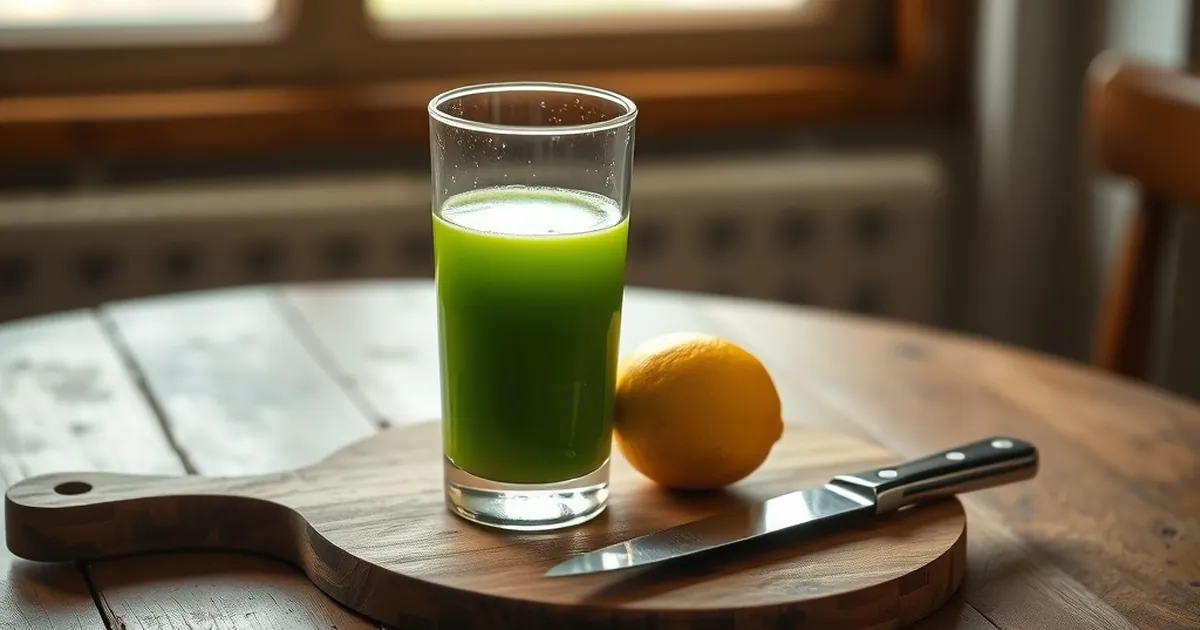
I’ll admit it: I’ve been that person staring into the abyss of my refrigerator at 7 a.m., realizing I forgot to buy lemons. My first instinct was to just blend the kale, celery, and green apple anyway. The result was a glass of something that tasted like lawn clippings dipped in sadness. It made me wonder—what does that citrus wedge actually do beyond making the drink palatable? The answer, it turns out, is a lot more than you’d think.
When you skip the lemon in your green juice, you’re not just losing a flavor note. You’re losing a chemical workhorse that affects everything from nutrient absorption to how your body processes the sugar in those apples and beets. Let’s break down what’s really happening in your glass—and your gut—when that yellow fruit goes missing.
The Nutrient Absorption Trap
Here’s the hard truth about leafy greens: they are packed with iron, but it’s mostly the non-heme type, which your body struggles to absorb on its own. Lemon’s vitamin C acts like a bouncer, waving that iron straight into your bloodstream. Without it, you might be chewing through bags of spinach and still feeling sluggish.
I remember a nutritionist friend telling me that sipping a lemon-less green juice is like trying to start a fire with wet wood. You have the kindling, but you’re missing the accelerant. The vitamin C also stabilizes certain antioxidants, like the catechins in kale, keeping them active long enough for your gut to actually use them.
The Oxalate Problem
Spinach and Swiss chard are high in oxalates, which can bind to calcium and form painful kidney stones in susceptible people. The citric acid in lemon juice helps break down those oxalates, making them less likely to crystallize. Skipping the lemon doesn’t just reduce absorption—it potentially increases your risk of that gritty, back-aching discomfort.
The Sugar Spike Rollercoaster
Green juice often contains fruit to make it drinkable—usually apple, pear, or pineapple. That’s natural sugar, but it’s still sugar. Lemon juice doesn’t magically erase the carbs, but its acidity slows down the rate at which your stomach empties into the small intestine. This delays the glucose spike, giving your insulin a fighting chance.
Without lemon, that morning glass can hit your bloodstream like a wave instead of a gentle tide. You might feel a quick burst of energy, followed by the dreaded 10 a.m. crash and a craving for a bagel. The lemon isn’t just a garnish; it’s your blood sugar’s seatbelt.
The Flavor Balancing Act
Let’s be honest about the taste. Green juice without lemon often tastes bitter, earthy, and a little flat. The lemon’s sharpness cuts through the vegetal funk, highlighting the sweetness of the apple and the peppery bite of the ginger. Without it, you’re more likely to add extra fruit to compensate, which loops us right back to that sugar problem.
I once tried an "alkaline" juice at a café that used zero citrus. It was so grassy I actually coughed. The barista said, "It's an acquired taste," but I argue it’s a design flaw. Lemon is the bridge between "health food" and "enjoyable beverage," and skipping it makes the whole ritual feel like a chore.
The Practical Takeaway
Lemon isn’t optional; it’s the key that unlocks the green stuff. But if you genuinely hate the tartness, or you’re out of lemons, don’t just wing it. Swap in a splash of raw apple cider vinegar or a handful of frozen mango (which has its own vitamin C). The goal is acidity and vitamin C, not necessarily the citrus itself.
Next time you’re prepping that celery and kale, treat the lemon like a main ingredient, not an afterthought. Your blood sugar, your kidneys, and your taste buds will all send you a thank-you note. And if you do forget it, just remember: you’re one sad, grassy glass away from never making that mistake again.