Healthy Casino Snacks and Drinks: What a Café Should Actually Serve
Casino cafés thrive on low-sugar, high-protein snacks and unsweetened drinks that keep players comfortable for hours without a crash
· 3 min read
A café inside a casino floor should serve snacks and drinks that hold up over a four-hour session: low-sugar, moderate-sodium, high-protein items that don't spike and crash, plus water and unsweetened options placed where people actually walk. That's the whole answer. Everything below is about how to do it without turning the café into a wellness boutique nobody visits at 1 a.m.
The floor sets the menu, not the brochure
Casino food has one job a normal café's doesn't: it has to keep someone comfortable for hours without making them sluggish or thirsty. That rules out the obvious stuff — the 32 oz soda, the basket of salted nuts, the pastry case glowing under a heat lamp. It doesn't rule out flavor.
Practically, a healthy casino café menu looks like this:
- Protein-forward small plates. Turkey and cheese roll-ups, hummus with seeded crackers, edamame, chicken skewers. Aim for 10–20 g of protein per item; that's what actually holds off the next hunger pang.
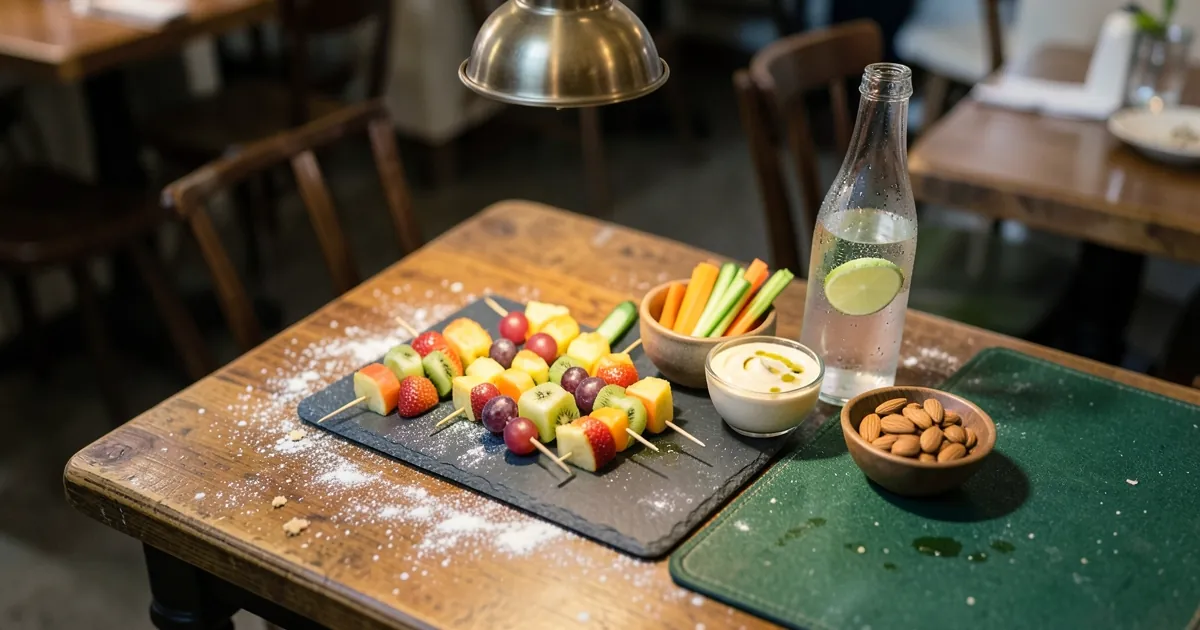
- Fruit that travels. Whole apples, bananas, grapes in cups. Not a fruit salad swimming in syrup.
- Water as the default. Visible, self-serve, free or near-free. If the only water is a $4 bottle behind the counter, people drink soda.
- Coffee and tea that don't need sugar to be drinkable. A decent drip coffee beats a burnt one people fix with four packets.
Drinks are where cafés lose the plot
Juice is the classic trap. A cold-pressed bottle reads healthy and can still land at 30 g of sugar — and even the good ones tend to be all fruit, no vegetable. A juice order that's missing its vegetable is a sugar delivery system with a green label.
Smoothies have their own problem. Fat-soluble vitamins in leafy greens need fat to be absorbed, so a green smoothie needs a fat source — yogurt, nut butter, avocado — or you're paying premium prices for expensive fiber. Offer one version that's actually built right rather than five that aren't.
And keep alcohol honest. A casino will sell drinks; that's fine. But every alcoholic round should come with a water, and the café shouldn't be the place where a fourth cocktail is easier to get than a refill.
Texture and salt do more work than the ingredient list
Two things quietly change how much people eat: how a food feels and how salty it is.
Crunchy items slow eating down and register as more satisfying per calorie. That's the logic behind why two crunches beat one swallow — texture sets the pace, and pace sets the portion. A soft muffin disappears in ninety seconds; a cup of spiced chickpeas takes five minutes and ends sooner.
Salt is the other lever. Casino food gets over-salted because salt sells drinks, and drinks sell everything else. But skipping the salt shaker doesn't mean bland — acid, herbs, and heat do the work, and customers wake up less puffy and more likely to come back.
The number that should shape the whole operation
Here's the one figure worth taping to the register: roughly 20%. When people serve themselves last, they take about a fifth less than when someone portions it for them. That's the finding behind self-service shrinking portions — and it's an argument for a small self-serve snack station rather than a counter where staff hand over a generous plate.
Apply it to the café and the design writes itself: open fruit bowls, a self-serve water station, pre-portioned nuts in 1 oz cups instead of a bottomless barrel. You sell less per visit and more visits.
Which raises the question a casino café has to answer for itself: is the goal to maximize what a customer spends tonight, or to keep them comfortable enough to still be there — and still glad about it — at 2 a.m.? Those two goals point at different menus. Most cafés haven't decided which one they're running.