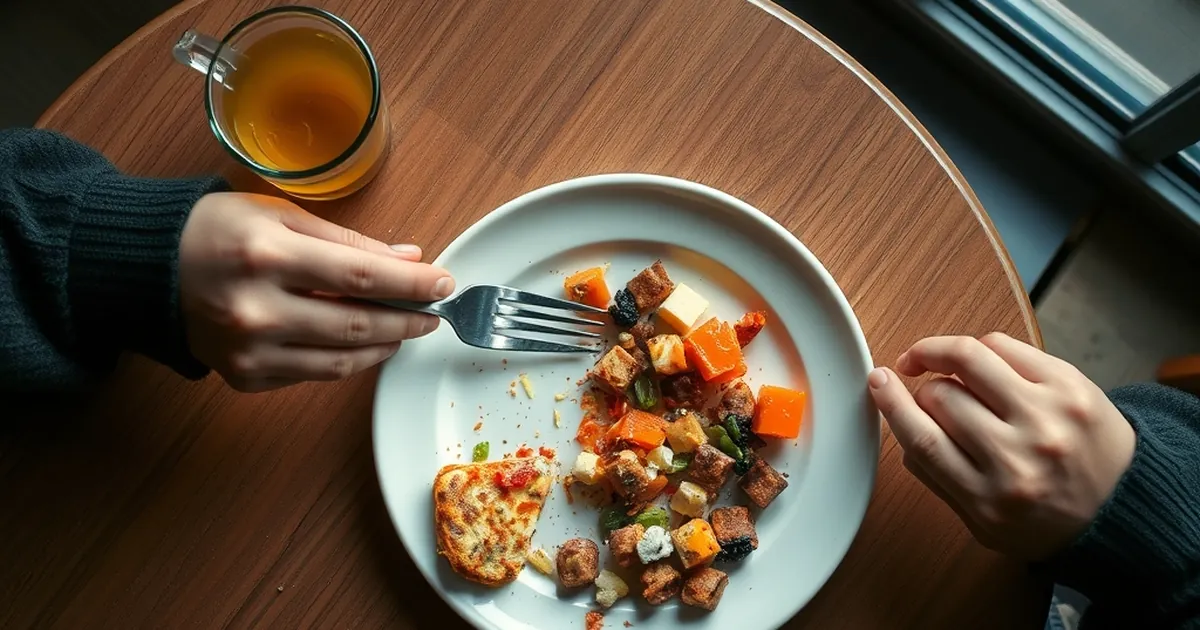
There's a moment at every good meal when the fork keeps moving but the pleasure doesn't. The first few bites are vivid — salty, bright, warm — and then somewhere around bite five, the experience flattens into background noise. Yet we keep eating. The question worth sitting with: if the reward has faded, what exactly is still driving the hand?
Sensory-specific satiety is real, and it's fast
Behavioral researchers have a term for this: sensory-specific satiety. It describes how the pleasantness of a specific food drops as you eat it, while your appetite for other foods stays relatively intact. In classic studies, participants rated a food as highly appealing before eating, then rated it noticeably lower after consuming a modest portion — sometimes after just a few ounces. The effect shows up within minutes, not hours.
That last part is the interesting wrinkle. Your stomach hasn't sent a fullness signal yet. Your blood sugar hasn't meaningfully shifted. The decline is happening in the reward system, not the gut. Which means the "I'm still hungry" feeling and the "this doesn't taste as good" feeling are two separate channels — and they don't sync up.
The reward loop doesn't need pleasure to keep running
Here's where it gets genuinely strange. The behavior persists after the reward fades because the anticipation was doing more work than the experience. This is the core of what psychologists call reward prediction — the wanting system and the liking system are not the same machinery.
Kent Berridge's research on dopamine made this distinction hard to ignore. Animals without dopamine signaling can still show "liking" reactions to sweet tastes, but they stop seeking them. Remove the wanting system and the pursuit collapses, even though the pleasure capacity remains. Flip it around and you get the human dinner table: the pursuit is still humming along on momentum, habit, and the next-bite prediction, long after each bite delivers less.
Bite six isn't eaten because it will taste good. It's eaten because bite five set up an expectation that bite six might.
Familiarity is a slow anesthetic
There's a second layer: habituation. Repeated exposure to the same stimulus dulls the response, and it does so faster than most people expect. Think about the first sip of coffee in the morning versus the last. Same cup. Wildly different intensity of experience.
This is why a plate of one thing gets boring but a plate with five things stays interesting — variety resets the habituation curve. It's also why restaurants lean on texture contrast and acid: a squeeze of lemon or a crunch of something pickled interrupts the flattening and briefly restores the signal.
What this means for how you actually eat
If the reward fades but the reaching continues, the practical move isn't willpower. It's redesigning the environment so the reaching has somewhere better to land.
- Build variety into the plate itself, not just the menu. Three components beat one large portion for sustaining interest.
- Use acid, heat, or crunch as resets. They interrupt habituation without adding much.
- Slow the first three bites down. Most of the sensory payoff is front-loaded, so spreading it out changes the whole arc.
- Notice the moment the flavor drops off. That's the real cue, not fullness — and it's a more honest signal than the one your hand is following.
The interesting frontier here isn't restriction. It's learning to read the gap between wanting and liking in real time, at your own table, one bite at a time.